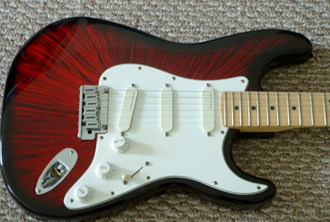
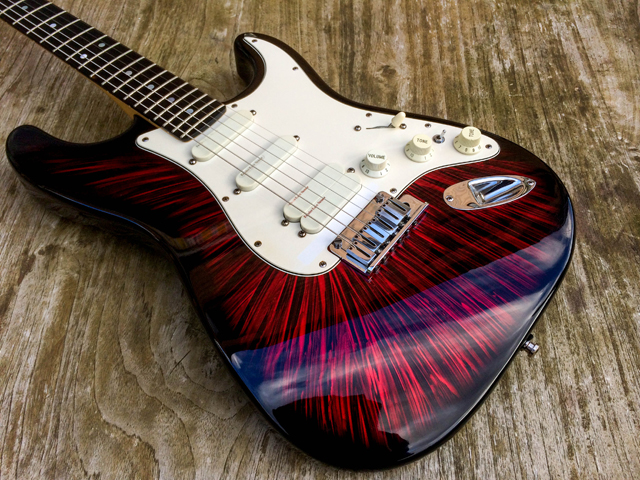
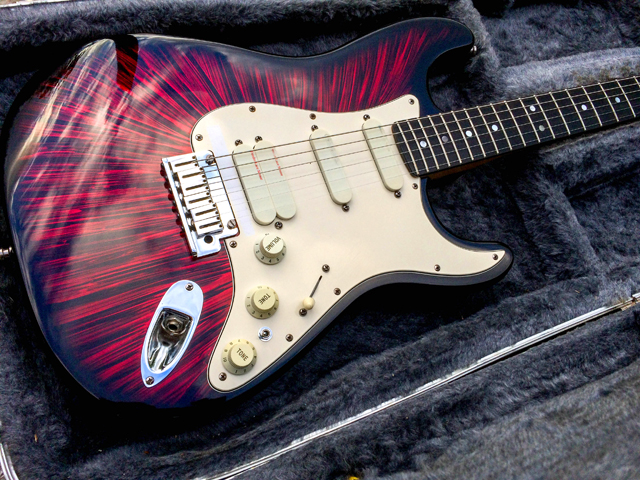
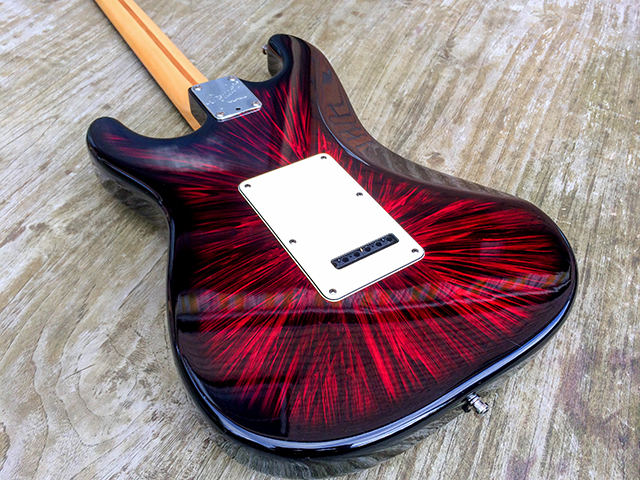
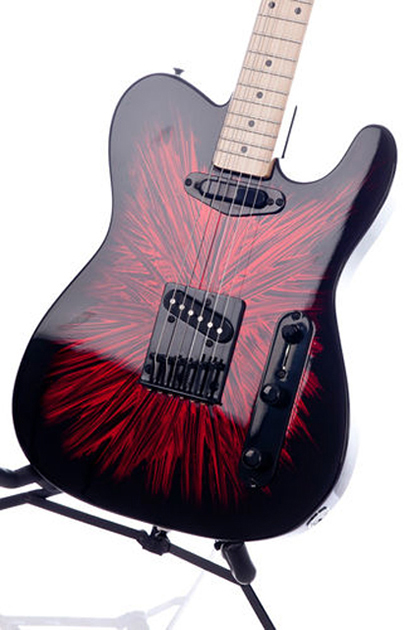
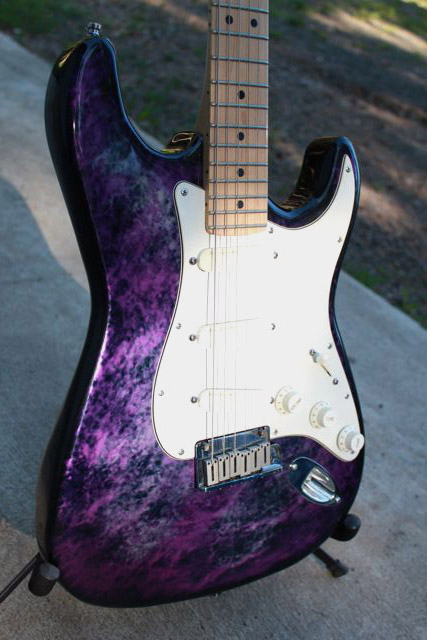
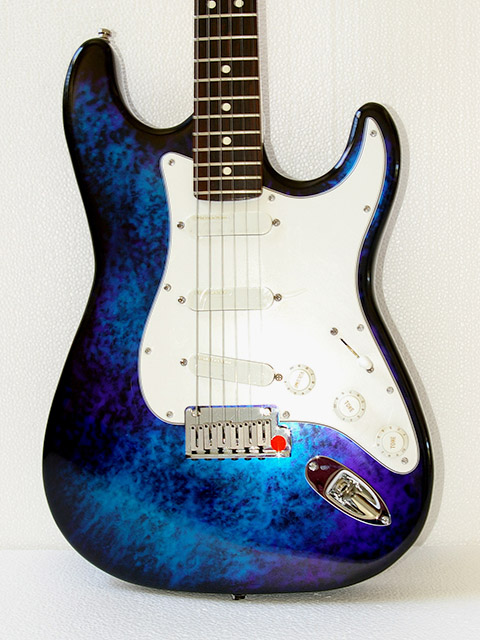
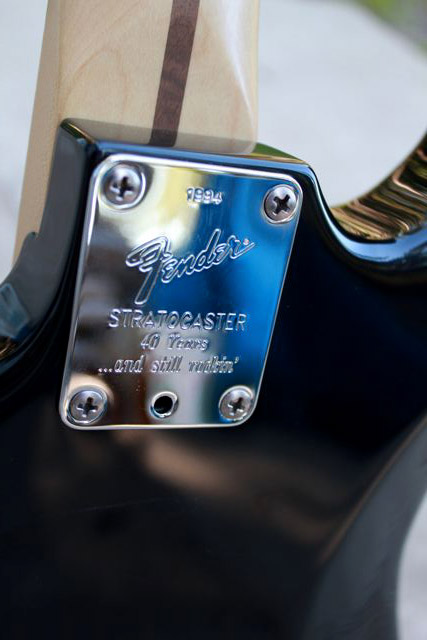
LIKE MY FACEBOOK Page! NOTE: On Facebook you can follow build threads, interact, ask questions, see current guitars and projects. Use this website for research as many of your questions about your guitar will be answered here!
Strat PlusSeries was introduced by Fender in 1987 and was the highest end production model next to Fender's Custom Shop guitars. Production was stopped in July of 1998. There was some transitional Strat Plus' in 1999 that were a mix of the new DX Strat series and the Plus Series. You can tell by the serial number, which started with DN9XXXXX and they also had a chrome Fender logo on the headstock. While some were sold as a "Plus" they were sort of a hybrid having Fender's new Noiseless pickups, yet retaining the locking tuners, roller nut and American bridge. These went on to be the American Deluxe Strat Series.
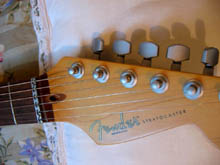
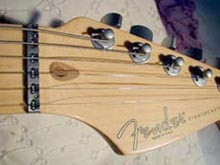
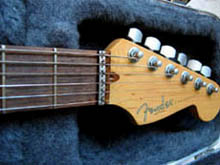
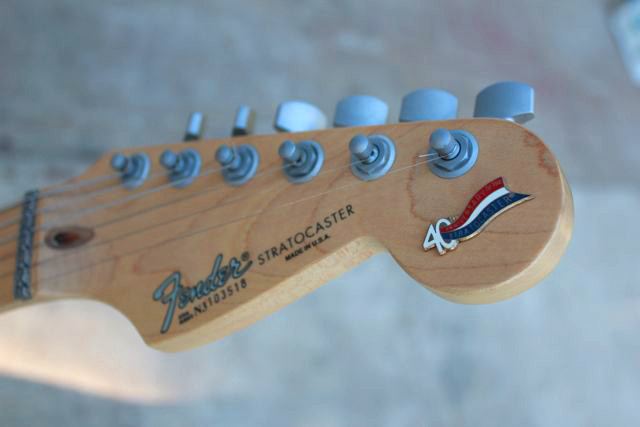
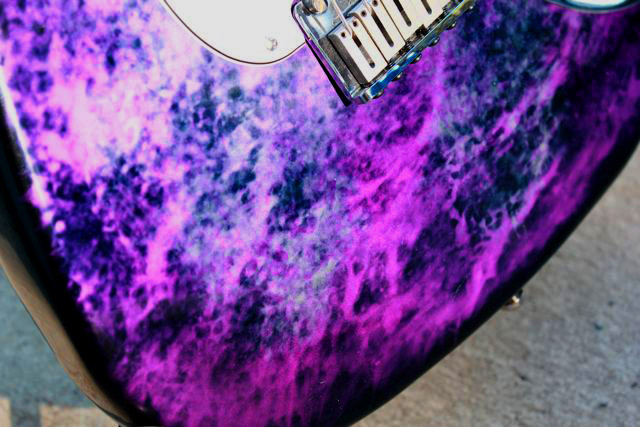
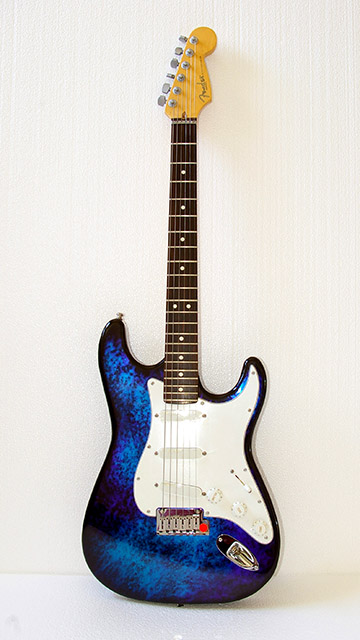
The Strat Plus Series consisted of: The Plus, and then in July of 1989,The Plus Deluxe, and then the The Ultra in January of 1990. (Why you are at it, check out my wild and crazyCustom Strat Plus guitars!) Each of these models are taken up on different pages on this website (just click on the names). The Plus Series was a very good attempt to reclaim Fender USA's floundering reputation, as quality had drastically gone down hill under CBS's ownership. All the Plus Series guitars had similar features. This page features the Standard Plus, some specs and....
The Stratocaster was Leo Fender's second guitar design after the Telecaster around 1953, with actual production beginning in early 1954. The model went through a series of changes through the years. Here's a few little tips to remember to help aid in dating those late 1970s and 1980s Stratocasters: Fender's three-way selector switch was updated to the Stratocaster's 5-way in 1977. In the mid 1970s the "Thick Skin" high gloss all-polyester finish was introduced.
After CBS sold Fender in 1985, there was no production of Fender guitars in the U.S. from February, 1985 to October, 1985 (almost 8 months!). When the Corona plant was started up, only the Vintage Reissue Stratocaster models were produced between late 1985 through 1986. Then in 1986 they started production on the new American Standard Stratocasters. Finally, as we talk about the Plus Series, the Fender-Lace Sensor pickups, invented by Don Lace, was introduced in 1987, and a new upgraded version of the American Standard Strat was born = The Strat Plus! A Lace Sensor "Dually" was also used in the Ultra and the Version 1 Tele Plus which is two Lace Sensors placed side-by-side looking like a humbucker but were actually two independent pickups.
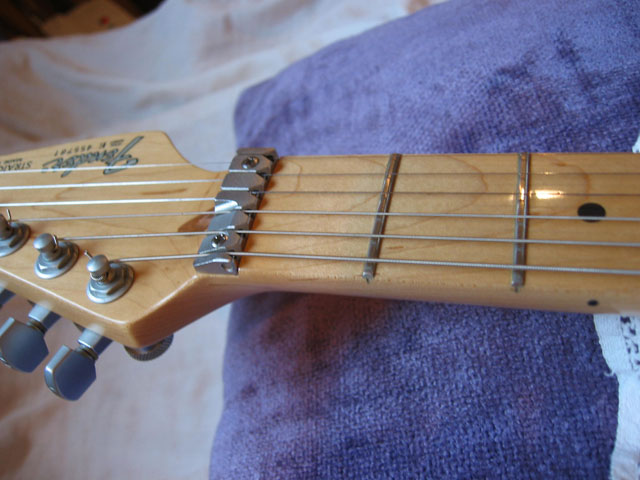
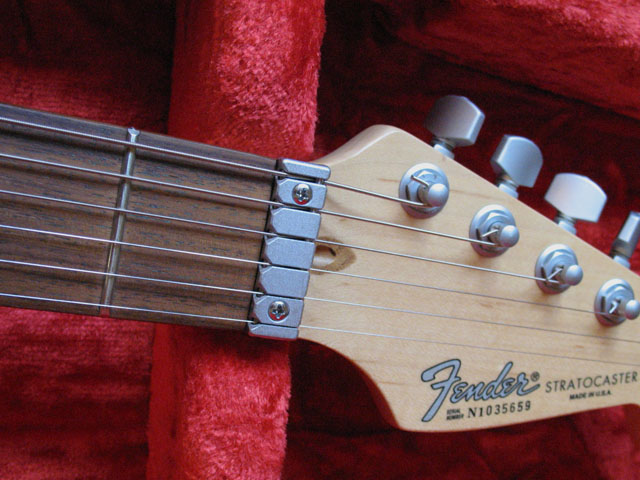
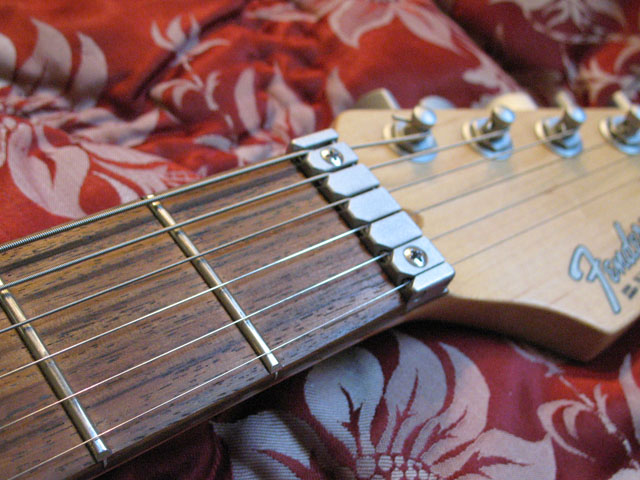
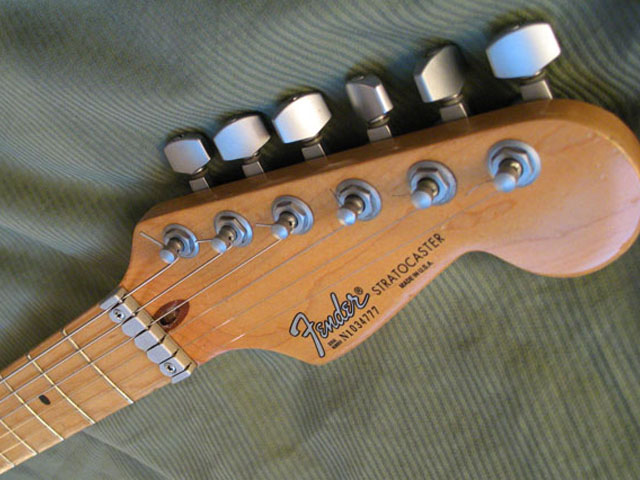
The history behind the development of the Stratocaster Plus Series is quite interesting. We will discuss this in depth in a bit. As mentioned, the Series was going to be the first Fender Strats with the new Gold Lace Sensor pickups and the premier "roller-nut" designed by an English chap by the name of Trevor Wilkinson. By the way, when Trevor finally patented his roller nut, he was living in Australia! He later moved to the US and over the years worked with a number of guitar companies, and was responsible for many creative designs seen on guitars today. As you look at the Yellow Plus below you will see the very first generation of this roller nut (we will discuss more about these nuts later!) This nut was design to reduce the friction at the nut when using the tremolo. Locking tuners were also part of the Plus Series. The first locking tuners on the Plus' were the Sperzel, then later Schaller.
There has always been a mystery surrounding the creation of the Fender Strat Plus series. How did they come about? And is it true the Jeff Beck had something to do with it's creation? The true account behind what happened is fascinating. Here is what happened! Sometime in spring of 1986 Fender got a call from Jeff Beck asking about having a special guitar built for an upcoming tour in Japan. He had some specifics—it needed to be a 1962 Vintage style Stratocaster painted in the same yellow color as the 1932 Ford hotrod coupe featured in the movie American Graffiti. Jeff has an obsession with this little "deuce" couple and even owned a replica. Fender "corporates" seized the opportunity to try to talk Jeff into having a namesake (signature) Stratocaster model, so the story goes. Things turned a bit complicated—so let's see what really happened as the events unraveled.
In order to get the facts behind this story straight, I contacted George Blanda, the man who built the prototype that would be presented to Jeff Beck as a his Signature model. This would become historically known as the Jeff Beck/Strat Plus prototype. George's personal history is brought out in more detail on this page when we discuss the mysterious BOB body on the very early Strat Plus guitars, but let's start with a introduction. This way you know this is no hearsay, but the story told by the man who actually made the Strat Plus design!!!!
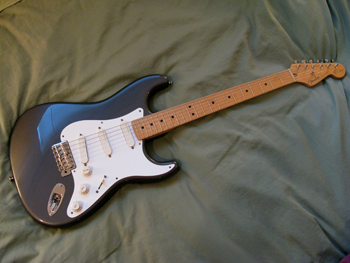
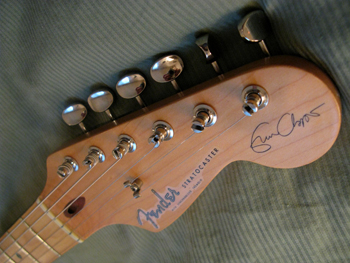
In 1986, George Blanda was hired to get Fender’s Custom Shop up and running and was given the title, “Senior Design Engineer.” He was responsible for much of the design of the “new” American Standard Strats that were released that same year. As Fender started branching out with Signature model guitars, he ended up building three prototype models for Eric Clapton, using the new Lace Sensor pickups. One was finished in Torino Red and the other two in Pewter Grey Metallic. (Side note: all were used in the "Prince Trust Live Aid,” "Live in Montreux" and "Eric Clapton and friends Live 1986" DVDs from 1986. See Eric, wearing a red shirt, playing the Torino Red Prototype in 1986 in Bermingham, UK. (Lower left).
Above you will see in (2nd from the left) a picture George right after he was hired at Fender. The third picture from the left shows him in the lower center. Behind him to the left is John Page of Fender Custom Shop fame and now owner of John Page guitars. Behind John to the left in the red shirt is Dan Smith, another Fender icon, the man who helped turn Fender's failing reputation around by bringing higher standards to the company. The picture to the far right is a more current picture of George. I asked him about Jeff Beck and how he was connected with the Strat Plus advent. I also wanted to see if he knew about the curious picture of Bruce Bolen, head of sales at Fender at the time, standing next to Dan Smith, holding what looked like a Strat Plus Prototype! This picture was found in the the May, 1987 issue of a British magazine called the Guitarist. Below are some picts from the magazine and the guitar in question. I thought it was interesting that this Graffiti Yellow Strat in the picture, which had to be built before May of 1987, had a FULL Wilkinson nut, Lace Sensor pickups, the new 2-point American Standard bridge, and what looked like Sperzel locking tuners. Check it out! (below)
Here is what George Blanda had to say about that guitar: "Hey Xhefri, the yellow guitar shown is the instrument (one of one built by me) that has been identified and mis-identified as the Strat Plus prototype/Jeff Beck prototype. The short version is that this was built as a prototype for the proposed Jeff Beck Signature model. Jeff decided not to do a Signature model (then later changed his mind) and the guitar was returned to Fender. It had many of the features that would appear on the future Strat Plus which was still being developed and thus, by default, became the Strat Plus prototype, well almost!"
But George did not stop here. He want on to explain how the whole Signature Series came about and how it all tied together with the Strat Plus. He also gives us a clear time frame for these events: "Sometime in spring of 1986 we got a call from Jeff Beck asking about guitars for an upcoming tour in Japan. This was just a few months after Bill Schultz and Dan Smith attended the Hank Marvin presentation (seen in the black and white pictures) and just a few months after I started at Fender. The Hank Marvin presentation (Marvin’s Stratocaster was reputed to be the 1st one in England, brought from the US by his manager) is where the 1st discussions of the Artist Signature Series got started between Schultz, Smith, and the guests as shown in the picture in the article. BACK ROW: Hal Lindes, Dan Smith, Bill Schultz, Jeff Beck, David Gilmour. FRONT ROW: Stuart Adamson, Eric Clapton, Hank Marvin, Richard Thompson, and off camera Steve Hackett, Pete Townsend and Gary Moore!
"Jeff’s main request was for a really huge neck and for the guitar to be yellow, the exact yellow of the deuce coupe in the movie American Graffiti. There was discussion about what new features Jeff would be most interested in seeing, so about 5 or 6 yellow guitars were made—everything from a 62 Strat reissue in yellow to a high-tech Japanese Fender Strat called a 5700—and everything in-between. Jeff ended up taking the ’62 re-issue with an oversize raw wood neck. Our thought was that we would carve it down on the spot to Jeff’s exact liking. Instead, he wanted it just as it was and wanted to take it unfinished. Since it was going to Japan in summer, Dan convinced him to let us take it back and put a coat of sealer on it. This was the guitar used on the Jeff Beck / Jann Hammer tour in Japan in summer of 1986. (See Jeff playing that guitar below).
"This was occurring at the same time that we were developing the Clapton, American Standard Strat, and Strat Plus with all the attendant components. It was a chaotic situation. The first American Standard Strat prototype had been scrounged together (by me) from modified and completely hand-made parts and shipped immediately to Europe for a presentation (long story) and was promptly lost! A second replacement was hastily made and immediately sent over. After that presentation the guitar was returned. By this time Dan and Jeff had come up with a rough concept of a Jeff Beck Signature model so one of the prototype Am Standard tremolos was taken off one of the returned guitars and put on the proposed Jeff Beck guitar. This instrument, which was “Graffiti Yellow” was from the original batch of bodies for the Japan tour, had a huge neck with Sperzel locking tuners, and a Wilkinson roller nut.!!!!
"We had asked Trev Wilkinson to modify his existing roller nut to include a second set of rollers in back to put down-tension on the strings. The 1st version Wilkinson had 6 rollers in back and a block-like housing. The angled, split-nut version with 3 rollers in back came later (another long story). The Beck guitar also had mock-up Lace Sensors. We were working with Don Lace to fully develop the Lace Sensors but we weren’t there yet. The mock-up pickups were actually Schaller humbucker bobbins stacked up inside Mustang pickup covers. These were also used in the first 4 Clapton prototypes (which Eric recorded and toured with for almost 2 years). The neck also had an early version of a wipe-on finish that we had not yet mastered. It looked and felt great when we first did it. This guitar was shipped to Mr. Beck to evaluate.
"In the next few weeks the guitar came back partly because of finish problems on the neck. There were discussions about future improvements and we were starting to receive production parts from our sources. The neck on the guitar was re-finished, real Lace Sensors were installed and at least some of the American Std. tremolo parts were now tooled up. I believe the guitar still had the handmade bridge saddles. This is where things get fuzzy. I believe that this version of the guitar was also shipped to Jeff Beck. Right around this time is when he decided against having a Signature model. The guitar was returned for a second time or possibly never left. In either case, this guitar was floating around the Fender offices. There were still many components being considered for the future Strat Plus model and it was becoming something of a never-ending quest. Around this same time, several factors came together that dictated that the Strat Plus be finalized. My memory is that during a meeting Bruce Bolen held up the guitar and said, 'Here is our Strat Plus right here, it has everything it needs.' Everyone sort of went oh yeah, it is what it needs to be!
"The guitar in the article is the 2nd incarnation Beck prototype, which by the time of the article, was being called the 'Strat Plus'. I know for sure that we never duplicated the highly saturated yellow color of the 8-10 original proposed Beck bodies, even though the eventual color was still called Graffiti Yellow. The body on this guitar is definitely from that batch. According to the article, Bruce and Dan took it to Nomis (Fender’s Artist Relations center in London) about 1 year after the Hank Marvin presentation. Their trip was probably around the time of the Frankfort Musik Messe (European NAMM type show in March). The article was in the May 1987 issue, probably a couple months after the interview. By then the American Standard Strat had been released and was in production, Clapton was touring with his prototypes, and the process of gearing up for the Strat Plus was beginning. I’d forgotten that John and Michael built the Strat Plus protostypes for NAMM and that they were introduced that summer."
Below one can see the Fender Custom Shop log when two Strat Plus prototype guitars were made by John Page and Michael Steven, as George pointed out—one in Surf Green and the other in Grafitti Yellow, both headed to the 1987 NAMM show. Some of the parts, such as the bodies and the unfinished necks came off the "line" which means they came out of the same stock the production model of the new American Standard Strats came from. Then those parts were taken to the Custom Shop, where they were hand finished and assembled, using the “Plus” features, such as the split Wilkinson Roller Nut, Gold Lace Sensors, and Sperzel Locking tuners. It is interesting to note, after looking at John Page's Custom Shop work log, that these two Strat Plus' were guitars # 4 and #5 to come out of Custom Shop! WOW!
What I find interesting is, even though Jeff Beck at first turned down having a signature guitar in his name with his specs, he went on to own and play Strat Plus guitars! In the pictures below you can see him playing early model Strat Plus guitars. On his tour with Stevie Ray Vaughan in 1989, he has what looked like a Midnight Blue Strat Plus - a color that was not offered by Fender till 1990. If you look in the picture below (middle) you will see Jeff playing one of his favorite colors in a Surf Green Strat Plus. That was going to be a color pick for his Signature Strats.... He also played a Bahama Green Strat Plus which can be seen in a music video entitled "Throwaway" with Mick Jagger filmed at the Country Club in L.A. in late 1987. (See picture below to the right). We will talk about the legendary Bahama Green Plus' later. I was told by George Blanda that he borrowed that guitar from Fender special for the shoot and that Dan Smith kept that guitar in his office for many years afterward!
Below the picts is a short video of Jeff playing a 1988 Surf Green Strat Plus Live at Arsenio Hall TV Show- December 4th, 1989 and then a clip of him and Stevie Ray Vaughn playing I'm Going down. Here is the odd thing, even though he had his own Signature guitar from 1991 onward, he rarely played them live (at least the Version 1 models). He was always seen with a Strat Plus and then later the V2 Signature guitars, that were custom built for him using the Fender noiseless pickups and a slimmer neck. Speaking of necks, when they fir hit the market in 1991 they had super fat necks coming in at .950 @ 1st fret to .990 @ 12th. In 1992 they came down a little @ .900 at the 1st fret. Then in 1994 it was .900 1st fret to .960 12th fret and stayed that way through to 1999. So these one still has the famous Bass Ball Bat neck! Good for big hands. Just not as huge as the 1992-1994 models. Then when the Version 2 Becks came out, the necks became more like an American Standard.
Now to the Jeff Beck signature models below! So yes! He did finally accept Fender's offer to build his own signaure guitar, that was a spin-off of the Strat Plus. And oddly enough, he NEVER chose Graffiti Yellow as one of his colors! AND...Here is the MYTH! So many times I have seen people try to sell a Grafitti Yellow Strat Plus on Reverb or eBay claiming it was a Jeff Beck prototype! There never was a prototype on the market!!!Only the "good old" Strat Plus in Grafitti Yellow!
In 1990 Jeff Beck took up Fender's offer and they released the Jeff Beck Signature guitar which was based on the Strat Plus. Amazingly, it did not come in Graffiti Yellow! The Jeff Beck Signature Strat (not counting the Custom shop models) was released in Midnight Purple, Surf Green and Vintage White!The Midnight Purple is very close to the vintage color used by Fender in the 1960's called Burgundy Mist. These used 4 Gold Lace Sensors pickups with a split-button that turned off the rear Gold Lace Sensor pickup in the Gold Dually in the bridge. This Version 1 JB Strat also had a very thick, fat neck—sometimes called the, "bass ball bat neck."
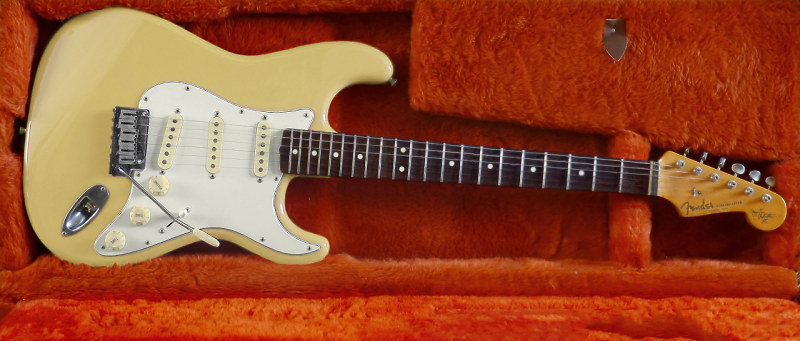
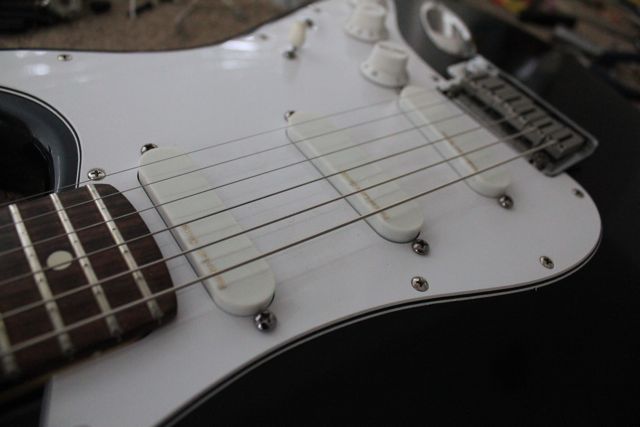
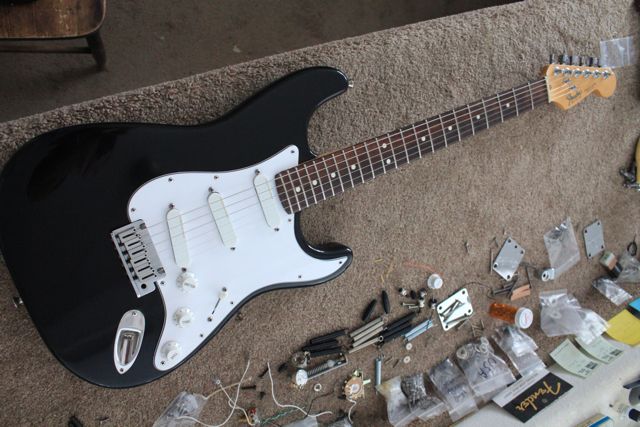
Here is a sample of one of those early 1988Graffiti Yellow Strat Plus' with a Rosewood fretboard. Many of these also came with Maple necks. There is a 1991 with a maple neck posted farther down on this page. Most of these Graffiti Yellow Plus' were sold between late 1987 through 1991 and they WERE NOT Jeff Beck prototype! LOL!!!! The Standard Strat Plus came with 3 Gold Lace Sensor pickups, which were designed to give a 50's single coil sound, with a lot of chime and even bell like tones. Crisp and quiet, they really do perform like a 1950's pickup, but with no hum! Some Graffiti Yellow's in 1989 came out in the Version I Deluxe models sporting Silver/Silver/Blue Lace Sensor pickups. Very collectable!
This Graffiti Yellow Plus was late enough to sporthas the full Wilkinson roller nut. Many of the last 1987s into elary 1988 had the Split Wilkinson nut. The first Plus' will have an E4XXXXX serial number, (as shown above, we will discuss later in this page) indicating they are from 1984. Truth is, it is a 1987 (and some early 1988s),as production for the Plus Series started in mid 1987. Odd thing is, when Fender introduced the the Plus Deluxe in 1989, they used the Split nut again, while the Standard models were already using the full-nut.
Below is an original Fender advertisement from 1988 for the Strat Plus guitar. Note the variations in color for the Surf Green. I have seen this color be a milky green to a darker green, looking even a bit like Sea Foam Green. (We will talk about the color confusion a little later.)
One thing is for sure—even though these guitars vary, all Standard Plus guitars had: locking tuners, roller nuts (which means they will NOT have string trees, and for some reason people put them on, thus lowering the value of the guitar!), an American two-point floating bridge, with strings going through the body, a TBX lower tone control, swimming pool route and Lace Sensor pickups. I have seen American Strats, or pieced together guitars (frankinstrats) with Lace Sensors that people try to pawn off as a Plus on eBay and other places. So beware!
Here is another interesting advertisement that came out in 1995 about the Strat Plus series:
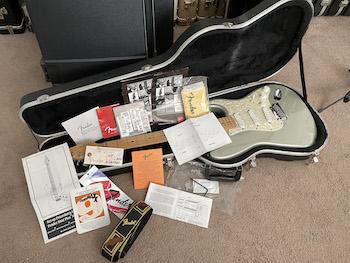
Here is the Holy Grail of Strat Plus guitars—a 1987 Shell Pink Strat Plus. This guitar is mint—in an unplayed condition. It was owned by a former lawyer who worked for Fender. I bought it from a dealer who got it from his estate sale after he passed away. The strings, I am certain, were the original from 87, as they were rusty and hard to pull through the nut. I have owned 100's of Strat Plus', as well as helping 100s of people to identify their guitars. Shell Pink was not even listed as an available color from Fender in 1987 (but historically it was color code #56). So this is a one-off Shell Pink Strat Plus that must have been custom made for the lawyer or it was a proto-type. It is the ONLY one have ever seen! The color is like Dusty Rose, but has a fine metallic in it much like a Candy Apple Pink.
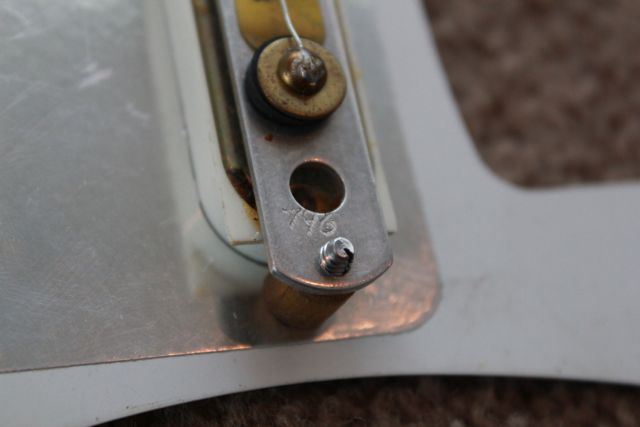
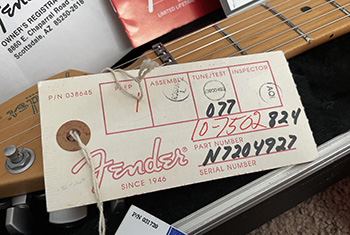
This is also the oldest Strat Plus I have come across, as of yet. It came off the assembly-line on July 27th, 1987! This was only one month after John Page made the first two Strat Plus' in Fender's "Custom Shop" on June 22nd of 1987 to be taken to NAMM!!! (Scroll up to see John's Custom Shop work log.) The backs of the pickups do not even have any stickers, carrying the part or patent numbers. Instead they are hand scribed (most likely done by Jeff Lace when in high school). The numbers on the pickups indicate the order which they were manufactured! These are: #58, #72, and #94, so these were some of the earliest to came from Lace Music Company. The soldering is very interesting, almost like they were trying to decide how to wire them up. Has the big fat resistor on the TBX. Another interesting feature, beside the split Wilkinson nut, is the starred Sperzil locking tuners. Each tuner locking knob has a Star on them, indicating "very early"! This has the BOB body with the screw-in "wood-screw" bridge posts and the pointed control route in the body. (More on the BOB bodies down farther on this page) Only a few earliest BOBs had that and was changed to have the pointy part of the route "cut-off" to make placing the wired pickguard on the body easier. Came with the original Fender rectangular case with hang tag and even a 1987 Strat Plus owners brochure and American Standard brochure.
This is another one of those early Strat Plus guitars which rolled off the newly organized factory in Corona, California in 1987. A very sweet Candy Apple Red (CAR) with a outstanding Maple neck, that is dead mint. A find like this is very rare and this one sports a serial number that is very low which starts with a E44xxxx.
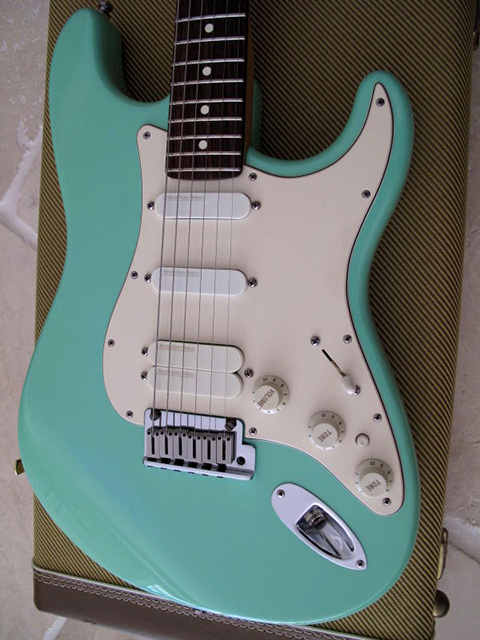
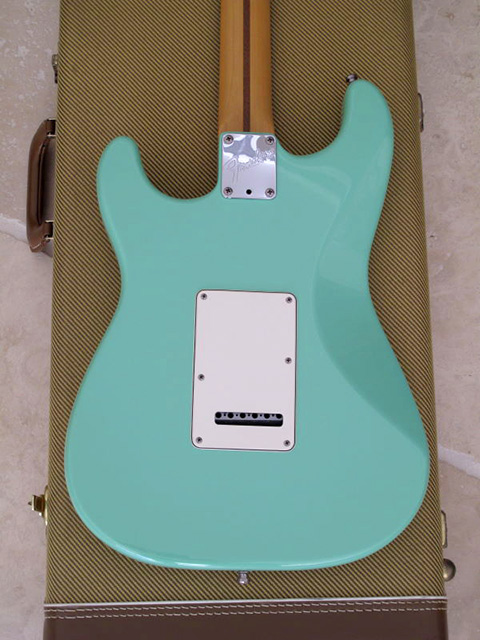
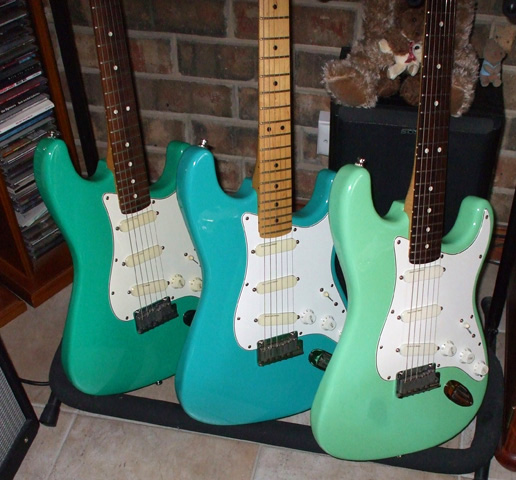
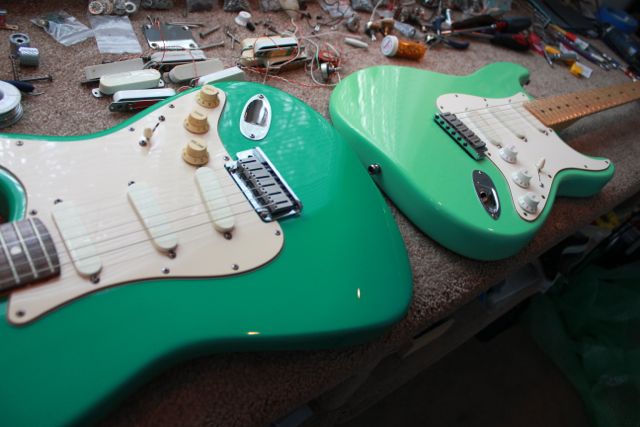
This is a dead mint Surf Green Strat Plus also with a very sweet Maple Neck. Again, this has the split nut just like the CAR 87 Plus' above. This color is another controversial color, due to the fact that Fender's mix was not always the same and the clear coats on these yellow. In fact if you look on this page you will see some Surf Green Plus' that are a lighter milky green and some that are like this one, with a richer color. This is not to be confused with Sea Foam Green with is much brighter and blue-greener in color (and was not used on the Plus series). Or Bahama Green which is much richer and has a tad bit darker green, yet not as blue/green as Taos Turquoise. I contrast these colors later on this page.
Check out the neck manufacture date which is penciled on the butt end of the neck—it reads 12/4/87. This guitar is sweet and plays wonderful. The E4xxxx 1987-88 Plus' have been going up in value. Also the vintage colors such as Surf Green, Graffiti Yellow, Shell Pink, Dusty Rose, Fiesta Red, Bahama Green, and Taos Turquoise are harder to find and are quite collectible. I list the rarer colors in the Color Confusion section of this page.
Now to the bodies—the AMERICAN STANDARD STRATS and STRAT PLUS guitars used the EXACT BODY design from 1987 to 1998 with the exception of some early models having the Version 1 "BOB" bodies, which I talk about down a little farther in this section. These were made in 1986 through 1987. I have taken apart a Strat Plus and have foundAMSTAD stamped in the neck socket. This means the body was originally slated to be used on an American Standard Strat, but for some reason was made into a Strat Plus. Does it really matter? Well, maybe a little! LOL! I was talking with Jack Schwarz, who worked at Fender for many years and he told me the bodies we graded and the nicer ones, A-bodies, went to the Strat Plus line and the B-bodies went to the American Standard line. The American Standard Strats came in a few colors not offered in the Plus series and vice versa. And some "choice" bodies and colors were used on the Plus' as they were higher-end guitars, especially when the Strat Plus Deluxe was introduced.
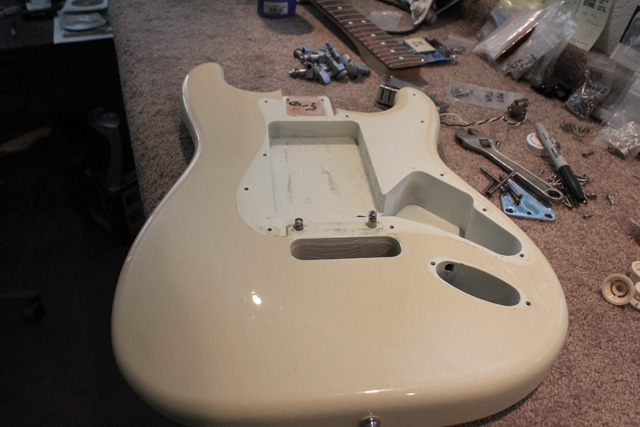
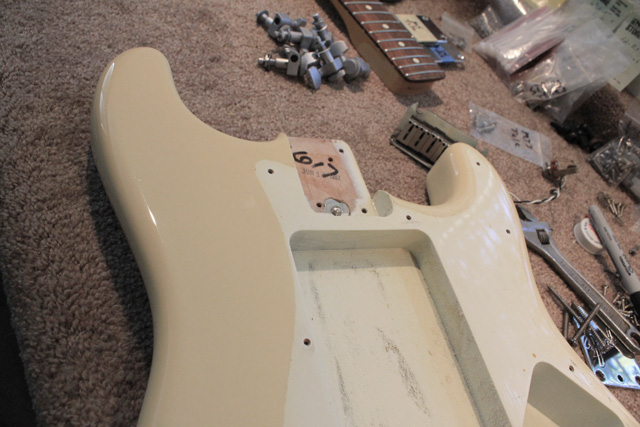
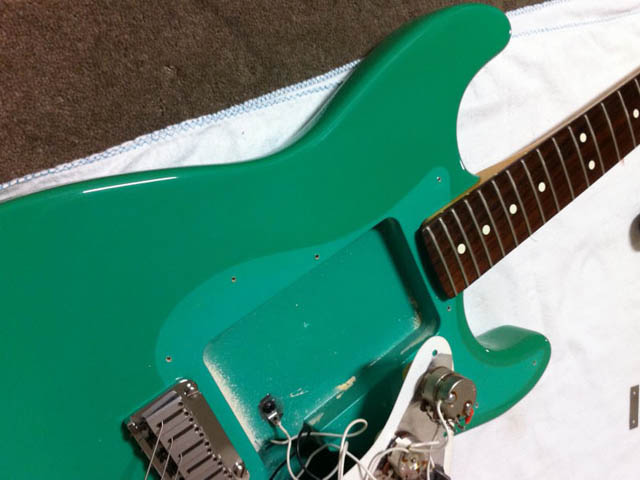
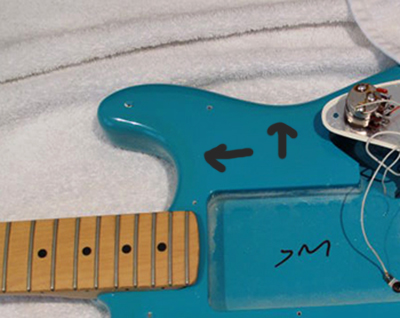
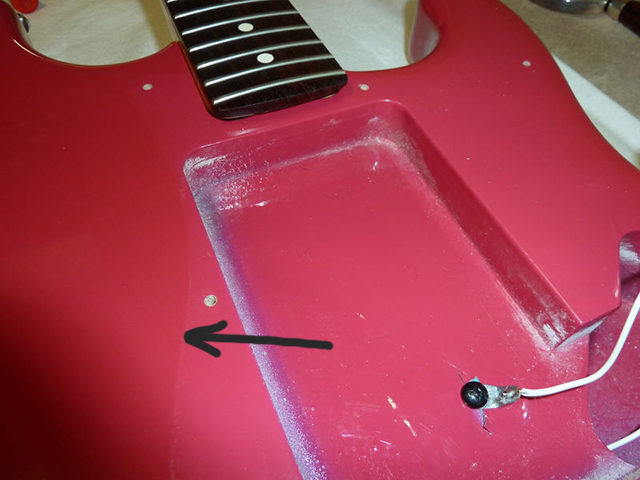
All Strat Plus’ have the “swimming pool” route in the body, no exceptions! Here is another interesting thing about the first routes in the new American Standard Strats and the first Strat Plus'. There was a triangular leg between the control cavity and the swimming pool route. These were on all the "BOB" bodies. George Blanda told me that little narrow place was hard to get the wires to lay down into the cavity while the guitar was being assembled. SEE ABOVE - early 87 body compared to a 88 body to the right. The R&D guys decided to cut off that trangluar piece to make things easier. Note that the route cavity is first painted with a black conductive paint to keep out unwanted hum and pickup noise. Most of the time Fender placed a piece of tape over one small spot in the lower edge of the route to expose this conductive paint while the finish was being applied. Every Strat Plus will have a black ground screw in this area connecting a wire to the pickup's ground. Side note: I have also seen bodies that were painted one color and then painted again another color by Fender. I could tell by looking in the route (I talk more about paint later). For example: the Blue Pearl Dust above had Arctic White under one of the quality control stickers! Some burst Plus' such as the Brown Sunburst above are solid Alder, while other bursts, such as the transparent Blue Burst above, the will have Ash caps laminated front and back on Alder, thus the dark burst edging is used to cover up the lamination seams.
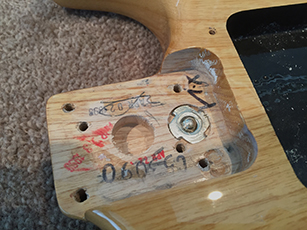
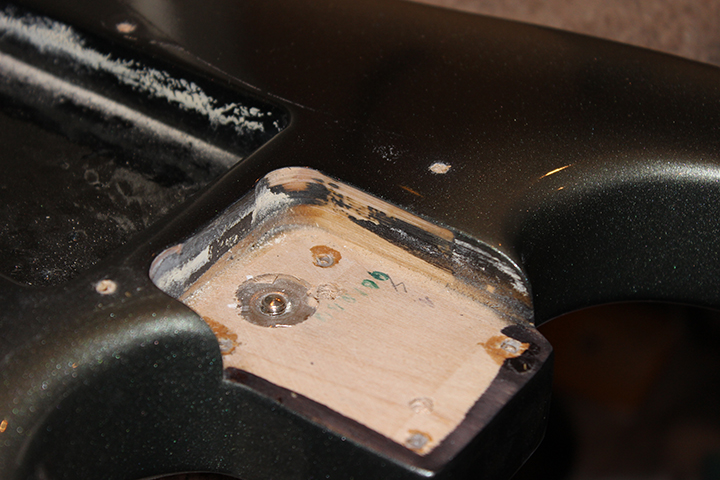
I get asked quite often about the MS or the SW (depending on which way you turn the body!) inside the body route on 1987 - 1990 Strat Plus guitars. I have seen these initials inside many bodies, and never gave it much thought. Then I got curious and asked John Page, one of the former employees at Fender, who was around back in those days. He was one of the guys that started Fender's Custom Shop. At first he did not have a clue, or at least didn't remember anything about this mysterious autograph inside these guitars. Then a while later he got back to me and said, “I just had a flash... the final line supervisor's name was Mike Summers. They were probably bodies that someone questioned regarding QA standards, probably a fit of finish question. Mike probably initialed it to override and approve it's usage. At least that what I would guess. It took me awhile to remember his name, now it makes sense.”
Stress Cracks!No, I am not talking about cracking jokes when you're all stressed out! One common problem you can find on an old Strat Plus, or an American Standard Strat, are hairline stress cracks in the neck sockets. Sometimes these are so faint you can barely see them - maybe only being 2 mm long. Other times they can be big, gaping cracks that go right down into the wood. Big cracks significantly lower the value of the guitar. You can see examples above. A small, 1-3 mm long hairline finish crack will not hurt anything in most cases and should not be entirely frowned upon. Some of these can be there for years and never cause a problem. These cracks are caused by different things. One is the neck socket was really tight when the guitar was assembled. Then if the guitar ended up in a humid climate, the body could swell as it takes on moisture, causing slight cracks in the finish. It has to do with the neck and body not expanding and contracting at the same rate. Tight neck sockets are nice for good tone, but too tight...well I think you get the point. Other cracks, usually the Mother of all Cracks, is caused by the guitar falling over and the neck or headstock hitting something. When Gibson's do that they snap off the headstock, while a Strat will crack the neck sockets on the body! This is the weak spot on a Strat, unfortunately. The wood there is thin and is cut at a 90 degree angle. Even with the guitar in the case and having it slam flat on the floor could cause these cracks. No wise cracks here! So don't let your guitar fall over, even while in the case!
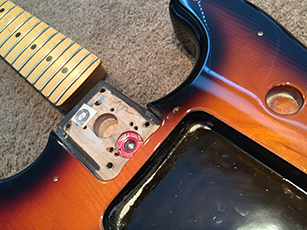
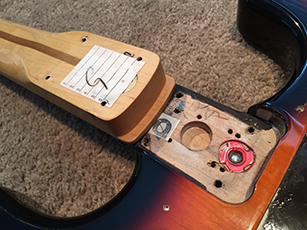
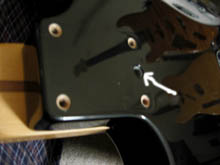
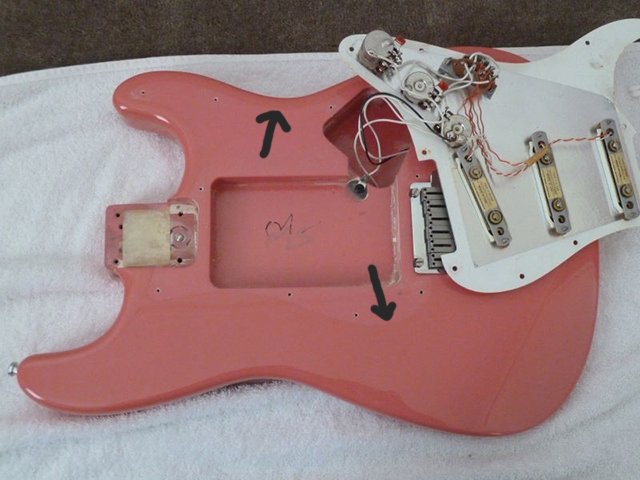
Here is an interesting little tidbit about extra holes found in some bodies (see picts below): Toward the end of 1997 Fender (I am guessing after August of that year) changed their jigs for holding the bodies for the manufacturing process. So while the Strat Plus body retained the all the features prior to late 1997, there were 2 noticeable "extra" holes used to hold the body while it was being produced. You will find these holes located: 1) in the neck socket and 2) below the swimming pool route. This can be handy to know if someone tries to sell you Strat Plus stating it is older then late 1996. But be aware, like a lot of things at Fender, there were, for a while both types of bodies being used till the older ones were gone! Or there is the possibility that the neck or body were swapped out at one time.
It is a Poplar Question!
Most of the Strat Plus' are made with Alder,with the exception of the natural solid Ash models. As mentioned earlier, some models have Ash caps laminated on Alder with a transparent burst finish. In 1990-1993 some Ash caps were laminated over Poplar as well. The "burst" is used around the edges to hide the lamination seam. I have found a few solid Ash bodies that were used to make these bursts as well. I have been told that sometimes the solid Ash body would not meet quality specifications to be used in a natural finish. Some where even painted in a solid color.
Poplar wood was also used on some bodies between 1990-1993. According to an interview with Dan Smith and George Blanda, two long time Fender employees, in The Fender American Standard Stratocaster:An Excerpt fromThe Stratocaster Chronicles by Tom Wheeler, it states (see below) about Poplar wood being used on some Fender guitars from 1990 - 1993/94.
QUESTION: Did Fender ever use it [Poplar] on their higher end USA guitars, such as the Strat Plus and the Strat Plus Deluxe back in 1990-1993???
Dan Smith: "For a while, the environmentalists didn't want us cutting alder. There was an endangered species controversy, with some logging restrictions up in Oregon, so we had to use poplar. Leo had used it on many guitars "— Musicmasters and others "— and we later used it for the Bullet guitars. It's a good wood. We used it on some American Standards in the early '90s. From the beginning, poplar was spec'd to be used on the American Standard as a substitute."
George Blanda: "All the Strat bodies were alder up until about 1990. When it got so hard to get alder, we were faced with either using poplar or not making guitars. There's a misconception that poplar is not a good tone wood. Actually, it's fine. James Burton actually specified it for his signature Tele in the late '80s, after trying a lot of different bodies. We never regarded poplar as a second-rate wood, but a lot of people preferred alder so when the restrictions eased, we were able to go back to alder in '93 or '94."
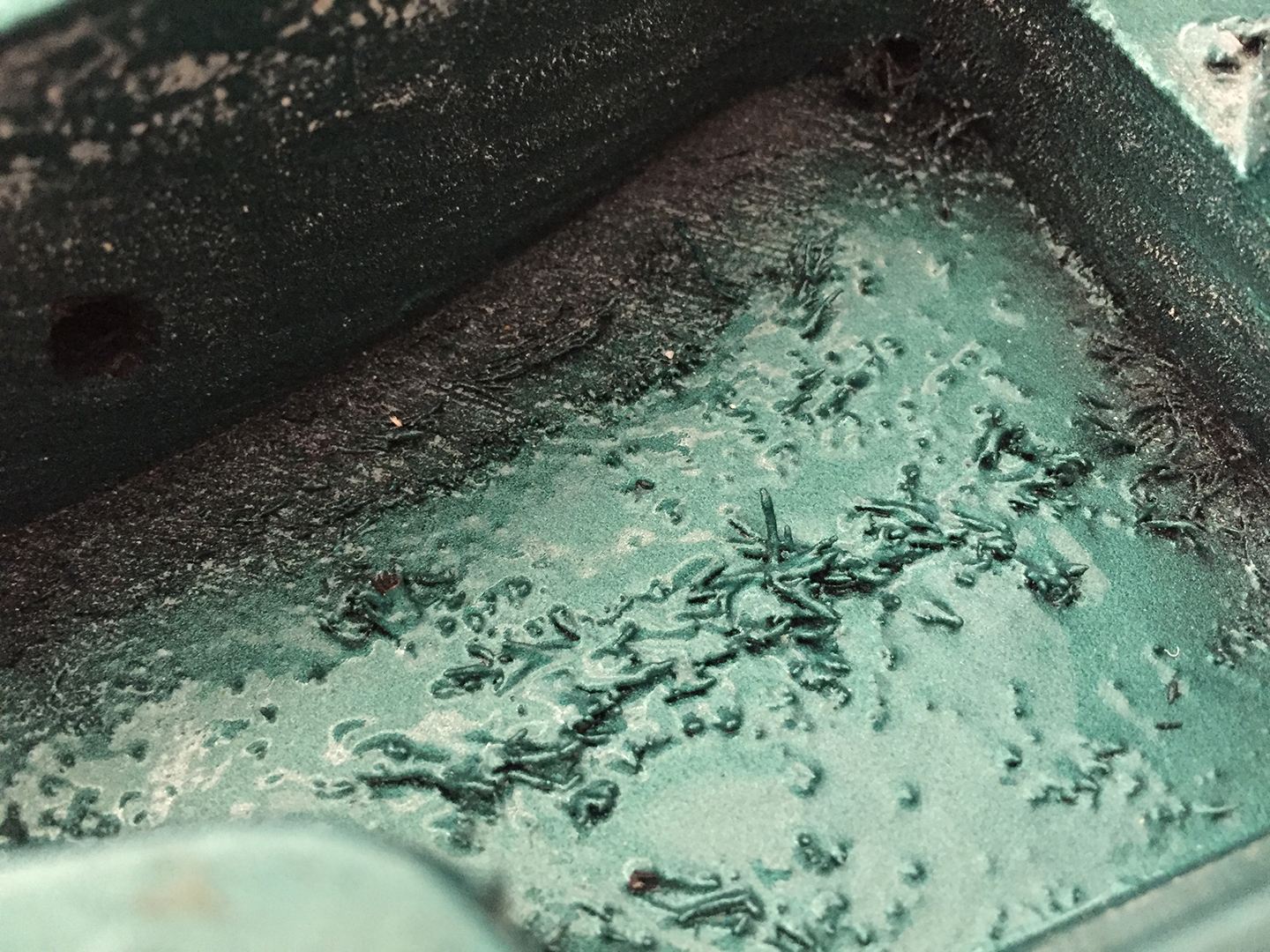
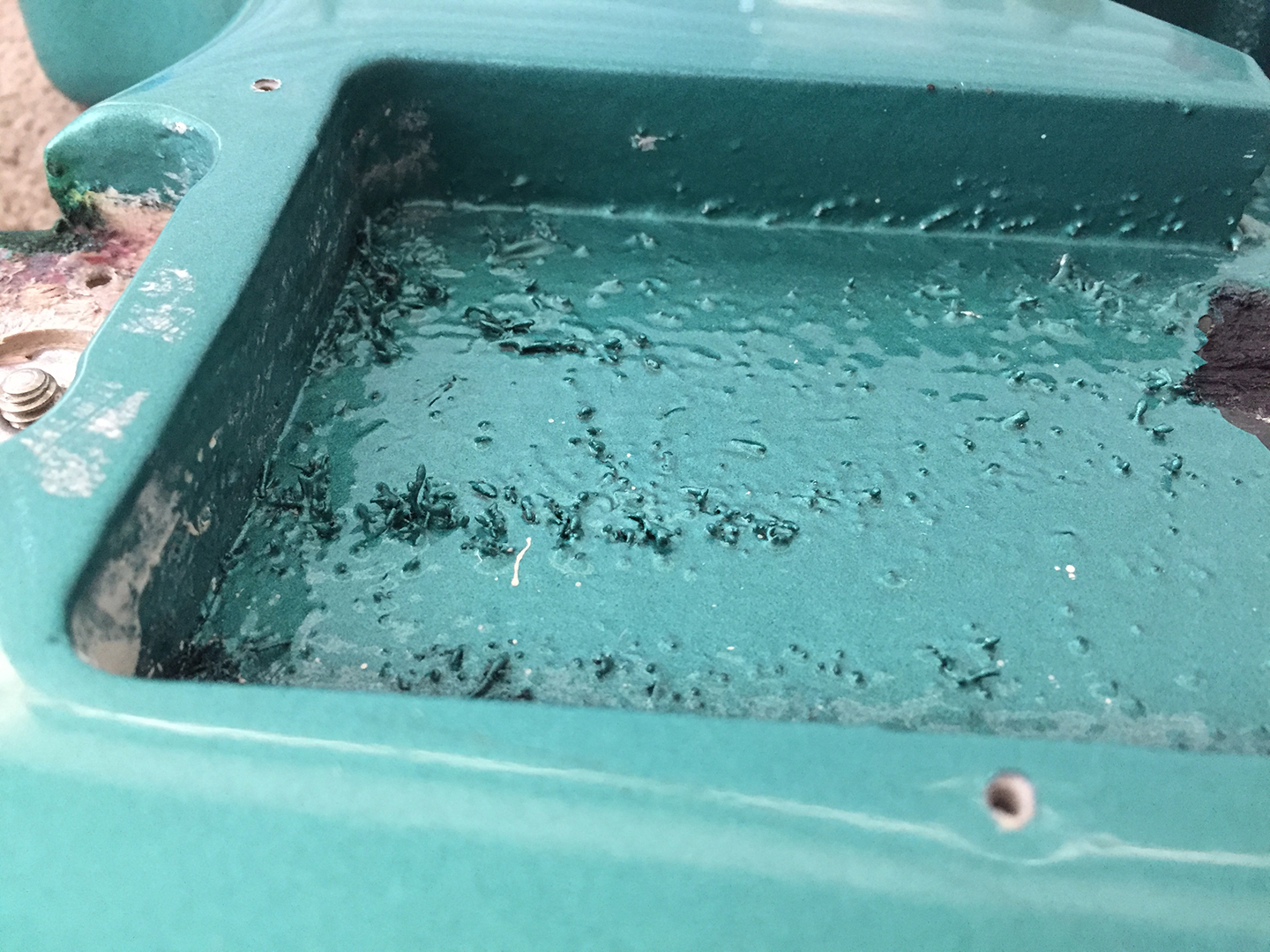
One way you can tell if you have a Poplar body is to look at the routing. Poplar is a stringy wood and when routed it does not clean up nicely like Alder or Ash, so there will often be fibers of wood sticking up through the finish in the routed areas. As an example, look at the pictures above of an early 1993 Caribbean Mist and you will see what I mean. Alder sometimes will have some fibers sticking up but nothing like this! That is Poplar! Frankly speaking, I agree with George Blanda, I really can not tell the difference between Poplar and Alder as far as "tone woods" go. In fact some pro player perfer Poplar over Alder and Ash.
”BOB” bodies? Strat Plus’? What the…??? You will want to keep reading becauseIF YOU HAVE A “BOB” BODY ON YOUR 87-EARLY 88 STRAT PLUS THEY ARE VERY RARE AND COLLECTABLE!
In November/December 1986 all the way through to the first month of 1988 (i.e., 1987) there was, what later would become, a mysterious and controversial “Bob” body that appeared on the “new” American Standard and a few Stratocaster Plus guitars. What did these short-lived bodies look like? And where did they come from? And what happened to them?
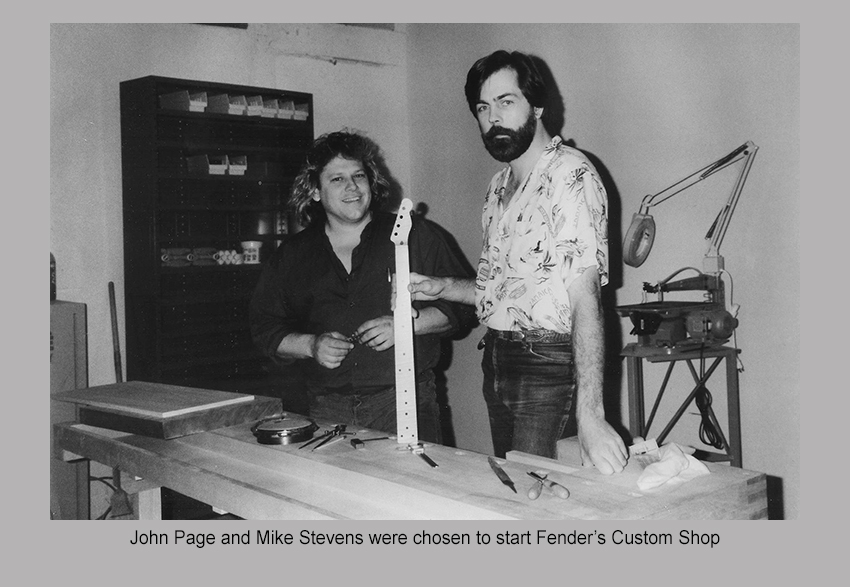
Somehow, someone surmised that these short-lived bodies had to be leftovers from the old Fender Fullerton plant. I, along with some people who helped give me information, even shared a whole explanation on why and how these bodies were left-over. I found out this was not the case. John Page, George Blanda, and Rob Schwarz were all working for Fender right at the start of the new Corona plant. John and George were hired by Fender, along with Mike Stevens, to start a Custom Shop division at Fender. These men were the ones responsible for the changes on the contours of the bodies as well as the designs. I communicated with all three to get the facts of what happened back in these “wild and woolly days” at Fender.
Leftover CBS Bodies?:When I asked John Page,about leftover bodies from the old Fullerton plant he stated, “There were absolutely no American Standard or Plus bodies that were made at the Fullerton plant! These guitars were not developed until after we were gone from there for over a year. The only bodies that MAY have been leftover would have been some of the vintage reissues. The American Standard wasn't designed until after we had already left Fullerton. I had left Fender for 11 months in 1986, and we left Fullerton the year before that."
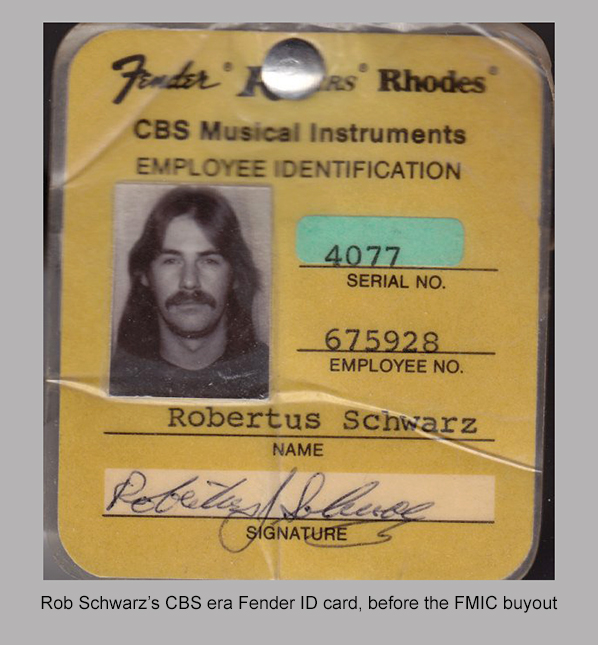
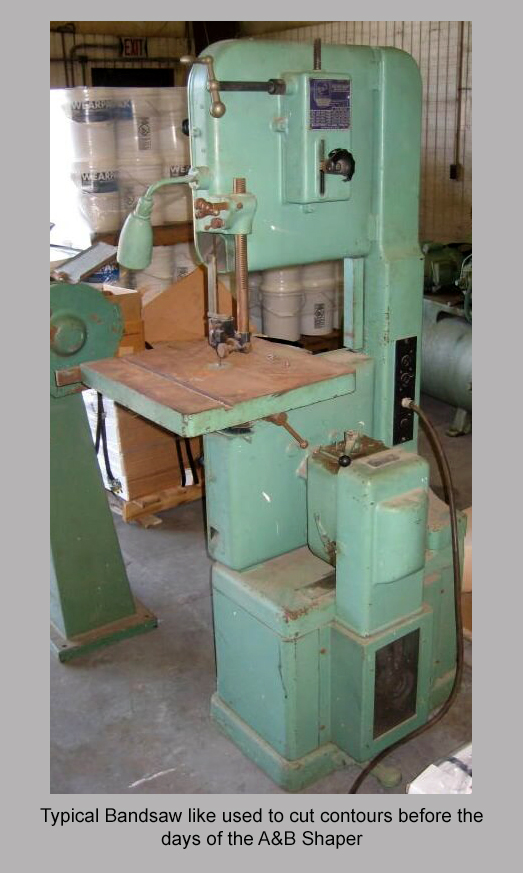
So what were these early bodies one finds on the first American Standards and a few early Strat Plus Stratocasters? And how did they come into being? Well, before we answer that, let’s take a look at how Strat bodies were shaped in the early 1980s, while Fender was still under CBS control. Then let’s take a look at what happened after the Fullerton plant was closed down and production moved to the Corona plant after the CBS buyout. Rob Schwarz, a 34+ year employee at Fender told me this story: “I started at CBS Fender Oct 17, 1980, in the woodshop — on the ‘body-line.’ I was on that line for about a year where, yep, we traced the contours on the bodies with a pressboard jig, and then cut the contours on a bandsaw. The Union ‘standard’ per hour was 150 bodies.
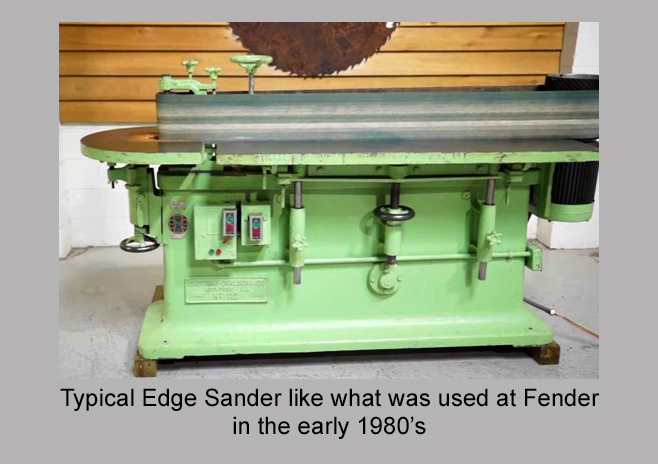
“We would receive the bodies out 300 at a time, I recall, on a rolling table about knee high and maybe 3 ft long. After completing the 300 on the band saw, we would bring them over to a large ‘edge sander’ which was about 10-12 ft long. I think that Union standard for the sander was 300 per hour (thus one table w/3 stacks of 100) (Please note he is saying this number was the total for all the guys working on the floor! Not individually.). It’s a bit difficult to cut 150 bodies an hour, so some workers would cut a ‘lesser’ contour and sand more off on the edge sander. Since in 1980 it was pretty easy to pass inconsistency through the inspectors, the contours varied greatly. From barely a contour, to a deep contour, depending entirely on the operator.
“I can tell you that the guitar’s shapes and weights were very inconsistent until Bill Schultz, Dan Smith, Bashar Darcazallie, and others, began their changes in 1982. The only ‘new machine’ related thing I remember is the neck router, that cut 6 at a time, that came in while I was still on the ‘body-line.’ I’m uncertain if any other machines were updated in the remaining 4 years, but I suspect not. When I began at Fender, the bodies were being roughly cut out, 3 at a time, in the NC router room. After that, the bodies came to the ‘body-line’ where several procedures were performed — rounding the edges, sanding machines, contour cutting and sanding, and the drilling of all the holes needed.”
So what Rob is pointing out, the bodies were inconsistently shaped back in the last few years of CBS, because they were cut and sanded by hand! As you might remember, Bill Schultz and Dan Smith were trying to bring CBS’s quality control up to a higher standard, as things faltered under CBS’s ownership. As mechanisms were put into place, contours started being more consistent.
CBS Buyout and the New American Standard Strat: In 1986, George Blanda was hired to try to get Fender’s Custom Shop up and running. Since that did not happen right away, his first gig consisted of working with Rob Schwarz, inspecting the Japanese Fender imports that were coming in, while the Corona plant was trying to get up to speed with their production. As the Custom Shop started to become a reality, he was given the title, “Senior Design Engineer.” He was responsible for the design of the “new” American Standard Strats and also built three prototype signature models, using Gold Lace Sensors, for Eric Clapton. One was finished in Torino Red and the other two in Pewter Grey Metallic. (Side note: all were used in the "Prince Trust Live Aid,” "Live in Montreux" and "Eric Clapton and friends Live 1986" DVDs from 1986.). George explained where some of the features of that design came from:
“There were two new lines introduced in 1982 (before I was hired), called ‘Standard’ and ‘Elite,’ which were newly designed from the ground up. Several features of the ‘new’ American Standard came from these, in particular the TBX tone control; the Bi-Flex truss rod, the pickups with reverse middle polarity and the EZ Glider string trees. Both of these models had a slightly modified Stratocaster shape compared to Vintage. On the American Standard we went back to the Vintage perimeter shape which we had at the time. John Page is correct that no American Standard bodies were ever made at CBS Fender.
“Regarding the contours, the CBS era Vintage Reissue Strats and ‘Standard and Elite’ Strats had the same body contours. These had a very round and even profile when viewed from the side. The top and back contour blended together along the side to make a continuous, even curve from front edge through the middle when the back contour turned back toward the bottom. This was by design and the A&B shaper that John Page describes was tooled up that way. When the first American Standards were built, starting in November/ December of 1986 (a few protos were done in summer of 1986), they were done exactly the same way. And yes, there were several ex-CBS employees who were used to making that shape, but it was actually intended to be that way."
So now we know where these “supposed” Fullerton bodies really originated! We have now renamed them “Bob” bodies, which I will explain in a moment. These bodies were used on the first “new” American Standard Strats and a few very early Strat Plus guitars. George clarified by saying, “These bodies used the CBS Fender contours identical to American Vintage Re-Issue Strats (AVRI), but with swimming pool route, 2-point tremolo and micro-tilt adjuster.
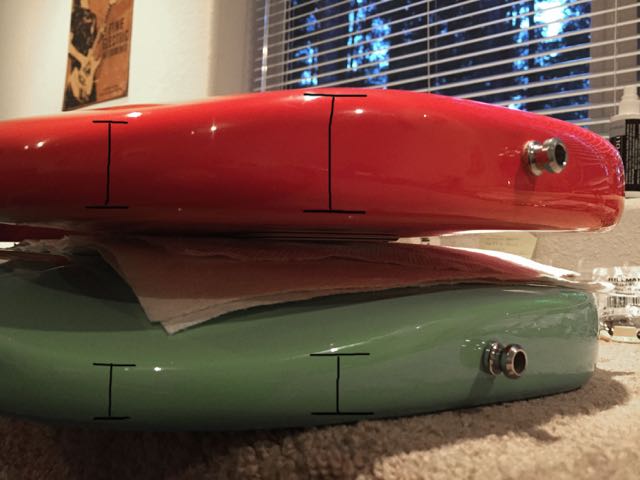
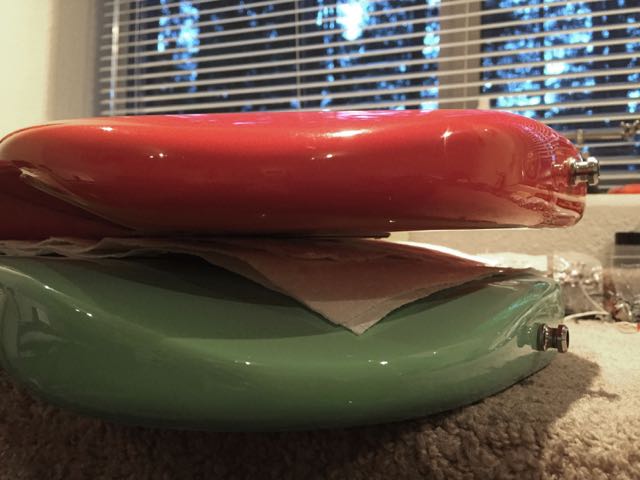
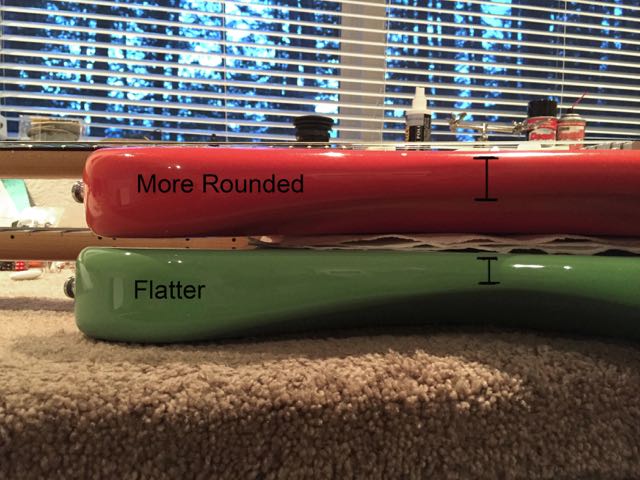
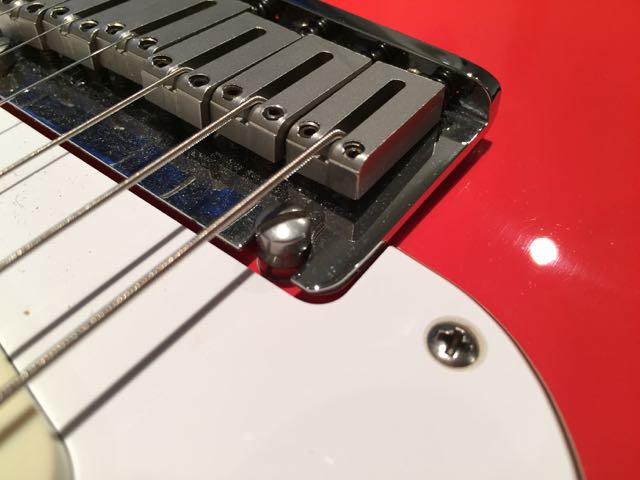
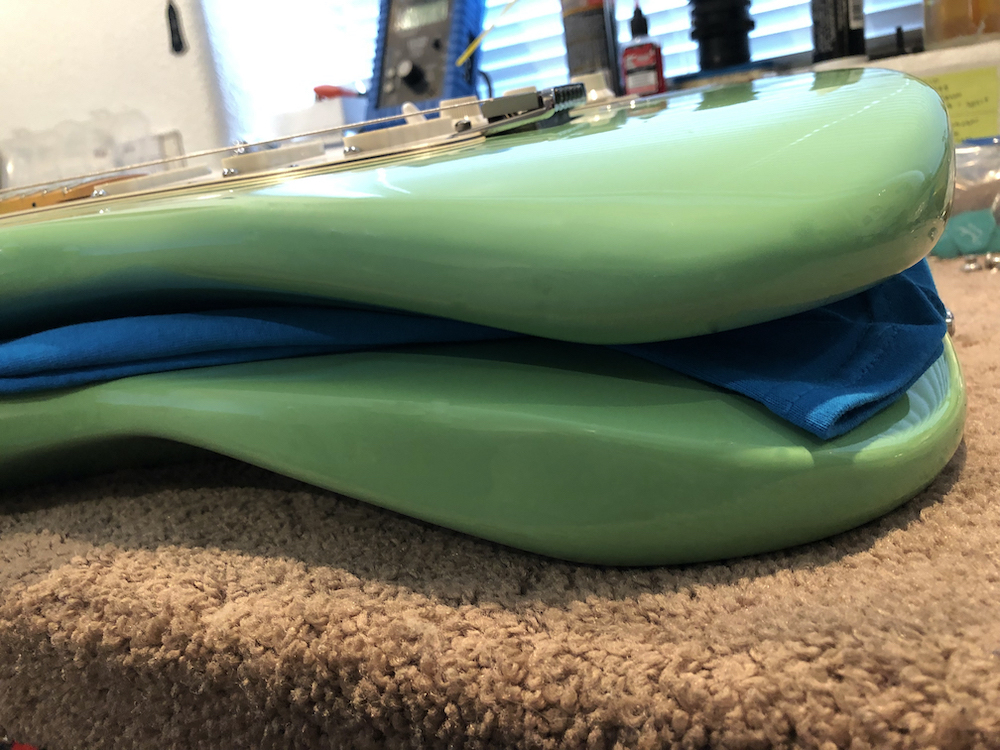
If you look at the pictures above, the 87 Plus body in Fiesta Red is a "BOB" contoured body. This is nearly the same shape as the old 1956 contours (more about that in a bit!)The 87 Surf Green Strat Plus body is the newer Corona contour (or what I call Corona Curves, love how that sounds!) Note the BOB body (Fiesta Red) has a much thicker cut on the arm bevel. In other words, the angle of the face of the guitar where your arm goes does not have such a sharp angle like on the Corona body. The BOB then quickly tapers to a thinner cut as you turn the body toward the top edge. Look at the middle upper picture and you will see how much thinner all along the top back edge compared to the Corona body, which is thicker and flat on top (top 3 picts). The tummy cut on the Corona (Surf Green) tapers down to a thinner edge in the middle while the BOB cut is rounder and fatter. Sounds confusing but the pictures tell the story!!! In my opinion, the Bob contours are nicer and more sexy (if I can say that). One other thing of interest is the bridge posts. On all the Bob bodies Fender used wood-screw type posts, which screwed directly into the wood. You will note that they have a more rounded head. These were later replaced (late 87, early 88) by the method of drilling a bigger hole and then pressing in a brass ferrule in which a flat topped bridge post was threaded into. If you look below you can get even a better understanding about the BOB verses the Corona bodies. The upper one is a Surf Green 87 BOB and the lower one is a Surf Green 88 Corona.
So if you have a Strat Plus with a “Bob” body, you have a rare first-run style that was changed early in 1988. Odd thing was, I have seen some of the newer Corona style bodies used in December of 1987, so there was a mix and match there for a while. As George pointed out, they had to use up their stock of Bob bodies while the new cuts were being introduced on the assembly line. Date stamps on necks and bodies could vary in the production process as well. But to find a Strat Plus with a “Bob” body is pretty rare, making it more collectible.
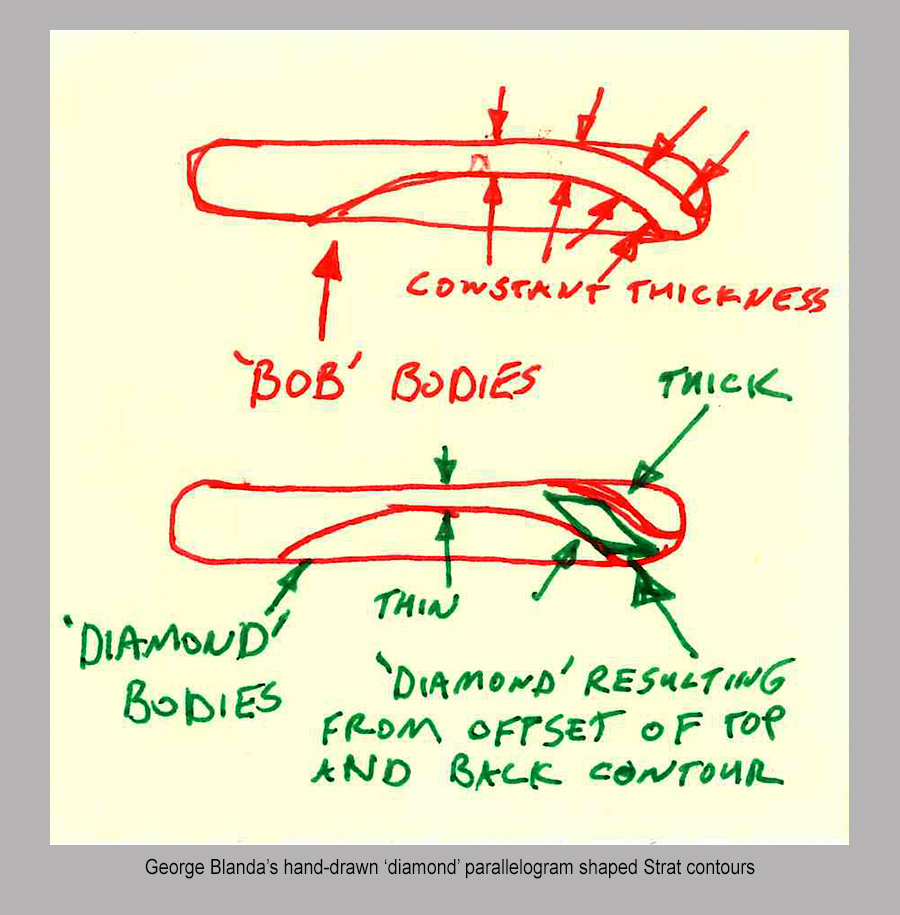
Corona Bodies — Why Were the "Bob" bodies Changed?: Most people that have a Strat Plus with a Corona body knows that the body has pretty flat side edges, making them look more blocky. (again see the comparison above.) John Page, explained, “The contours on the bodies were cut on a large shaper, called the A&B Shaper. It cut a bevel in the front and the back for the contours, and then they were sanded. This is what I remember, early in the Custom Shop, Mike Stevens and I were asked to work with Yngwie Malmsteen to create a signature Strat. He was VERY specific about having the 60's ‘diamond’ contour on his body, so we worked with the factory and had the A&B Shaper templates changed. We all liked that contour better, and it helped us dial in the vintage product closer to the originals as well.”
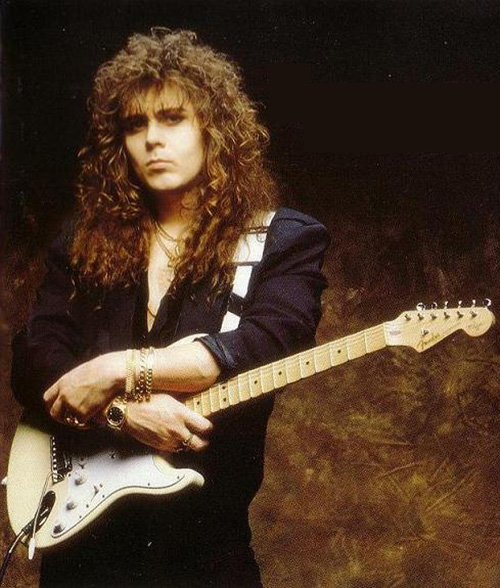
So the rounded CBS style “Bob” bodies were changed due to the request from Yngwie Malmsteen, and the American Standard and Strat Plus guitars kept that shape all through the rest of the Strat Plus era, and is still with the American Standard Strats today. George Blanda remembers it this way: “Yngwie Malmsteen is the one responsible for getting the ‘diamond’ pattern back onto Stratocasters.Dan Smith and I took him one of the first production American Standards when we were creating his soon-to-be Signature Strat. Dan and I started this project, but it was turned over to John Page and Michael Stevens right as the Custom Shop started. The contour was the first thing Yngwie pointed out that he wanted fixed on his model. He made the point that we should fix this on all Strats, and we did. This involved modifying the A&B shaper patterns, which took some time, and we had to work through the stock of bodies that we had just made. BTW, he liked the Am Std tremolo and used it on his Signature model for several years before going back to Vintage." (See Yngwie original 1988 Signature Strat above which used the American Standard type 2-point bridge.)
I had never heard of a 1960s “diamond” pattern before, so George explained and even drew me a diagram: “The ‘diamond’ refers to a parallelogram-shaped flat area on the side view of the contour. This is the result of an offset between the front and back contours.” Once you look at the diagram and then hold up your Strat Plus or American Standard Strat on edge, you will immediately understand what he is talking about!
George added, “The ’BOB’ bodies were the older, rounder, throwback to CBS Fender. The ‘diamond’ bodies are the flatter, squarer, ones still used today. The edge radius did eventually grow back to the vintage round style in the late 90s but the ‘diamond’ style contours remain.” And he also added this tidbit, “The square edges just kind of evolved in manufacturing (easier to make) and it was embraced by Marketing as an identifier for the line. The square-edged Jackson-style body radius was super hot at this time and it made the Am Std ‘hipper’.”
OK, so where did the name “BOB” come from??? When I was corresponding with John Page, I asked him, “What in the heck should these bodies be called if they are not Fullerton bodies and they are not the newer American Standard bodies?? Lol!!” I even suggested, “Pre-Malmsteen-contoured-deluxe-resissue-hybrid.” John wasn’t impressed and answered, “As far as what to call them, I would just say they're ‘original run,’ or ‘early run.’ Or you could just call them Bob!” So BOB it is!
Now I know people are going to ask, “What does ‘Bob’ stand for?” Well I tried to be creative and came up with BOB = Before Other Body… but the truth is “BOB” is just a name that John Page made up and nothing more! Nevertheless, if you have one on a Strat Plus, it is a rare bird!
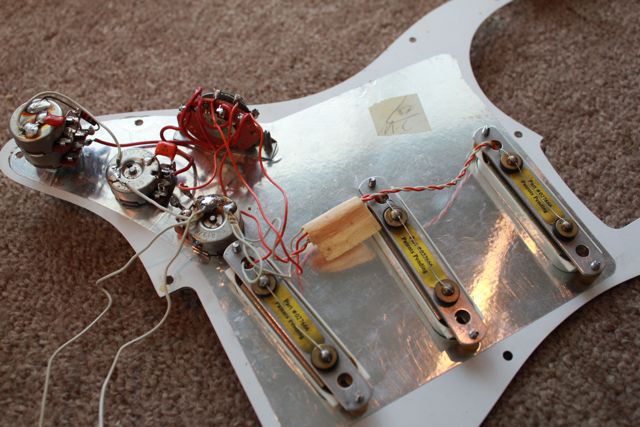
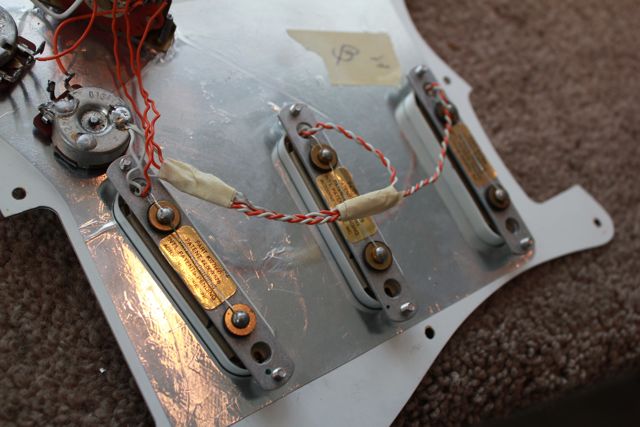
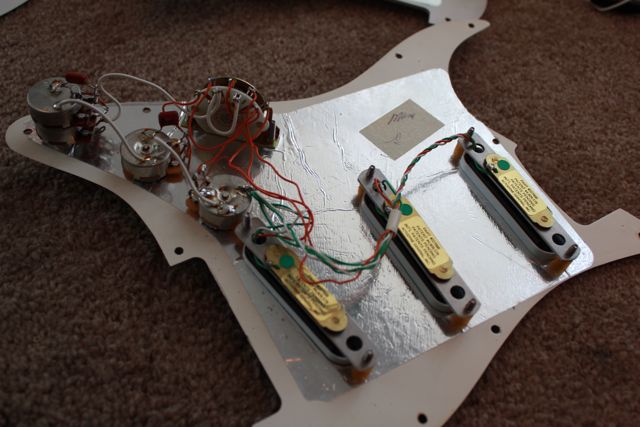
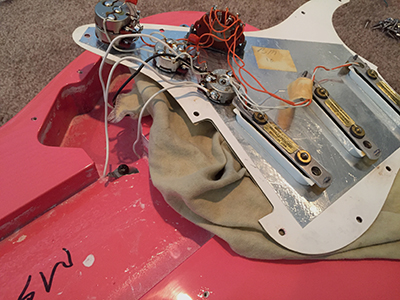
The Strat Plus electronics has been basically the same from their inception, with a few minor variations. Knowing this info is good for determining if your guitar has been modified or to help date your guitar. Above you will see the progression of pick-guard assemblies. The one to the left is off one of the very first 1987 Plus'. The middle pickguard is off a 1989 Plus and the one on the right is from a 1994 Plus. As we go on, I will explain a bit about the components, but do note the changes of the stickers, the wire spanning the back of the pickup and the addition of an extra green ground wire which showed up around mid-to-late 1993.
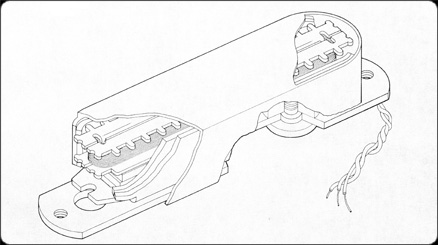
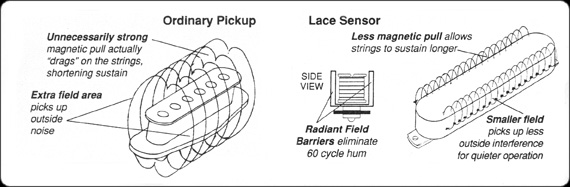
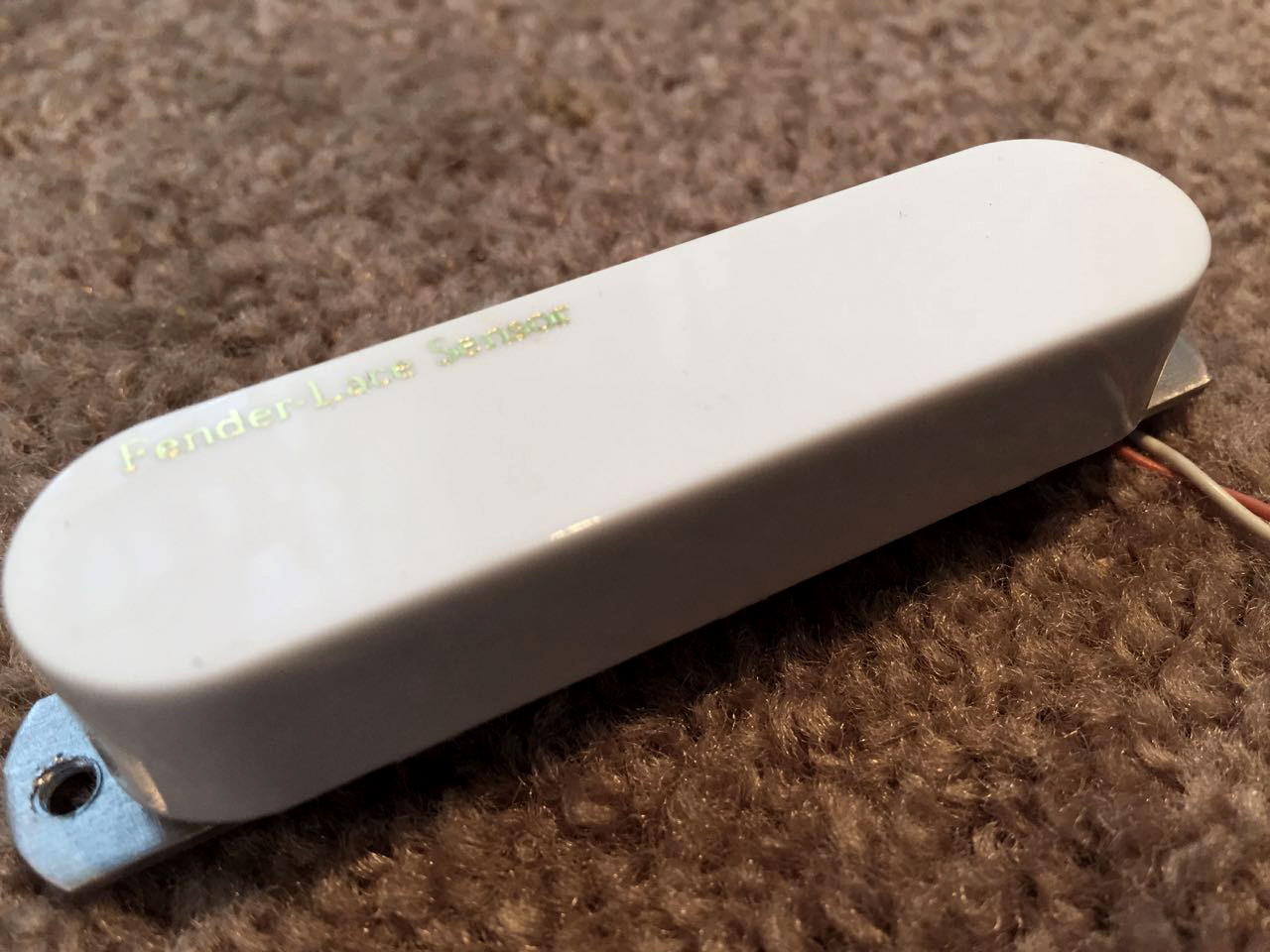
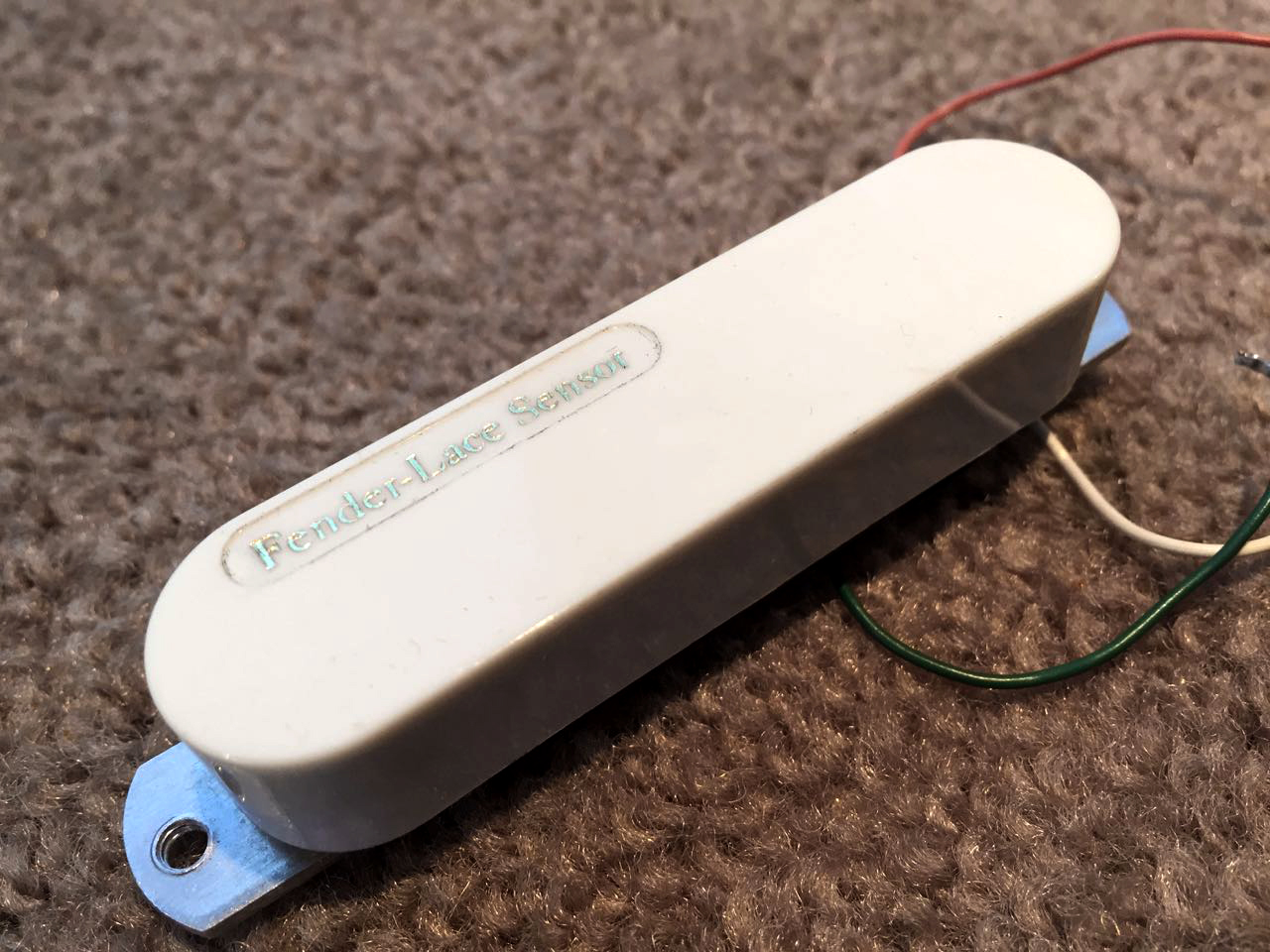
Lace Sensors were a whole new design of pickups—having a unique radiant field barrier system that surrounds both the coil and magnets, eliminating annoying 60-cycle hum. The patented Lace Micro Matrix Combs replace traditional bobbins, yielding a wider tonal range and better string balance than traditional pickups. The Gold Lace were the pickups of choice for years by Jeff Beck, Eric Clapton, and Buddy Guy on their Signature Series. It is important to note that the Strat Plus Standard uses 3 GOLD LACE PICKUPs. If your guitar has three Gold Laces, then it is a STANDARD and not a DELUXE PLUS. One of the main differences between the DX and Standard are the type (color) of the pickups. Note: there are two types of covers used on Lace Sensors:One type says Fender Lace Sensor, which is marketed by Fender exclusively and the other just say "Lace Sensor", which is markets directly from Lace Music Company.
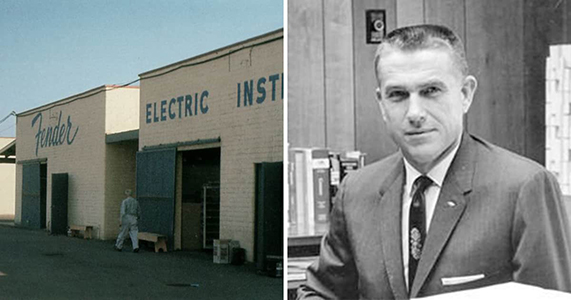
Lace Music Products, the manufacturer of Lace pickups, is a division of Actodyne General Inc., founded in 1979 by the late Don Lace Sr. The company was a manufacturer of solenoids for the semi conductor industry with coil winding at the heart of the business. Don Lace Sr. had an extensive background in magnetics with things like linear motors, solenoids, alarms, radios, and other highly complex magnetic devices. His expertise in speaker design brought him to Fender Musical Instruments in 1967. There he consulted on speakers and various issues regarding pick-up manufacturing. It was here that Don Lace was exposed to the fascinating world of the music industry while working with Fender and people like Don Randall who was a manager in the early years of the Fender Musical Instruments Corporation. Mr Randall was the guy who came up with many product names for Fender, like the Esquire, the Telecaster, the Stratocaster, and the Champ. He was Leo Fender’s partner and the sales, distribution, marketing and advertising behind the company’s rise from small California guitar maker to worldwide status. So amazingly, Don Lace goes way back with the Fender company, talking shop with people like Don Randall and Leo Fender!Don Randall is shown below!
Eager to become more involved in the music industry, Don Lace began to develop a new guitar pickup that would have a lower rejection rate during production. Lace used one of his existing solenoid patents that was part transducer as well as "open and closed" device called a "shock generator". He applied the new concept to an old beat up Sears guitar that he bought at a garage sale! He plucked the string and it worked! By the late 1980's, Don Lace had perfected a single rectangular shaped sensor that fit under the strings. The goals were simple: to reduce the rejection rate, increase fidelity, and reduce outside hum. Lace presented this technology to Seth Lover (inventor of the original humbucking pick-up), who was working with Fender at the time. Lover knew that Lace was really onto something!
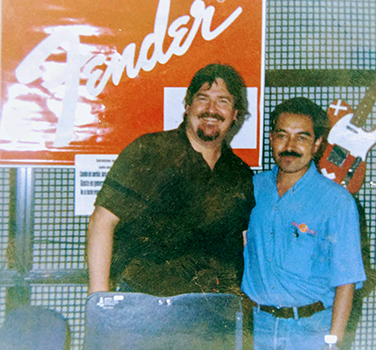
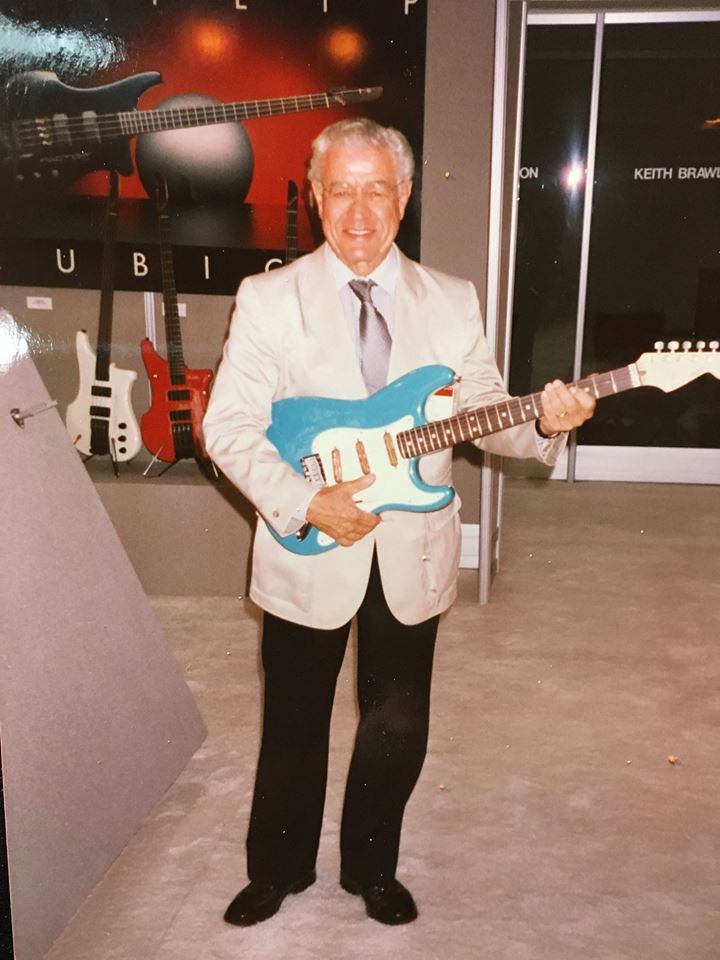
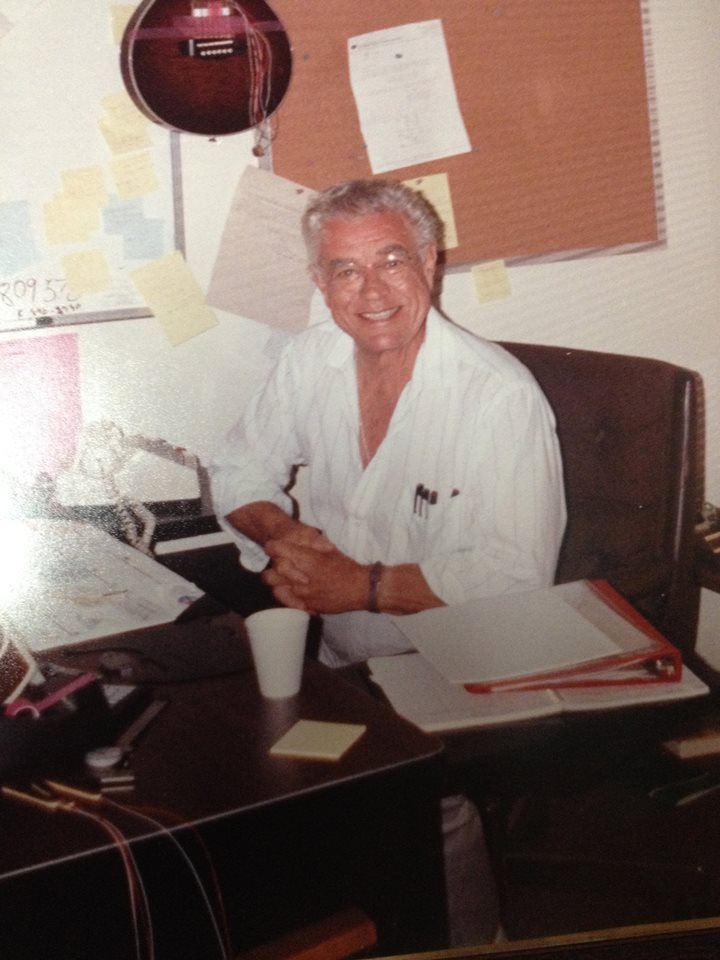
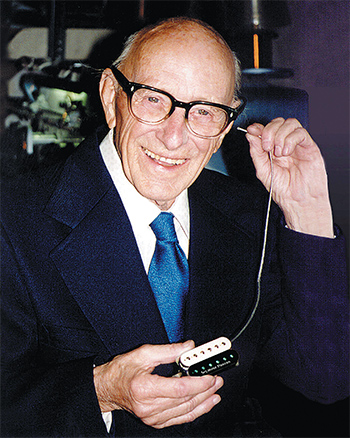
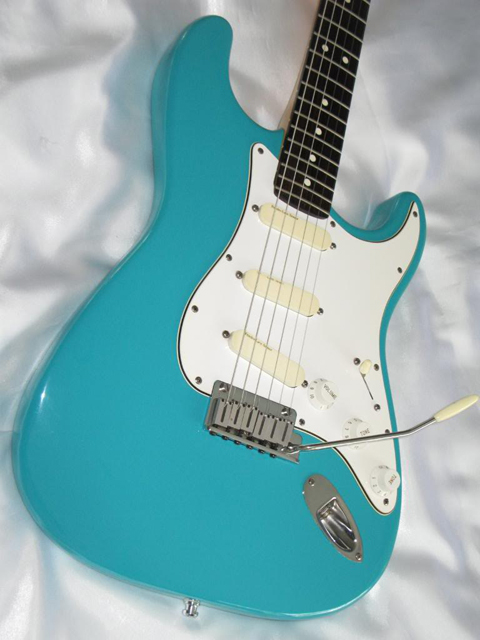
I asked Jack Schwarz, who worked at Fender, off and on for 35+ years, how the Lace Sensors made their way to being one of Fender's show-case pickups. Jack started working at Fender back during the CBS era, from 1981 to 1984. Cutbacks at that time created number of layoffs, including Jack. But when Fender was purchased in 1986 by Dan Smith and some investors, Dan was looking for talented people to help with Fender's startup located at the new Corona plant. So Jack was hired back to work at Fender. Jack left a great paying gig with a band in Anchorage, Alaska to do it! Again, that was in 1986. So he was one of the first "new hires", together with George Blanda, at the new Corona factory. Jack was introduced to Don Lace Sr. and ended up interfacing with him to help with the "voicing" of the new Lace sensor pickups. Don was not a musician, he was a technical engineer. Jack had some electronic understanding under his belt, plus he was a guitar player! So he was making suggestions to Don about how he could get various tones from these pickups. Well, the rest was history! Fender began to use this newly designed pickup technology on their premier guitar — the Strat Plus, which won numerous awards! They became known as "Fender-Lace Sensors". They became the hallmark for artists like Eric Clapton, Jeff Beck, Buddy Guy, James Burton, and others. The Lace Sensor company was started in the family garage and quickly grew to become one of the most respected companies in the music industry. Sadly, Don Lace, Sr. passed away on October 11, 1992, leaving a strong impact on the music industry. More than 30+ years have passed since the company was started and, to this day, his family carries on his tradition. The pictures above (left) is Jack Schwarz, long time Fender Employee. Next picture (middle) shows Don Lace Sr. at the 1989 NAMM show in Chicago, holding a Strat Plus in the very rare Ice Blue color with the newly designed Blue, Silver, Red Lace Sensors. 3rd from the left is a pict of Don Sr at his desk. Far right picture is the late Seth Lover, the inventor of the humbucking pickup.
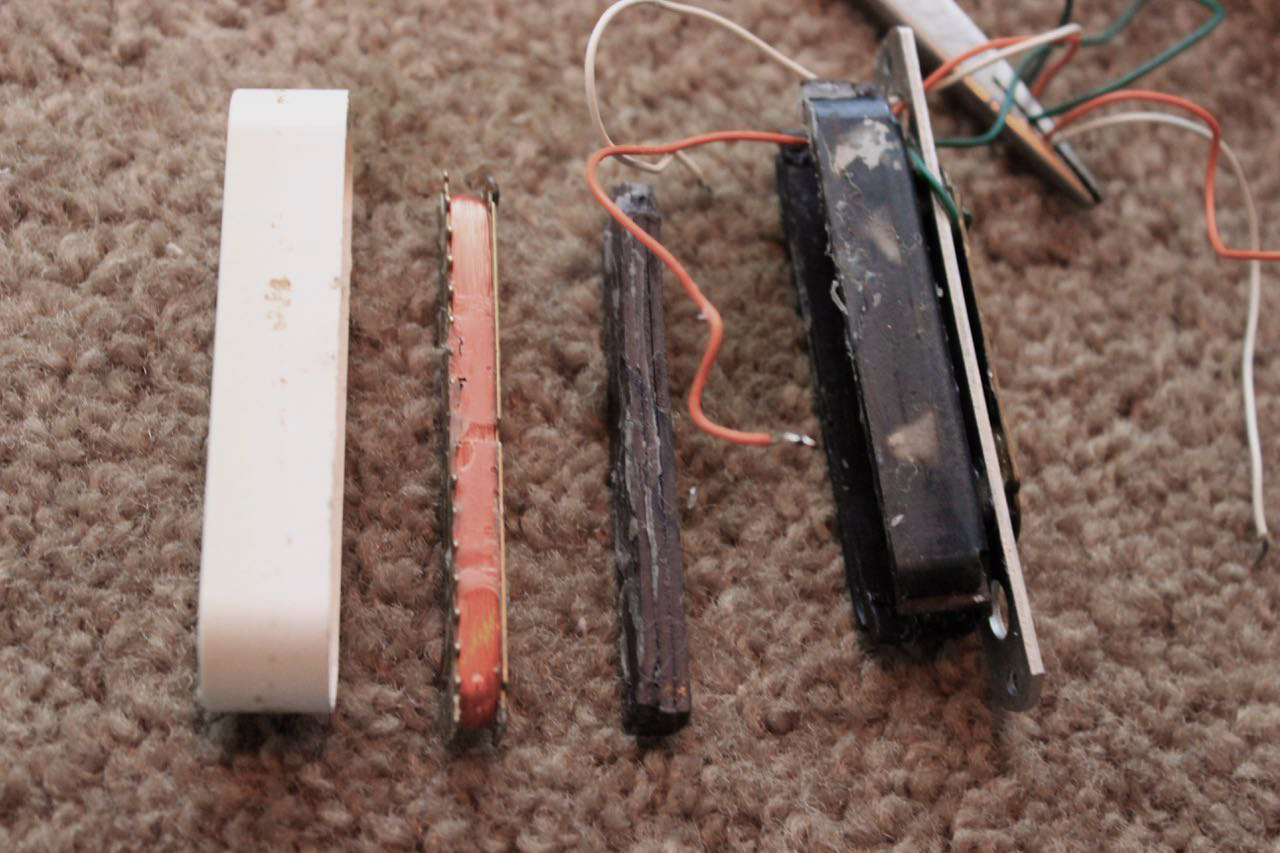
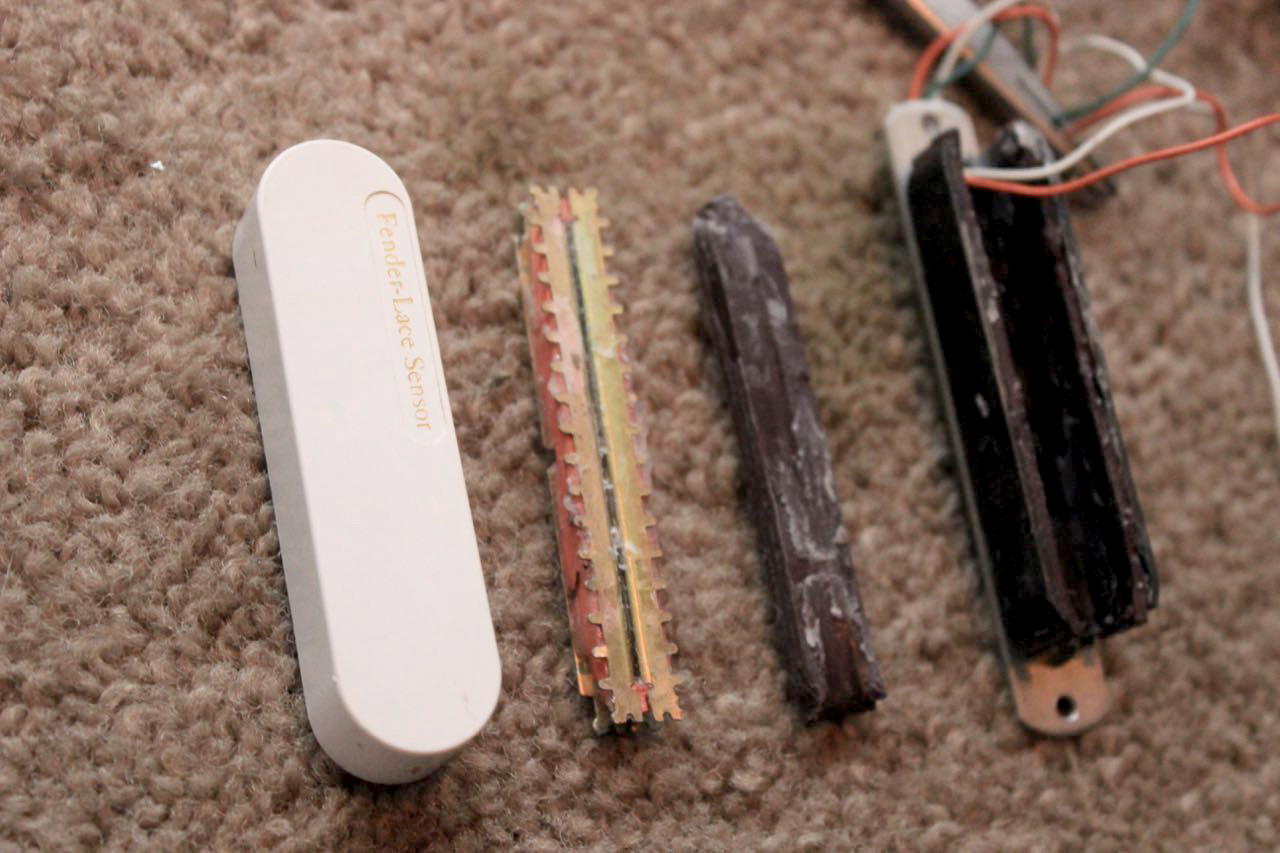
Opening up one of these BEASTS is rather interesting. (You will see why I called these " Beasts" in a little bit... just keep reading) The black and white drawings posted a bit ago looks...well... rather aesthetic. But when you take one of these puppies apart, they look like a bunch of refrigerator magnets! Yes, that's right, those soft, bendy type of magnets like you see moms use to paste things, like school papers and kid pictures, on the fridge. These are slapped inside with some funny looking windings. The steel cradle that houses these magnets has several layers of magnets on the bottom and one on each side of the windings. A very clever design! These odd looking windings are in a copper/brass holder for the winding wire. Then this winding holder is put in and surrounded by those magnets! Last, but not least, a plastic cover is glued on with what appears to be epoxy. These covers are hard to get off BTW. The new Lace Sensors now come in a one-piece molded plastic housing. Very clever design! And NO 60-cycle hum!
It is often said that Fender Elite Strats and Teles, with their similar looking plastic covered pickups, were Don Lace’s prototype / forerunner to the Lace Sensor pickups. This simply is not true and was confirmed by Jeff Lace, Don’s son.
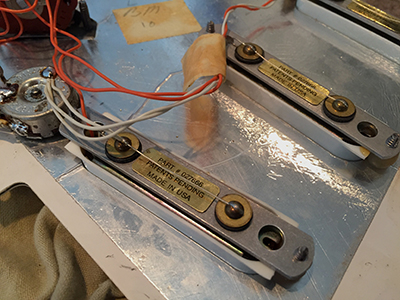
The Deluxe Plus, introduced mid-1989, at first used SILVER/SILVER/BLUE Lace Sensors and then in mid-1990 they changed over to the BLUE/SILVER/RED pickups. Some models used a Gold Lace in the middle. This is a pickup assembly above is off an early Dusty Rose Strat Plus. Other than the color of the pickups, all Plus' are wired exactly the same.
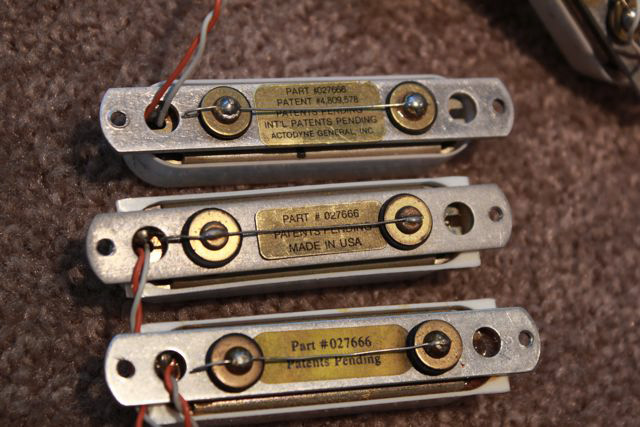
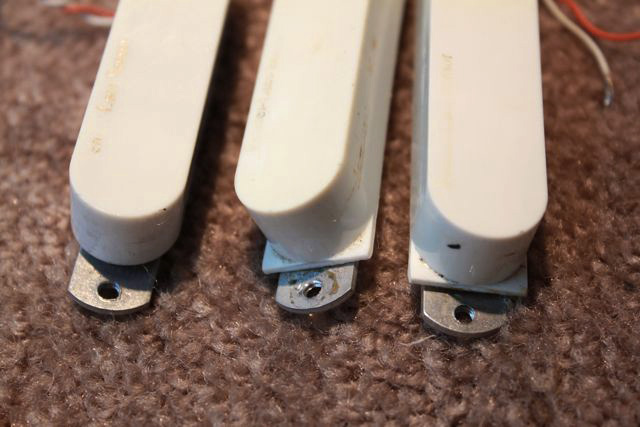
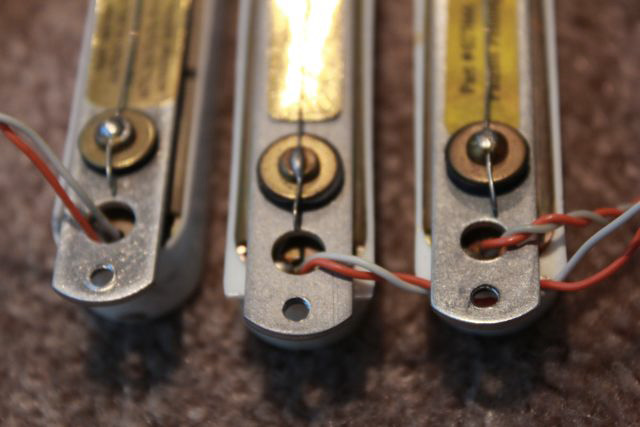
These are theMark of the Beast pickups! Yes... as the Gold Lace part number ends with a 666! Above you will see the progression of the Gold Lace Sensor pickups from left to right. The very first ones that came out had a square edge on the plastic cover on the bottom side. Also note the very old Patent Pending part number stickers on the back the pickups.
These are off a very early Strat Plus from around mid-1987. These even have a number inscribed by hand on the mounting plate. I remember Jeff Lace telling me when he was a teenager, he used to scribe those numbers on the pickups for his dad, Don Lace Sr., the inventor of the Lace pickups. I am thinking about "that," wow, all these pickups were hand numbered as they were produced! Wow… Anyhow, up until 1993, the tops of the Gold Laces were smooth with the gold lettering on the top of the pickup—thus the letterings rubbed off pretty easy. Around late 1992 to early 1993, Lace then recessed the lettering in a oval-shaped area—protecting the lettering a little bit better. By the way, you can buy "Fender Lace Sensors" or "Lace Sensors" depending on if they are marketed through a Fender vendor or directly from Lace Music. The only thing that is different is the cover of the pickup. BTW these covers are glued on so you can't change them for a different color such as on standard single coil pickups. Again - Lace Sensors had only white and orange wires up till around late 1992 - early 1993, then the Lace Music Company added the extra green ground wire.
The Strat Plus used a different wiring schematics than the older American Strats. The TBX tone control was connected to both the middle and bridge pickups. Older Strats had the lower tone control connected to the middle pickup and the bridge pickup was bypassed all together. This newer design gives a person a lot more tone capabilities. On position #4 you can use both tone controls, one on the neck pickup and the TBX on the middle pickup while having both pickups on.
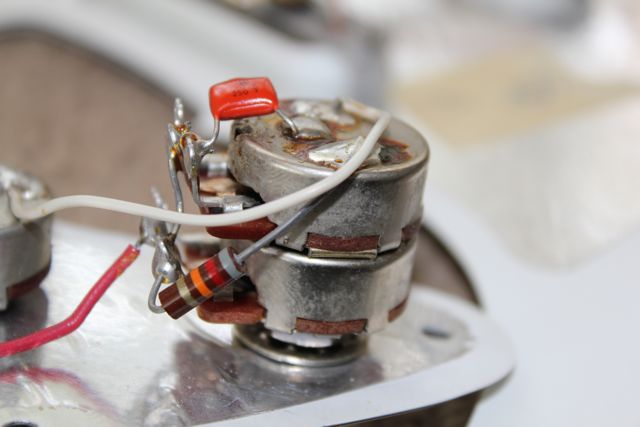
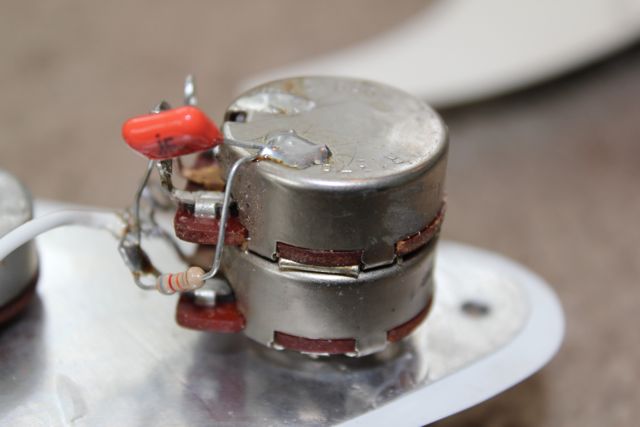
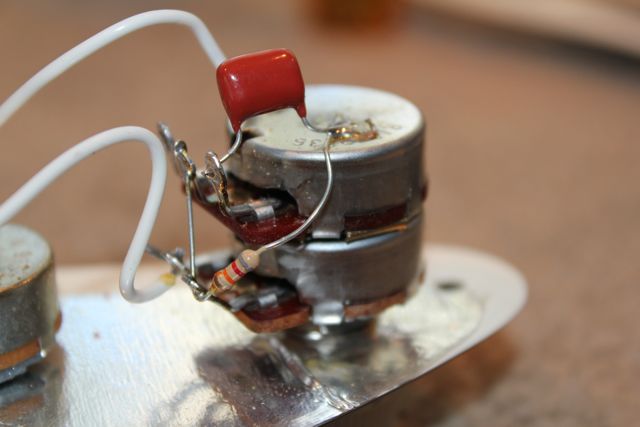
The Strat Plus used what was called a TBX tone control on the lower tone knob. Above you can see the progression of the TBX (again from left to right). The first one is off an very early 1987 Plus. Note the big resistor! Wow! The caps on the tone controls were orange up until around 1992-3, then they were a brownish color after that. The 2nd picture of a TBX is off a 1989 Plus and the last one off a 1994. The TBX is not an active system, as some believe, using a battery as found on the 25db boost on the Clapton Strats.
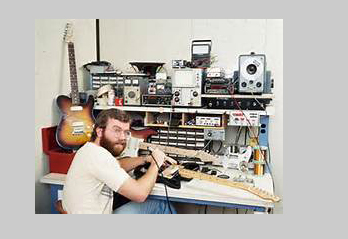
Paul Gagon was the mastermind who designed Fender’s TBX potentiometer, as he worked there from 1978 through 1984. (See the picture to the left of Paul at is work bench around 1982). I asked him what “TBX" stood for and he explained the following:
“TBX stood for Tone Boost Expansion, which is a pair of stacked potentiometers. I came up with the circuit while working on Fender’s Elite Strat project. The circuit is really quite simple. The goal was to unload the pickup from the tone control pot. With the TBX control fully clockwise the pickup has a 1meg resistance sitting on top of the tone control. When you hit the center detente of the pot you jump over to the normal tone control circuit of a 250K pot and a .022uf cap.
"So sonic-ally you hear a brighter sound out of a Strat pickup when it's unloaded, or has a high resistance across it—like a meg or two. The TBX works as a standard tone control from center detente to 0 and there’s an 82K resistor that sits in parallel with the 250K pot. That resistor is used to dampen the resonant frequency peak of the pickup to nearly flat when the TBX pot is at center detente Then from center detente to 10 you are decreasing the resistive loading on the pickup which allows it to have a stronger output at its resonant frequency, which is around 4KHz, when measured on the Elite Strat.”
The TBX control gives the bridge and middle pickup a unique variety of sounds! When the 5-way switch is in the 4th position, by turning the tone control you can get a bell like sound to a honking out-of-phase mid-range sound. Put the switch in position #2 and, you get a quack, or a hollow twang! The 1st tone control is a standard Fender 250 k potentiometer as is the volume control.
The Gold Lace Pickups were also used on several signature model guitars, as seen on this Jeff Beck model (above). The JB Strat uses all Gold Lace pickups with a Gold Lace Dually in the bridge in connection with a push button "pickup splitter" to have it operate in either single or dually mode. (Really, since the Dually is just 2 Lace pickups, side by side, the switch just turns off the top pickup). There is the Jeff Beck signature on the headstock as well. Of course there was the Eric Clapton Signature Strat with 3 Gold Lace pickups and an active 25db mid-range boost. There was also the Buddy Guy Signature Strat using the Gold Lace. It is like a vintage Strat with the Lace pickups and, of course, Buddy's signature on the headstock!
Here is a nice sample (above) of a 1989 Eric Clapton Strat in Pewter. Note the Gold Lace Sensors, which they used from 1988 till 2001 when the Vintage Noiseless were introduced on this model. I believe Jeff Beck and Eric Clapton models were the last two signature guitars to convert from the Lace Sensors. But why? There is an interesting story behind the change of the Clapton Strats from Lace Sensors to the new Noiseless Vintage pickups in the year 2001. I did an interview with Jeff Lace, son of Don Lace, the inventor of the Lace pickups. He told me that when Lace's (EGI) exclusive contract with Fender ended in 1996, there was a push to get the signature models guitars, which were using the Laces pickups, to move to Fender's newly designed Noiseless pickups. I simply think there was some turf protecting going on, so Fender decided to keep the pickups "in-house" with their own pickups and stopped promoting Lace pickups anymore (a secondary vendor) on Fender's top line guitars (AKA: Custom Shop, Strat Plus Series, Ultra, and Signature series). So it was just a matter of time before Jeff Beck and Eric Clapton Signature guitars moved over to use Fender's new Noiseless pickups. In fact, Lee Dickson, Clapton's guitar tech insisted on it for some reason and he said Clapton needed to make the change.
The question I have, is why would Lee Dickson insist on it? What was going on with that? Personally, and this is just my own preference, the Fender noiseless pickups are just too glassy and bright for me. I owned a 2000 DX Strat (replacement for the Strat Plus DX/Ultra guitars) and kept it like 2 weeks and then sold it. I tried to liked them but just gave up. There are a lot of other pickups I like, such as DiMarzio, Seymour Duncan, etc.. which you will see me using these on custom builds on this website, but just have not been sold on the Fender Noiseless or the Vintage Noiseless—and I have had both.
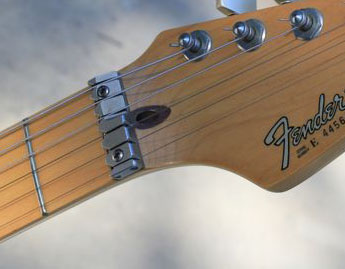
The new premier "roller-nut" designed by an English chap by the name of Trevor Wilkinson was first used on the Strat Plus, at least on Fender guitars. It is interesting to note that when Trevor finally patented his roller nut, he was actually living in Australia! He later moved to the US and over the years worked with a number of guitar companies, and was responsible for many creative designs seen on guitars today. The very first version of the Wilkinsonroller nut to be introduced(above, left) had the top 3 strings floating while the other strings had to feed through an upper pin. This was called the Wilkinson Split Nut and is more rare to find, being discontinued late 1987 into early 1988. Odd thing was, in 1989 when the Version I Strat Plus was introduced, so was the split nut - again! Never have figured that one out.
The other photos (above middle and right) show the regular Wilkinson nuts that had all the strings fed through a upper "roller" pin that the string rested on, while it went down under a 2nd pin. These were a problem if you wanted to use heavier strings as feeding them through the slots and the two pins was a real hassle if not in some cases impossible.
Mid 1993, Fender stopped using the Wilkinson nut and replaced them with the LSR Roller nuts (above). These made string changes much easier, as each string rode on top of a set of roller bearings—a great improvement over the Wilkinson nut. The idea with the roller nut was to improve tuning while using the tremolo as the strings could freely move. Some people, bless their hearts, just could not imaging having a Strat without string trees! So they put them on, not realizing this counteracted the whole concept of having the roller nut. A Strat Plus will NOT have string trees, and putting them on the guitar greatly lowers its value!
The Plus necks were made from Maple with a Rosewood cap, or they were solid, one-piece Maple (thus a Maple fretboard!) The shape was called a Modern C shape. Rosewood pn# (110-7500) or Maple pn# (110-7502). All had 22 "Standard Jumbo" Frets and a 9.5” Radius/241 with a scale length of 25.5” (648 mm) with a nut width of 1.6875” (43 mm). (Don't you love those .6875 measurements! LOL!). Again, in 1995 they moved the serial numbers from the front to the back of the headstock. IF you are wanting to adjust the Truss Rod, it takes a 1/8 inch Allen wrench. I use a StewMac truss rod gripper as that has a tapered 1/8 inch head and it also fits the mini-Floyd Rose bridge Allen screws and the Micro-tilt adjuster. Great tool to keep on the bench for working on Strats! Note too that All the necks have a Mahogany skunk-stripe running down the back. There has been some debate about what size fret wire is used on a Strat Plus? Sometimes called "jumbo" some times called "medium jumbo". The fret wire is #6150 (.104" X .047") and they are wide and tall. They are really called "standard Jumbo" and this same fret wire is used on the Modern Fender American necks as well.
Shapes and Sizes: OK, now that I have given you the specs right down to the microns, it is time to face reality. In the early days at Fender, after they moved to the new Corona factory, quality control was often not very strict or specific. While they used a lot of care to make a great product, there were a lot of variations in the finish work on the necks. Stop and think about it for a moment—a CNC machine milled out the basic specs and then the neck was finished by hand. This meant if the guy standing at the belt sander stood there a minute longer than the time before, you got a slightly thinner neck profile! Some of the finish sanding was also done with orbital sanders, again, by hand. Some 87-90 necks can have a thinner taper while others, were really fat! I have owned a few 1988-89 Strat Plus guitars that had necks that were nearly as fat as the old Jeff Beck Strats! In 1990 and later, they started to conformed to the Modern C shape - but it all had to do with the finisher and how he sanded the neck. By 1993 things started being a bit more constant. Even if Fender called these necks a Modern C shape, the reality was that early ones had a considerable amount of variation!
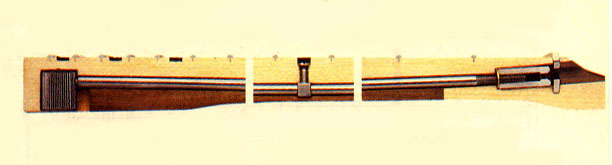
The Strat Plus Series, as well as the American Standard Strats of the same era, use a Biflex truss rod system. (Seen above) This truss rod adjusted the neck in two directions, allowing for a more precise curvature adjustment. You can see by the picture (above) how this truss rod is different than a normal vintage-type truss rod. Again, if you need to adjust the Truss Rod, it takes a 1/8 inch Allen wrench. Best to use a StewMac truss rod gripper than a small hex wrench.
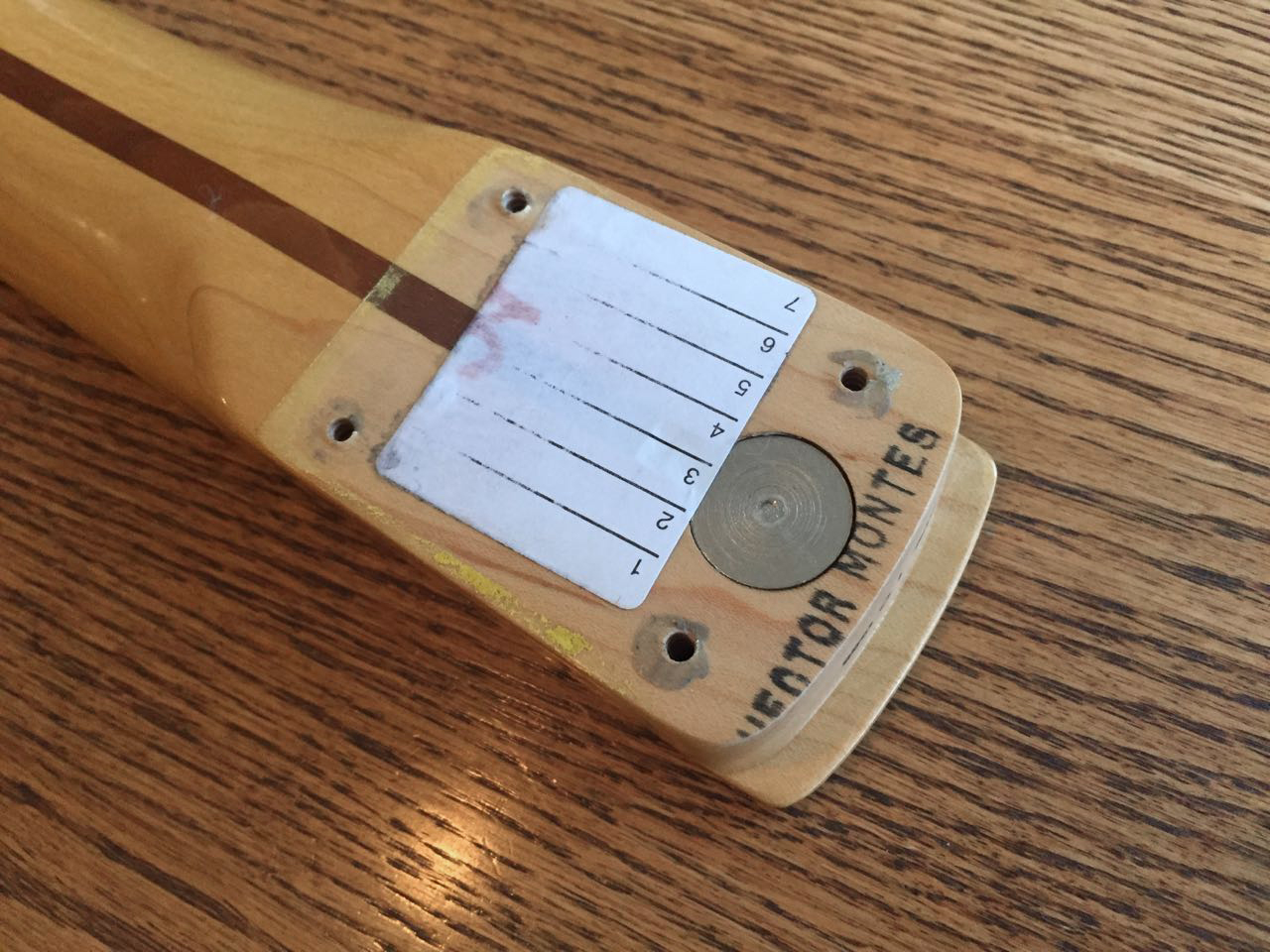
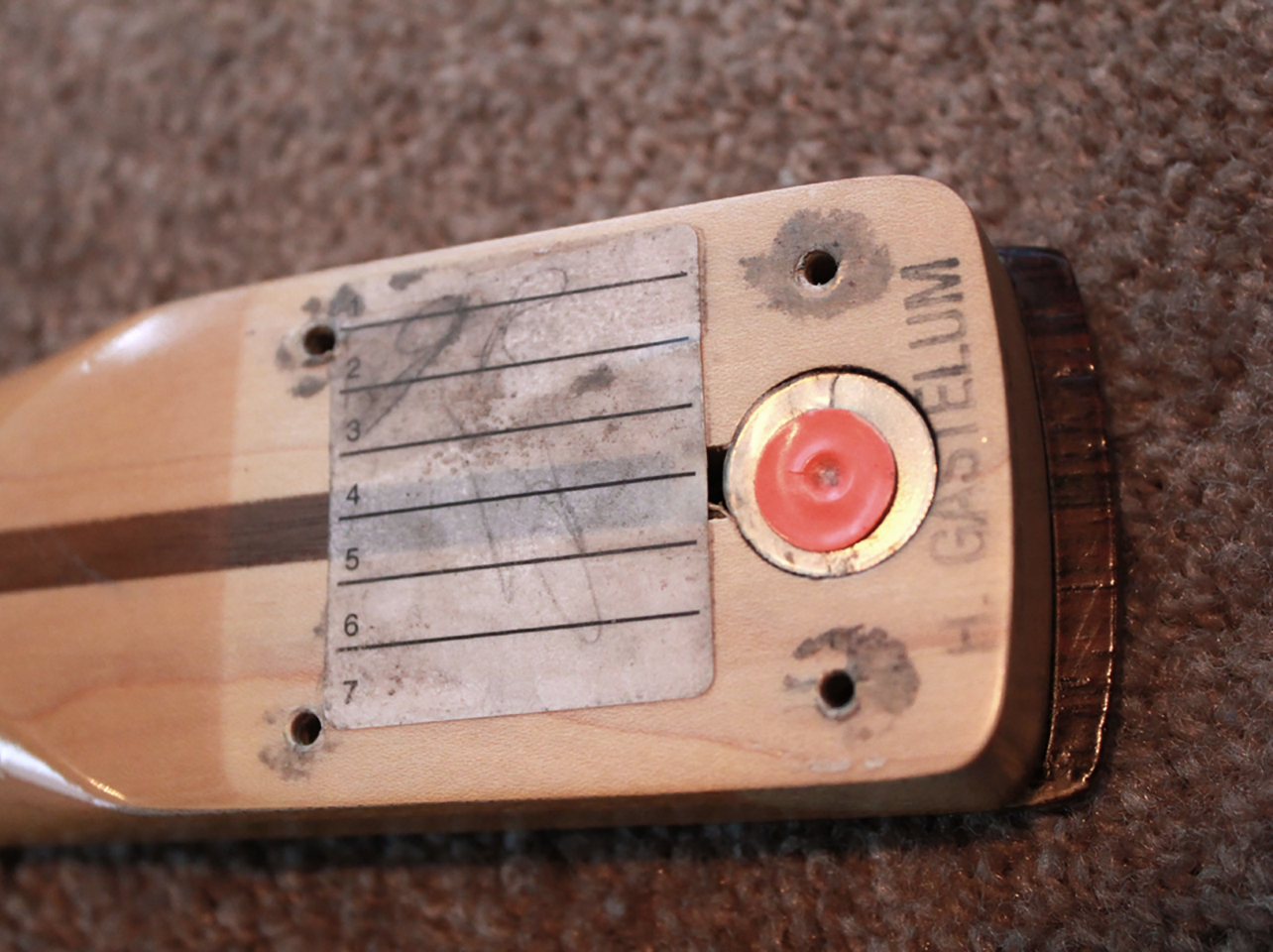
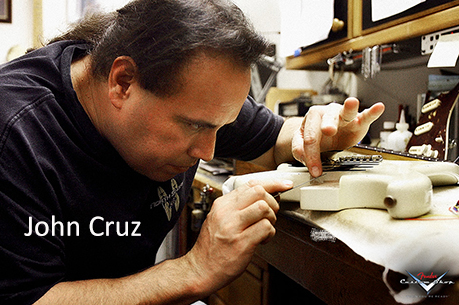
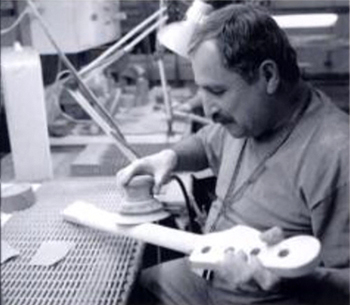
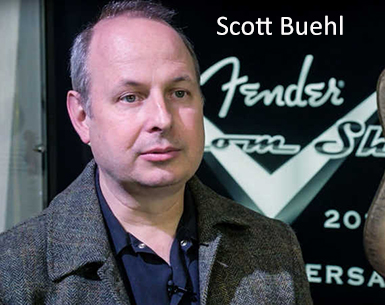
There is some interesting historical information to note about Strat Plus necks. Back in 1985, Fender nearly went bankrupt under the ownership of the Columbia Broadcasting System (aka CBS) before an investment group led by Bill Schultz purchased the fledgling company. Schultz and his crew then began revamping Fender to return the company to its roots. Over the years different people worked at Fender who shaped and finished, not only the guitars, but the necks as well. Some worked there, going way back even before CBS owned Fender, and others joined after Fender sold to Bill Schultz's new FMIC. Some collectors seek out Strat Plus and American Standard Strat necks that were created by some of the more famous builders. Four come to mind right off - Hector Montes (who later went to work at Fender's Custom Shop), John Cruz (who came to Fender in 1987 and was quickly recruited by Fender's Custom Shop and became a Master builder and is a guitar building legend of himself! Finding a production neck made by him is a rare find and always the best of quality. (1st Picture below.),Scott Buehl, who also became a master builder, and then the also legendary Herb (Herbie) Gastelum (one of the longest standing Fender employees). Below are a few pictures (2nd & 3rd) of the rarely photographed Herbie Gastelum. This guy is a humble legend. Here is a bit of his story:
Fender Custom Shop was started in 1987 with luthiers John Page and Michael Stevens at the wheel. And again, Hector Montes, Scott Buehl, John Cruz, and Herbie Gastelum first worked at Fender’s production plant, but were later recruited by John Page to fill positions in Fender’s Custom Shop.
Herbie Gastelum was probably one of Fender’s most historical neck shapers. He joined Fender in 1961 and is considered one of the Fender “veterans” next to Abigail Ybarra who entered the musical instrument industry in the summer of 1956. Abigail is famous for the pickup she has wound over the years. Herbie Gastelum began buffing guitar bodies, then spent a little time in the spray booth, and then settled in as a neck shaper for Fender’s Custom Shop. He mostly likely shaped necks for people like Jeff Beck, Eric Clapton, and many others.
Herbie Gastelum was quoted saying: “Some people say the necks in the 50's and 60's were better than they are now. But in my opinion, I think the necks - even the whole instrument - is a lot better now than in the 'good old days.' Believe me, I've seen the work, and it's a lot more detailed and a lot more critical than in years past." Winter 1999 issue of Frontline magazine..
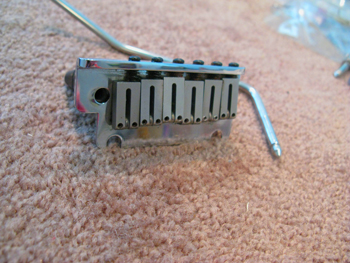
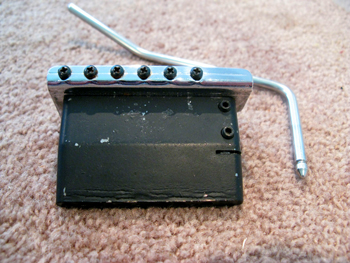
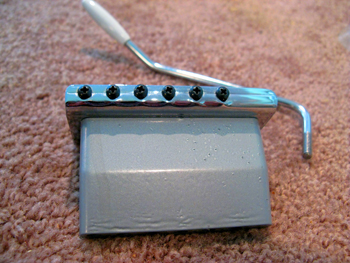
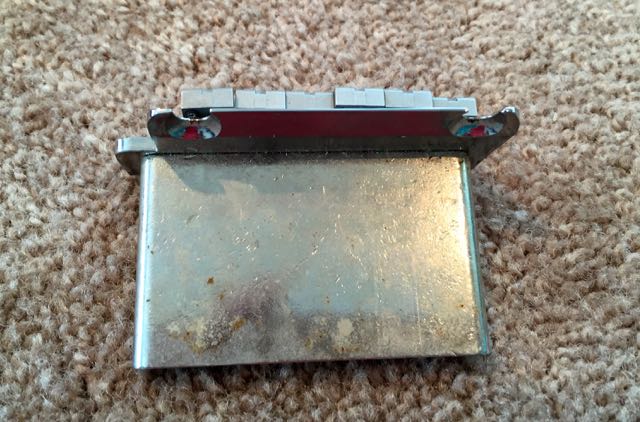
The Standard Strat Plus came with two basic bridges, both 2-point floating American types; one used a pop-in tremolo arm and the other a screw-in tremolo arm. On the top they basically looked the same, with 6 bushed offset saddles.It is easy to tell which you have by simply taking off the back Trem cover and taking a peek at the tremolo block. The pop-in type has a BLACK block and the screw-in type has a GREY block (see above). Also some of the 87 and early 88 Plus' came with a trem-block that was shiny, with no finish on them. Here is what George Blanda shared: "The very first tremolo plates had the hole for the tremolo arm drilled at an angle to match the arm angle. This was abandoned very soon after intro. The first few hundred tremolo blocks were nickel plated instead of painted or powder coated. These are the shiny ones that you mention. The nickel tarnishes and looks like bare metal." "
The pop-in type has two Allen set screws. The top one adjusts the tension of the bar, so it will not hang too loose and swing around. The lower one sets how hard it is to push the arm into the catch spring. Now, saying this, I have seen where people, myself included, have tightened down the Allen set screws on the pop-in arm one so tight that one could screw in a tremolo bar! Not the best, but people have done it. I learned the hard way years ago. The pop-in block (BLACK) will always have a bigger hole. The screw-in tremolo arm is bigger than the vintage tremolo arm. If you need to buy one, you want to get the screw-in "American Standard Stratocaster Tremolo Arm" (PART NUMBER: 099-2054-000) with a plastic tip. The pop-in type is called "Fender Deluxe Locking in solid chrome" (PART NUMBER 003-6534-049). Google these numbers and you can find these arms for sale. eBay is another place to look as well!
Also note that the Strat Plus Deluxe models came with both these types of bridges and some had the Floyd Rose II bridge as seen on the The Strat Plus Deluxe page.
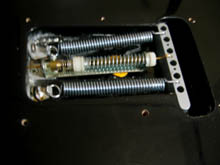
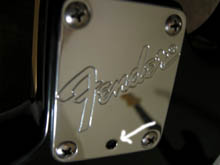
Many of the Plus Series, but not all, came with a Hipshot Trimsetter, which compensated for string tension. Once set up correctly, and after getting the guitar in tune, they stay in tune. If a string breaks while playing, the Tremsetter will compensate and the guitar will continue to stay in tune. (How to set one of these up will show on the "tips" page.) Please note the neck plate—all Plus' have the Fender logo written on it like the one above, except the Ultras will also have the word on there too. If you get one that says Corona, CA on it, it has been changed!
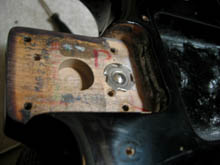
Like many of the later USA Strats, these necks have the micro-tilt adjustment, which is an Allen Screw under the Fender neck plate, which pressed against truss-rod grommet on the backside of the neck. This gives you the versatility of tilting the neck instead of the old method of resorting to cardboard or wooden shims. The “Micro-tilt adjuster” is a pretty fancy name! Truth is, these are in most hardware stores and have been used for years by cabinet makers. They are used to adjust the space on drawers and such. The name for these in a hardware store is a “4-Claw Tee Nut”!! They come in a variety of sizes but the size Fender uses is 1/4-20 x 5/16. The screw is a 1/4 inch Allen Screw.See video below on how to set these up!
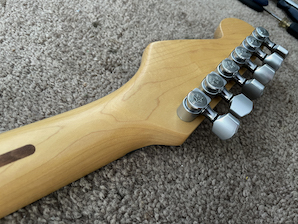
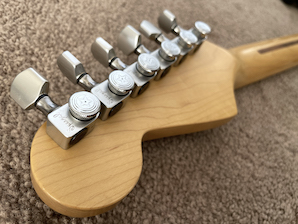
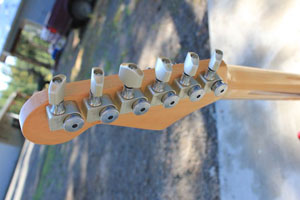
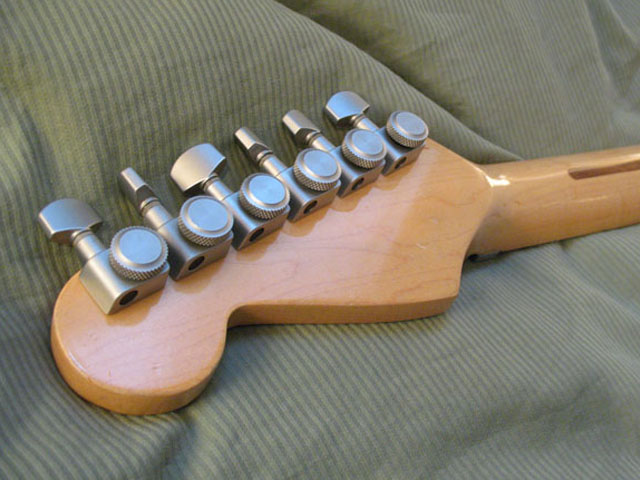
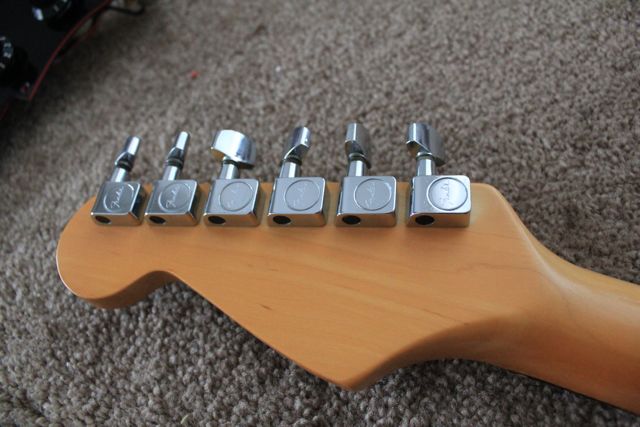
The Plus Series used locking tuners, the first, not so common, were the Sperzel (1987 and early 88), and then later Schaller. You can see the first two pictures, on the left, the very rare Sperzel "STAR tuners." These were used on the very first Strat plus guitar and were pretty much not used by the edn of 1987. Fender also used these on some very early Custom Shop guitars as well/. The middle picture is the "Black Dot" Sperzel tuners that were used at the end of 1987 into early 88. These are the most common on the early Strat Plus guitars. Then in picture #3 we have the Schaller locking tuners which became the stock tuners up till the end of the Plus series. Let it be known, that there seemed to be a mix and match on locking tuners the first few years. Not all early 1988's had Sperzels or visa versa. Fender did crazy things, like with the introduction of the Verson 1 DX Strat Plus, some came with the Black Dot Sperzel tuners, well after the Schallers were pretty much their tuner of choice. But These tuners are really slick as you just loosen the nut, pull the string through till it is tight, tighten the knob on the back, cut off the excess, and tune! Both types of tuners are good. The Sperzel have small pinss inside and of the cap comes off, that pin can fall out and then if lost you are in trouble! Those little pins come in various sizes depending on the strings and are hard to find for sale. BTW the owner of the Sperzel company is a super nice person and takes pride that his tuners are made in USA—even to this day!
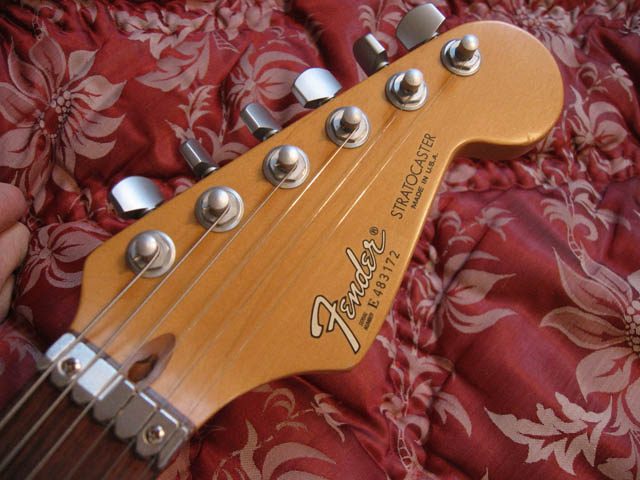
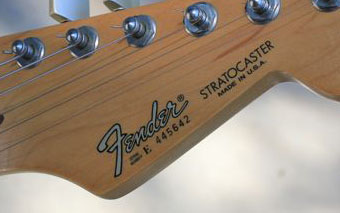
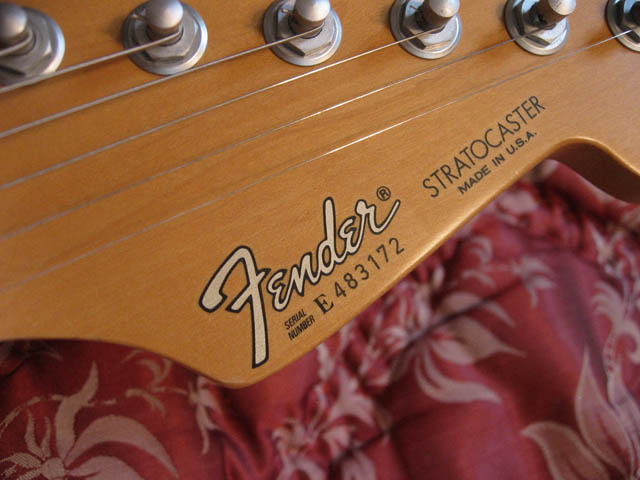
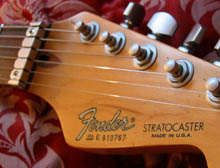
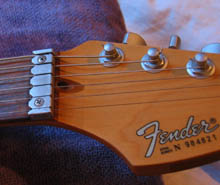
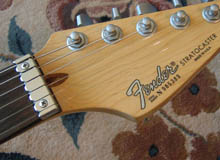
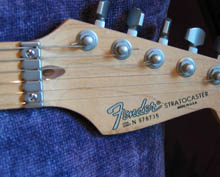
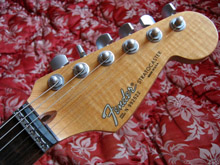
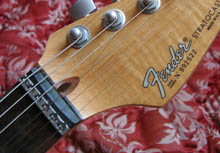
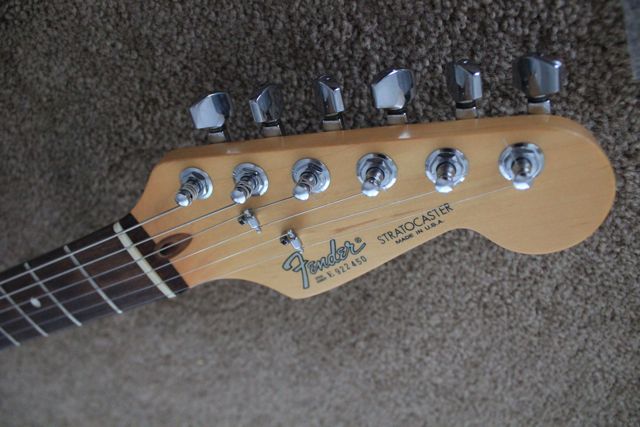
Now about the "E4" serial number that show up on some of the first Strat Plus': The photos above show some Plus' with the "E4" serial number.These are 1987-88 guitars! The serial numbers on the 87-8 models have caused some confusion due to the CBS buyout and the start up of the new plant in Corona, California. In general, Fender has had a lot of confusion over serial numbers, over the years, especially the older models. The Strat Plus series continues this tradition! The very first Plus' will have an E4XXXXX serial number indicating they are from 1984. Truth is, it is a 1987-88,as production for the Plus Series started in mid-1987 Many of the 1987 and later models will have a serial number that says one thing and the date in the neck pocket in the body or on the butt end of neck that says something different. This was due to the use of serial number water-slides left over from the CBS buyout. I was told that the water-slide serial number decals were moved from the old Fullerton plant to Corona, they were in a box. Some of them got mixed up and some stayed in numerical sequence. Never the less I have see E44XXXX be both 1987 and 1988. I have one guitar that has a E42XXXX serial number from Oct of 1987. Some will have E48XXX serial numbers and again late 1987 into 1988. So having a E44XXXX serial number might not be saying “You got a real old one here!!!” . Don't let anyone try to convince you that there is a 1984 Strat Plus, they just did not exist. Then to complicate things even more, when Fender came out with the Strat Plus Deluxe in 1989, they again introduced the E4 serial numbers, long after the Standard Plus' were using E8 and E9!!! Click here to get USA Fender serial numbers from 1976 till today.
Now comes the 1999 serial number saga—more confusion with the Plus serial numbers. The date? 1990. Man, oh man! Fender used E9xxxx and N9xxxxxx and even a few N0xxxx serial numbers for 1990.
Now N0xxxx makes sense because N0 = Ninety 0 or 1990. But the N9xxxxx serial number looks like it SHOULD BE 1999, right? But again, it is a Fender anomaly! N9 is most often really 1990 or 1991! Also, there was never a 1999 N9xxxx Strat Plus! The Plus series was pretty much gone by early 1998—which was a span of ten years. There was a few transitional Strat Plus’ made in late 1998 into early 1999 that still had the name Strat Plus. I think Fender a lot of Strat Plus DX cases they needed to use up! These transitional Strat Plus DX’s used the new Fender Noiseless Cobalt pickups, not the Lace Sensors pickups. Maybe Fender had not yet come up with a new name, yet so the Plus lived on for a few months as these hybrid DX Strats. They eventually took on the name the New American Fender Deluxe Stratocaster. Fender has and is partial to the "PLUS name," ya know.... All these transitional Strat Plus' had DN9xxxx serial numbers. (Note the "D" See below, for a 2000 model!)
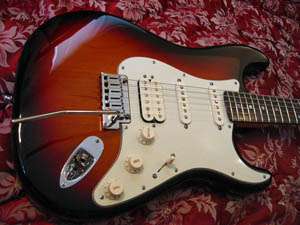
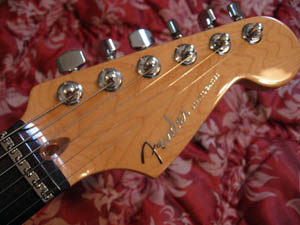
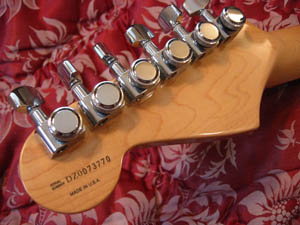
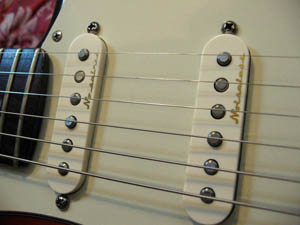
So THIS IS NOT REALLY A STRAT PLUS! (above) It is a 1999/2000 Deluxe Strat. The 1998-9's are are fairly rare and they where first marketed as a “Plus” and then in the middle of 1999, they were marketed as Fender's new Deluxe American Strat Series. These sported a chrome Fender Logo on the headstock and many of the Plus features, like locking tuners, LSR Nut, but had 2 Fender Noiseless Strat pickups and Fender’s Cobalt humbucker in the bridge which are powerful and very quiet. They carry the DN or DZ serial numbers. (DN9xxxx = 1999; DZxxxxx = 2000's).
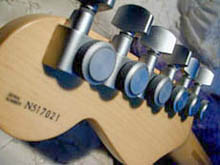
So the Strat Plus’ with an N9xxxx serial number are a 1990-1991 manufactured guitar. I do not know how many times I have sold a 1990 Strat Plus on eBay to have some “smart” guy tell me I am a dumb bozo for saying it was a 1990 and not a 1999. (I have owned a few of these as you can see in the above pictures). Well, here's how you can know if your Plus is a 1989-1991 with an N9xxxxx serial number: 1) The Wilkinson Nut (Fender changed over to the LSR Nut mid-1993;) 2) The serial number is on the FRONT of the headstock (Fender moved the serial numbers to the back of the headstock in 1995). So as you can tell by the above Plus’, all have a Wilkinson nut and serial number on the front, indicating that are ALL pre-1999….....except the pictures BELOW? Hummmm.
OK. Here is something that even makes things more confusing. Some people will do the LSR Nut conversion on their pre-mid-1993 Plus. (I think I just invented a new word!) In other words, they convert their Wilkinson nut over to a LSR Nut. The way you can tell if your Wilkinson Nut has been converted is by looking for the small black strip of plastic on the headstock side of the nut that is used to fill the missing wood made for the wider Wilkinson Nut. For an example inspect the middle picture above.
ALSO, again, please note that in 1995 Fender moved the serial numbers from the front to the back of the headstock. (See last pict above).
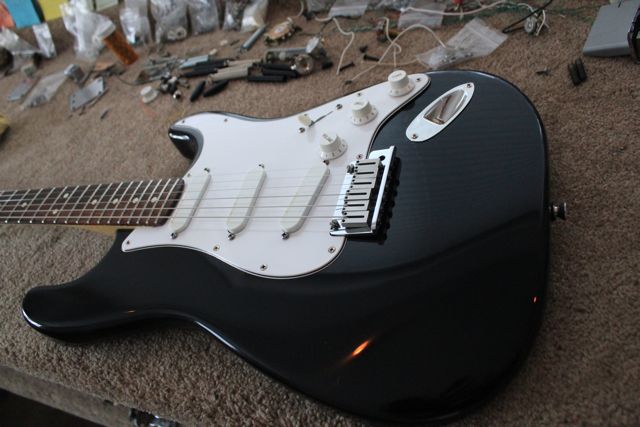
Fender introduced an Deluxe American Standard Strat in 1989 and discontinued them in 1990—so they had a short production life of about one year. Take a look at the guitar below and check out the appointments:
Again, this short lived Deluxe American Standard Strat looks like a Strat Plus, but it's not!!! ;-) Check out the neck in the pictures below. They came with all the features of a Strat Plus, such as Gold Lace Sensors, same bridge and body type, but no locking tuners or roller nut. They will often have the E4, E8 or E9 serial numbers too. What these really are is just an American Standard Strat fitted with with Gold Lace pickups! Now here is the bad news. I have been in touch with some people at Fender for years getting information for building this website. I have received help from a couple Fender employees that worked there for many, many years - one for 34+ years in fact. Couple of these workers are no longer working there. Here's the thing: Fender has a data-base that has been created which contains a lot of historical information about various models of guitars. Within the last year someone there entered into that data-base this misinformation: "At some unspecified time, an unspecified number of the Strat Plus guitars came out with a bone nut." Obviously this is not correct!
When I started questioning this entry in the data-base at Fender, one employee emailed me and admitted, "Yes, this was something that I added because that is what I was told by people here. I believe that was confused with the Deluxe American Standard model and not in reference to the Strat Plus at that time." So there you have it! THIS IS A MISTAKE AT FENDER, one which has been told to several people who then later come back to me and say things like, "So you think you know more than Fender?" LOL!!! A mistake in Fender's data-base is just that — a mistake!
In talking with some of the old timers from Fender I was told when the new factory opened in Corona, California things were unorganized and that some of the builders “did what was right in their own eyes!” From 1986 till around the middle of 1993 record keeping was very poor. Very few serial numbers were recorded, production numbers were not kept track of, and even in Fender’s new Custom Shop department, records of guitars built were nothing more than hand writing on notebook paper. Examples can be seen on JW Black’s website and is confirmed by John Page, both Master builders who worked in the Custom Shop department at the very start. It was with the advent of computers in mid-1993 that serial and part numbers started being entered about each guitar that was shipped from the factory. Even then, some of the info was not dead accurate due to some fat-fingering and data entry mistakes! Hey, it took a while till they got the bugs worked out of the entry system! :-)
So there you have it! Rob Schwarz, who worked there for around 35+ years in Fender's PR dept, said he never saw that entry in the data-base while helping me with info on Strat Plus guitars. As admitted too, by the one newer Fender employees, these short lived DX American Standard Strats were confused with the Strat Plus'. The Strat Plus, from it's inception, was heralded with basic features from the get-go and a Wilkerson roller nut and Locking tuners were part of their features. So just because Fender might tell you otherwise it does not make it true! (OK I think I made my point! LOL!)
According to the Blue Book of Guitars there was an estimated 400 instruments of these Deluxe American Standard Stratocasters produced. Personally, I think many more than 400 were made as I have owned several and I have questions coming in every few weeks about these by email. I see them from time to time on eBay as well. They are "some-what" collectible and are sometimes sold, mistakenly, as a Strat Plus! Over time, these may very well be quite collectible.
Listed below are both the Strat Plus Deluxe and Standard colors as many of these colors were used on both models. When we discuss Strat Plus colors, things tend to get complicated. It is important to note that if you try to use Fender’s current color ID table found on their website, it will not always match the colors for Strat Plus guitars. The reason is, some of the colors codes used today are not the same as those used back in the 1980s.
Lets talk color codes. It can, at first, seem a little complicated, but it really isn't that bad once you understand what is going on. Every guitar that is shipped has a hang tag. On that hang tag there is the guitar's PART number. NOTE: This "PART NUMBER" is not to be confused with the guitar's "SERIAL NUMBER." These are two completely different numbers. The SERIAL NUMBER on the instrument headstock tells us the approximate year of manufacture. The SERIAL NUMBER has NOTHING TO DO WITH THE COLOR CODE!!! Whereas the PART NUMBERfound on the guitars HANG TAGtells us a lot of things like: country of origin, model, type of wood on the fretboard, case type and color code. An example is seen below. This is what the guitar's hangtag looks like. It has all the final inspection stamps, then the Part Number and then below that is the Serial number.
OK, Lets break down how this "part number" works! The part number like: 10-7502-824. What is confusing is, Fender puts the last three digits together, yet those numbers stand for 2 diffent things about the guitar. They even use those last 3 digits in catalogs to designate color code. Kind of crazy since it is both the case type and color code.So the fact is, the first digit of the three is a "case type" and the last two are the actual color code! So the last three digits of the part number will often start with a 5, 7, or 8. (5 = shipped with no case; 7 = standard molded case; 8 = deluxe case.) It would have been better for the consumer if the part number would look like this: 10-75-02-8-24, designating each specific part of the code. But hey, these were for internal purposes and not so much for the consumer! This part number reads like this: 10 = USA, 75 = Strat Plus (a Deluxe Strat Plus is 95), 02 = maple neck (rosewood is 00), 8 = deluxe molded case and 24 = Inca Silver (color). See Fender's "part number" chart below, just to reinfoce the idea how the part number works:
Since the last two digits of the part number are the color code I will list them that way. On the LEFT they are listed numerically by color code and on the RIGHT they are listed in alphabetical order by name.
NUMERICAL
ALPHABETICAL
02 Lake Placid Blue
37 Antique Burst
06 Black
80 Arctic White
07 Vintage Blond
17 Bahama Green
09 Candy Apple Red
06 Black
15 Lipstick Red
91 Black Pearl Burst
17 Bahama Green
32 Brown Sunburst
19 Mystic Black
36 Blue Burst
21 Natural (Ash)
62 Blue Frost
24 Inca Silver
90 Blue Pearl Burst
28 Crimson Burst
09 Candy Apple Red
32 Brown Sunburst
47 Caribbean Mist
36 Blue Burst
28 Crimson Burst
37 Antique Burst
61 Crimson Frost
40 Fiesta Red
59 Ebony Frost
41 Vintage White
87 Electric Blue
43 Pewter
40 Fiesta Red
44 Shoreline Gold
78 Firestorm
47 Caribbean Mist
77 Frost Red
56 Shell Pink
68 Gun Metal Blue
57 Surf Green
70 Graffiti Yellow
58 Torino Red
83 Ice Blue
59 Ebony Frost
24 Inca Silver
61 Crimson Frost
02 Lake Placid Blue
62 Blue Frost
15 Lipstick Red
68 Gun Metal Blue
73 Midnight Blue
70 Graffiti Yellow
75 Midnight Wine
72 Sonic Blue
19 Mystic Black
73 Midnight Blue
21 Natural (Ash)
75 Midnight Wine
43 Pewter
77 Frost Red
84 Razz Berry
78 Firestorm
88 Root Beer Metallic
80 Arctic White
56 Shell Pink
83 Ice Blue
44 Shoreline Gold
84 Razz Berry
72 Sonic Blue
87 Electric Blue
57 Surf Green
88 Root Beer Metallic
58 Torino Red
90 Blue Pearl Burst
07 Vintage Blond
91 Black Pearl Burst
41 Vintage White
Colors not listed or mixed up: Dusty Rose was color code #19 in 1987-1990, but then in 1991 was changed to Mystic Black. Shell Pink, as far as I can tell, was never put into production on the Strat Plus series. I have the only known proto-type which was given as a gift for a Fender lawyer who years later passed away. I ended up buying it from his estate after he passed away.
Here are some of the colors mentioned in Fender Catalogs by Year! NOTE! what Fender said in their catalogs and what reality was are two different things! I know for a fact there were cross overs on these colors from year to year - especially from 1987-1991. For instance, Vintage white can be found throughout 87-93, but it is only listed for 87-88. Maybe some colors were special orders or smaller runs that did not warrant putting the color in the sales brochures. Also, Fender mixed colors from the American Stadard Strat lineup with the Strat Plus Seris. Such as Arctic White and a couple other colors, erry cool you can download the sales brochures for pretty mych every year—and this is for all the guitars offered by Fender for that year!
02 Lake Placid Blue
06 Black
09 Candy Apple Red
17 Bahama Green
19 Dusty Rose
32 Brown Sunburst
40 Fiesta Red
41 Vintage White
43 Pewter
57 Surf Green
58 Torino Red
68 Gun Metal Blue
70 Graffiti Yellow
80 Arctic White
83 Ice Blue (Late 88 through 89)
84 Razz Berry
06 Black
17 Bahama Green
19 Dusty Rose
21 Natural
32 Brown Sunburst
43 Pewter
58 Torino Red
68 Gun Metal Blue
70 Graffiti Yellow
75 Midnight Wine
77 Frost Red
80 Arctic White
83 Ice Blue
84 Razz Berry
88 Root Beer Metallic
90 Blue Pearl Burst
91 Black Pearl Burst
06 Black
21 Natural
32 Brown Sunburst
37 Antique Burst
43 Pewter
59 Ebony Frost
61 Crimson Frost
62 Blue Frost
68 Gun Metal Blue
73 Midnight Blue
75 Midnight Wine
77 Frost Red
80 Arctic White
88 Root Beer Metallic
90 Blue Pearl Burst
91 Black Pearl Burst
06 Black
19 Mystic Black
21 Natural
28 Crimson Burst
32 Brown Sunburst
36 Blue Burst
37 Antique Burst
43 Pewter
59 Ebony Frost
61 Crimson Frost
62 Blue Frost
68 Gun Metal Blue
73 Midnight Blue
75 Midnight Wine
77 Frost Red
78 Firestorm Red+
80 Arctic White
88 Root Beer Metallic
90 Blue Pearl Burst
91 Black Pearl Burst
06 Black
21 Natural
28 Crimson Burst
32 Brown Sunburst
36 Blue Burst
37 Antique Burst
43 Pewter
59 Ebony Frost
61 Crimson Frost
62 Blue Frost
68 Gun Metal Blue
73 Midnight Blue
75 Midnight Wine
77 Frost Red
78 Firestorm Red+
80 Arctic White
90 Blue Pearl Burst
91 Black Pearl Burst
06 Black
15 Lipstick Red
19 Mystic Black
21 Natural
28 Crimson Burst
32 Brown Sunburst
36 Blue Burst
37 Antique Burst
47 Caribbean Mist
73 Midnight Blue
75 Midnight Wine
80 Arctic White
90 Blue Pearl Burst
91 Black Pearl Burst
06 Black
15 Lipstick Red
19 Mystic Black
21 Natural
28 Crimson Burst
32 Brown Sunburst
36 Blue Burst
37 Antique Burst
47 Caribbean Mist
73 Midnight Blue (into early 1995)
75 Midnight Wine
80 Arctic White
90 Blue Pearl Burst
91 Black Pearl Burst
Catalog List for 1995 Strat Plus & Strat Plus DX colors
06 Black
07 vintage Blond
15 Lipstick Red
19 Mystic Black
28 Crimson Burst
32 Brown Sunburst
36 Blue Burst
37 Antique Burst
80 Arctic White
87 Electric Blue (into early 1996)
90 Blue Pearl Burst
91 Black Pearl Burst
(Some of these colors were listed as available from 1996 till 1998
when the Strat Plus Series discontinued. Some of these colors were also
offered in earlier years even though not listed, such as 3-Color Sunburst)
00 3-Color Sunburst
02 Lake Placid Blue,
06 Black
07 Vintage Blond
09 Candy Apple Red
15 Lipstick Red
24 Inca Silver
28 Crimson Burst (Disc. 1/97),
32 Brown Sunburst
36 Blue Burst
37 Antique Burst
41 Vintage White (Disc. 4/97)
44 Shoreline Gold
72 Sonic Blue (Disc. 4/97)
80 Arctic White
87 Electric Blue (Disc. 4/96)
90 Blue Pearl Burst
91 Black Pearl Burst
THE COLORS MENTIONED HERE ARE RARE TO VERY RARE, MAKING THE GUITAR MORE COLLECTABLE:
There were a lot of other finishes offered by Fender, especially early on (1987 to 1994) that are more rare to find. Color availability varied from year to year, even though they listed “certain” colors for sale in their sales brochures. I will mention the rarity of these after the color name. This is based on my years of ownership and watching guitars for sale on various venues on a weekly basis over the years:
1) Shell Pink (Only Proto-type that I know of), Dusty Rose (extremely rare), Ice Blue (extremely rare and mistakenly called Taos Turquoise), and Bahama Green (extremely rare). 2) Fiesta Red (very rare), Torino Red (very rare), Root Beer Metallic (very rare), Surf Green (very rare), Electric Blue (very rare), Lake Placid Blue (very rare), Razz Berry (very rare), and Graffiti Yellow (very rare). 3) Frost Red (rare), Crimson Frost (rare), and Shoreline Gold (rare).
FROSTS VERSE BURSTS:
It is a well know fact throughout Fender history that they painted a lot of "burst" finishes on their guitars. Colors such as Sunburst, Antique Burst and Tobacco Burst. All these colors had dark edges, black in most cases, with nice colors inward toward the center of the body. But then Fender went and did something totally confusing to most people — that was to introduce the FROST finishes in the late 1980s into the 1990s.
The FROSTS are similar to the BURSTS as they have dark edges, which most of the time is the same color as the the rest of the guitar, but a much lighter transparent color is used toward the center of the guitar's body. As an example can be seen in the 1st picture below to the left. This color was called: Crimson Frost. OK, ok, it looks like, well... a Burst! Fender offered a Crimson Frost, Blue Frost, and Ebony Frost. And Crimson frost is not the same as Frost Red, which is a candy color like Candy Apple Red and is not a frost, I mean, not a frost like what I am talking about. Are you confused? LOL! Most likely....
Then Fender did something to confuse people even more! They made various colored Bursts by using a light metallic edge that complemented the transparent color in the center area of the guitar. As an example seen in the second picture from the left below, which is called Crimson Burst! OK, I agree that looks more like it should be called CRIMSON FROST because the light metallic edge looks...well... FROSTY! What makes this all so confusing is because Sun Burst, Brown Burst and Antique Burst all have dark edges. It all seems kind of backwards to me, but that is the way Fender did it and it is well documented in their sales brochures. OK, are you ready to get confused more? Good grief! See the next paragraph!
Even More Confusion:In late 1989 Fender introduced Crimson Burst (see upper, the third picture from the left with the blood red edges.) Again, this was not to be confused with Crimson Frost as I just explained! This is version I of Crimson Burst which was phased out in early 1993 and replaced with a Version II Crimson Burst. The version I was mostly used on the newly introduced Strat Plus Deluxes. But note again that this Crimson Burst, when first introduced, was made from a solid red color—having a dark red around the edges with the middle area of the body having a transparent red usually over Ash. Then in late 1993 a new Crimson Burst was introduced having a whole new look with a red metallic around the edges, using a transparent red, usually over Ash, in the middle of the body. (upper #2 from left). The early Crimson Burst has been a mystery to many, with some people simply calling it Red Burst, Lip Stick Red Burst, etc.! Fender also had a Blue Burst with the silvery edges. Another confusion is the Shoreline Gold verses Inca Silver. See the upper right picture. Shoreline Gold is, well golden looking (upper right, first body) where as Inca silver is a silver, sometimes a light greenish hued tint (upper right 2nd body). Sometimes the clear coat on Inca Silver will yellow making it look like Shoreline Gold! All this is fun, eh???
ICE BLUE - Confusion and Other Color Myths
"Dazed and confused for so long it's not true..." There are also some myths that have been created about colors. I think part of it comes from the lack of knowing what to call the color of one's guitar—like on a eBay or Reverb sale. So people just make stuff up!!! I have seen this many times over the years! A good guess, right? WRONG!! OK,, I have been guilty myself of this color naming mischief. In fact, I did it two times with the same color over the years. I feel like a fool... but I was on my own when sorting this out as Fender did not have a clue when questioned about this color. I asked other reputable people and they too did not have a clue! Years ago when I started this website I had a turquoise blue Strat Plus (see above-right as an example). I had never seen one before and for a couple years tried to find out what color it was called (they are pretty rare which made it even more difficult). So on my website I just made up a name and called it Aqua Blue! Seemed fitting! LOL!! OK, OK, I know I should not have just made up a name! At the time it was just a guess. But then, after a couple years went by, I started noticing other people calling their Strat Plus' of the same color Aqua Blue!!!! Amazing how fast things can spread around the internet! Ummmm.... Oh man, I started misinformation — FAKE NEWS!!!! In my digging around, trying to find the real name for this color, I found that some of the early Plus' followed the vintage color tradition, so I reasoned that maybe this was one of those colors. After some more digging I saw Fender used this color in the 1960s and it was called Taos Turquoise! So I then proceeded to correct the fake "Aqua Blue" name changing it to "Taos Turquoise" on my website...glup! Years went by and Taos Turquoise became a commonly used name for this color in the internet!
Well.... The saga continues—then in May of 2021 I saw a 1989 Heavy Metal Strat that was this same color and the seller was calling it ICE BLUE! I got an idea and decided to check the 1989 Fender sales catalog. Sure enough, in 1989 the Heavy Metal Strats in this color were called ICE BLUE! As I searched, I then found reissues of this 89 HM Strat for sale, which are available right now in 2021, and sure enough, they are the same color and it is called ICE BLUE! I started feeling like a real dummy. Look at the picts above and you will see a HM Strat in Ice Blue color! Compare it to the 89 Strat next to it. Yep, same color!I had seen Ice Blue listed in the 1989 catalog and figured the reason I never saw this color was due to it being super rare—or maybe was never put into production? I questioned. I was not even sure what "Ice Blue" might look like! And certainly did not think it would look turquoise! To confuse things even more, there was an "Ice Blue Metallic" used on some American Strats in the late 1990s. A completely different color than Ice Blue. This Ice Blue is a solid pastel color—and not metallic. It was only used for a short time, roughly one year—1989. Please note this is a very hard color to photo and pictures taken often comes in a various number of hues depending on the lighting and camera.
And sure enough, in Fender's 1989 Catalog, Ice Blue was listed for both the HM Strat and Strat Plus guitars. (Color Code #83). And then look directly above and you will see Don Lace Sr. at the 1989 NAMM show in Chicago, with a Ice Blue Strat Plus sporting the new Blue, Silver, and Red Lace Sensors while they were still in development! And this color was used in 1955 by the Chevy and was called Regal Turquoise (color code 98), see the 1955 Chevy two-door post above! BUT calling this Taos Turquoise was not that far off really, as Fender did recycle colors over the years. Ice Blue is as close as you can get to Taos Turquoise and only used it for a short time in 1989, as stated, on the Strat Plus and HM Strats. Now an almost identical color is being used by Fender and they are calling it Miami Blue!!! Fender did this with the color called Tanqueray, only later to call it 7Up Green or Candy Apple Green. Then there is Gun Metal Blue looking like the later Sherwood Green. So you can see how easy a myth can get started. After years of researching these guitars and getting help from Fender, as well as the guys on the former and now deleted "Fender Forum", I have tracked down almost every color that the Plus series came in and have them listed here (and even shown most below). Take time to watch the video below on COLOR MISCHIEF and the Ice Blue revelation!
OK, let's move on to the GREENY problem. The picture, upper left, shows a lineup of the three "greens/blue green" that often get confused with each other. And then add to it yellowing of the clear coat and, as I mentioned earlier, Surf Green comes in several shades, so — Yes more confusion to the conclusion! ;-) These colors (1st pict) from left to right are: Bahama Green, Ice Blue, and Surf Green. Ice Blue can have the clear coat yellow thus turning to a more green color and then it often gets confused for Bahama Green! The second picture shows a Bahama Green (left) next to a Surf Green (right) on my work bench. Again the upper picture (right) shows the same two colors side-by-side. Surf Green on a Plus can be a lighter milky color or a richer color as shown in the samples above.
The Surf Green Strat Plus looks to it like it should be sitting in the back seat of a 1957 Chevy Bel Air hardtop! WELL...The truth is, Fender used General Motors paint color "GM111" which, by the way, was called Surf Green, on their Stratocasters! FACT: Over the years Fender borrowed many colors from General Motors. Look at the 57 & 55 Bel Air hardtops above and note that, just like a Strat Plus, they can come in various shades of Surf Green. Then note the 56 Bel Air Wagon (right) is in Twilight Turquoise. In 1955 the almost identical color was called Regal Turquoise! NOTE: SURF GREEN or BAHAMA GREEN often mistakenly called SEA FOAM GREEN. Don't fall for that one, even if Wikipedia says so! The Strat Plus and the Jeff Beck models NEVER came in Sea Foam Green.
Now about REDS! Above you will see some interesting comparisons. Starting from the left going right we have a Dusty Rose, then two Fiesta Reds, which is one of my favorite colors as it is a cross between Dusty Rose and Razz Berry! Next is Razz Berry, then Lipstick Red (which I will talk more about in a second. Then Midnight Wine, which really does not come alive until hit with direct light. The the last of the three pictures shows a Midnight Wine, Candy Apple Red, and the rare Frost Red side by side. All have silver base coats with transparent red color coats. The Frost Red is a super bright red. Again, on camera it is hard to get a really good representation.
The above picture is a close up of a hard to find color call Mystic Black. In normal lighting it looks, well, black. But under bright light or direct sunlight, one can see the clear coat has a blue-green pearl flake in it. Very subtle, thus the reason is it mystic I suppose. :-) This color was used between 1990 to around 1996 on some Plus Deluxe models and Ultra guitars.
I do not know how many times I have seen someone call an off-white Plus Olympic White.There was no Olympic White in the Plus Series. What this is 99% of the time is Vintage White or Arctic White that has yellowed. You will see a sample below. So if you see a color not listed here, it most likely is mis-named, or the body was swapped, or maybe a custom order and then there is that weird fluke out that sometimes too.
Then there is the Sea Foam Green myth. The Strat Plus never came in Sea Foam Green! Yes there were some odd variables of the Surf Green from dark to a milky green due to mix variations and yellowing clear coats, but Sea Foam Green was never listed for any of the Strat Plus colors, at least that I have found anywhere.
Ummm... With some of these colors there is a lot of variation due to paint mix and more overly, yellowing of the clear coat. This is especially true of the 87-91 colors. Take a look at the Vintage White above. This went from a nice creamy white to a very yellowish white. I have seen these yellow to the point where people mistakenly called them Monaco Yellow or even Graffiti Yellow! Look under the hood of this Bahama Green (above-right) and you can see the true color underneath. It is no wonder why there can be a lot of confusion when trying to identify colors! Also Fender sometimes did odd-ball stuff, like adding metal flake in some clear coats on some guitars and not doing it on others of the same base color.
Before we move on to talking about various colors, how to identify them and the complications that arise from trying to do so, let’s talk of another issue—FAKES. Unfortunately there are a number of refinished Strat Plus guitars floating around on the market. Most of these show up on eBay and Reverb. Because the value of the 1987 - 1990 Strat Plus’ value going up the last few years, especially the rarer colors, there are unscrupulous people taking older Plus guitars and refinishing them to pawn them off on unsuspecting people. Colors such as such as Graffiti Yellow, Dusty Rose, Ice Blue, Surf Green and some of the other vintage solid colors. Some of these are being done very cleverly to make it look like its original finish. BUT there is a way you can tell if you are buying a FAKE or not.1) Look under the pickguard to see if theres a color variation between the exposed and unexposed finish. Due to the reaction of the clear coat to UV and oxygen, the exposed finish will aways be slightly darker and a little bit yellowed. See some of the examples above. While some might not be as drastic as the Surf Green example (top right) you will always see at least a faint color change. Look at the 1988 Dusty Rose (upper left) and note the faint outline of the pickguard. Or even the near mint late 1988 Ice Blue (upper middle). There is almost no difference until you look closer at the lower horn, and then again you see the faint outline of the pickguard. Again, look at the 1988 Razz Berry Plus (upper right), and you can make out the color differences. Obviously, if a guitar has been recently refinished there will be no distinction between the color that’s been exposed to that which as not been exposed, unless the refinish job took place years ago.
2) Another thing to note in all these pictures the rubbing compound used in the buffing process at Fender. Rarely did Fender, in those days, thoroughly clean up the inside of a guitar. Both in the main body route, the jack plug route, and the neck route there are always traces of rubbing compound. When people go to refinish a body they often use a cleaning solvent to get all the old wax and dirt off of the guitar body before preparing it to be painted. In doing so they also remove all the rubbing compound residue. Then when they refinish the guitar, very seldom do they ever take the time to buff the guitar out like they do at Fender. So that means the inside of the routes are "spic and span" clean. Some of these fakes will also have a dull finish if they were not buffed out or possible shot in lacquer. Look at all these pictures above and you will see traces, and even excesses, of buffing compound.
3) Last but not least, these finishes are a thick polyurethane. This means that when the paint gets into the neck socket it often makes the socket too tight for the neck to fit. So Fender puts the body, after it’s finished, back into a jig and used a router to clean up the neck socket so the neck will fit properly. This means that the majority of the older Strat Plus guitars will have wood exposed on the left and right sides of the neck socket, obviously cleaned out by a routing process.
Candy Color Complications:The Plus series came in several candy Colors. Candy Apple Red, Midnight Blue (aka:Candy Apple Blue or CAB), Electric Blue (a bright blue, very rare), Midnight Wine, Frost Red, and Lipstick Red. If one understands how Candy colors are applied, then one would know why this color varies so much and why some of these colors get mistaken for each others such as with CAR and Midnight Wine.
Here is how candy colors are made: Candy colors are a three step process. They start out with a fine metallic base coat, such as silver or gold. Sometimes they even use a solid color such as vintage white on the Lipstick Red Strats. In any case, the base color can affect the final outcome of the finish color. To give you an example, a gold base coat will cause the guitar to have a slightly darker finished look. The "candy" name and look comes from the fact that the next coat is a transparent color coat over the base coat. With CAR, the color coat is red of course. Here's the thing, if 4-coats are put on compared too 6-coats, the final color will be lighter. The color gets darker with each additional color coat applied. Then after the color coat comes several coats of clear. This too can cause variations in color because as it ages it can yellow by being exposed too light (UV). So a CAR Plus can have a gold base coat and an aged clear coat making the guitar look almost like Midnight Wine—thus the color debates begin! Truth is Midnight Wine is made the same way as CAR, but Fender used a darker red color coat, sometimes having almost a slight purple tint to it. 7-Up Green (aka Candy Apple Green, which was NOT a Plus color) is done the same way, FYI.
Another interesting Candy Color is Lipstick Red. This color is obtained the same way as CAR or Midnight Wine, but the Fender finisher put down Vintage or Arctic Whites as the base coat instead of a metallic color. Then they used the transparent red color coat over that, followed by several clear coats. The result is a very deep red that looks like it has water on top of it. Very cool trick, BTW. Fender also had Crimson and Blue Burst and as well as the Blue and Crimson Frosts as I have talked about earlier—which the color coats showed the nice Ash grain through the tops and bottom of the guitar and became a solid color around the edges. These, in a sense, are also a type of candy color.
Now on to Midnight Blue (CAB). It was done with the same process as CAR and Midnight Wine but Fender used a dark transparent blue color coat. This finish is often pretty thick and you will find that they chip and get neck socket cracks quite easy. This color can change quite a bit as the clear coat takes on UV turning it slightly yellow. Adding a yellow hue on top of dark blue you get purple! Some of these will turn a deep purple color! Then, mistakenly, get called.... purple! Look at the pictures below. Over the years I have refinished a few guitars and I had a CAB that had chips all over. I decided to strip the body and refinish it. To my surprise I found 17 coats (not counting the clear coats) of finish. I also found that the fine sliver base coats were extremely hard to remove! This guitar started out as CAB (3 times) then was CAR (3 times with a black sealer coat between the CAB and CAR) and ended up being CAB again! What in the world was going on at Fender's paint shop??? So now if you want to talk about thin skin verses thick skin....we will not even go there. But one thing about these pictures, they do show the process of how Candy Colors are made!
OK! NOW TO ACTUAL COLORS! I have pretty much every color ever made in a Strat plus, minus a couple maybe! Anyhow some of these guitars have been modded but are still shown to give you the actual color. So if you see odd pickups on these, they are a Plus guitar that has been modified. Also there was BLACK and Mystic black, which are not shown here, but I do talk about and show a close-up of Mystic Black if you scroll up a little!
1) Dusty Rose 2) Shell Pink 3) Razz Berry 4) Fiesta Red
1) Torino Red 2) Crimson Frost 3) Crimson Burst (91- 93) 4)Crimson Burst (94 & Later)
1) Lipstick Red 2) Frost Red 3) Candy Apple Red 4) Midnight Wine
1) Surf Green 2) Bahama Green 3) Caribbean Mist 4) Gunmetal Blue
1) Sonic Blue 2) Ice Blue 3) Lake Placid Blue 4) Electric Blue
1) Blue Pearl Burst (Dust) 2) Blue Burst (on Ash) 3) Blue Frost (on Ash) 4) Midnight Blue ( Candy Apple Blue)
1) Arctic White 2) Vintage White 3) Vintage White (aged, variation) 4) Graffiti Yellow
1) Inca Silver 2) Shoreline Gold 3) Pewter 4) Black Pearl Burst (Dust)
1) Antique Burst 2) Antique Burst (variation) 3) Brown Sunburst 4) Brown Sunburst (variation)
Some of the Sunbursts will have a more distinct red band, some will have a darker center tint (even reddish), some have gold metal flake in the clear coat, and some are produced with Alder (finer grain) and others have Ash caps on Alder which makes for some nice bolder grain top and back.
Another unique finish on some of the Plus, Plus Deluxe and Ultra Strats as well as on some of the Version I Tele Plus' is called Firestorm. There was a limited number of these made, and each one is unique unto itself, as each were hand finished. Because they were made in limited numbers and were, as I just mentioned, hand crafted, they will continue to go up in value for collectors. This color is listed on Fender’s sales charts for the Plus series from 1991 through 1992, BUT, in saying that, I have seen some date stamped late 1990 up into mid-1993. In fact, a very limited number were produced in early 1993, most likely to fill orders and use up finished bodies. (some speculation here. But why would they keep selling them into mid-1993 and not list them in the Jan 1993 catalog??) The Firestorm finish was not listed in the January 1990 Catalog either, and showed up the first time in Fender's January 1991 Catalog!
There are all kinds of stories, or perhaps I should say fables, about these Firestorm finishes. If you search on the Internet, you will find a rash of speculation and arguing about them. And on top of it all there are some fakes floating around as well, two of which ended up here on my work bench. Both were shot in lacquer rather than urethane. So far about 4 or five have been spotted and they all came from the same source, around the same time. The guy who was forging these was shut down, booted off of eBay and even taken to court. He was also faking some of the early collectible Strat Plus pastel colors. The Firestorm finish became well known by Michael Houser of Wide Spread Panic who used a Version I Telecaster Plus in that finish. Check out my 1991 Telecaster Plus above, which is a classic example of what Michael Houser played. One story of interest about these finishes goes like this: There was a guy worked at Fender for about 1 - 2 years and he was the only one there who knew how to do these finishes. He quit his job, so production stopped... or so the legend goes. In trying to verify this story, I found out this was not true. In talking with George Blanda, former Custom Shop founder and a person who was in touch with a lot of the early Fender production, told me, "James Kulback, who ran the paint department, came up with the Firestorm finishes. He adapted it from custom motorcycle finishing techniques." He also said he did not remember how it was done other than some kind of thick finish was applied and then was streaked using wadded up aluminum foil, he thought. George also mentioned that James worked at Fender for several years after production for these finishes stopped, so that blows a hole in the "he left so the finishes stopped being made" theory!
George said Fender most likely stopped making these as demand started to taper off. After all, these cost considerably more money than your standard Fender finish!
Above: you will see an example of my nearly unplayed 1991 Firestorm Ultra. Oh, what a nice guitar.... I plan to post more pictures of all of my Firestorm guitars; Ultra, Strat Plus DX and Tele Plus. Former long time Fender employee, Mike Eldred, who was in charge of Fender's Custom Shop until several years ago, stated that Fender could still do these finishes but would charge a whopping amount of money! So??? Ummm.... I do not know if that is still true today. And there is a company in UK (England) that is doing a reproduction of this finish (above right, Telecaster). Also to clarify what I have read on-line on guitar forums about these finishes, they ARE NOT Foto-flame finishes like used by Fender Japan in the mid-1990s. And there are variations of this finish as well, since each one is unique and hand done. Some are darker, some lighter, and the streaks on each is specific to the guitar.
In 1995-96 Fender produced the Limited Edition Aluminum Body Stratocaster Plus (U.S. Mfg. No. 010-7500/7502) which were a spin off of the Strat Plus, except they had a hollow aluminum body. They were available in Blue Metal Burst, Stars and Stripes, and Violet Metal Burst finishes, some with Rosewood fretboards and some with Maple. Fender says there was a total production of 120 instruments (40 in each color). Here is the statistics from Fender:
(751) Blue Metal Burst: Rosewood @ 20 made, Maple @ 20 made
(752) Violet Metal Burst: Rosewood @ 20 made, Maple @20 made
(753) Stars and Stripes: Rosewood @ 20 made, Maple @ 20 made
So this make about 120 total. Fender used these bodies on a couple other guitars as well, such as the Harley-Davidson Strat and a other few Custom Shop models. There have been a few bodies floating around too, so there are some home-brewed Strats out there as well. I am trying to limit my research to the Strat Plus series, but it is hard!
Here is a nice sample of an Aluminum Body Violet Metal Burst Strat Plus that is New Old Stock. I picked this up from a dealer who bought it new and then tucked it away. When I got it it was unplayed and still had the plastic on the pickguard and trem plate cover. There were about 20 of these made in this color and with a maple neck.
The Aluminum Body Blue Metal Burst Strat Pluswith a rosewood neck (above) belongs to a friend of mine named Eric Liquori, who also provided information from his research to the Blue Book of Guitars. Again, only 20 were made in this color with a rosewood fretboard.


























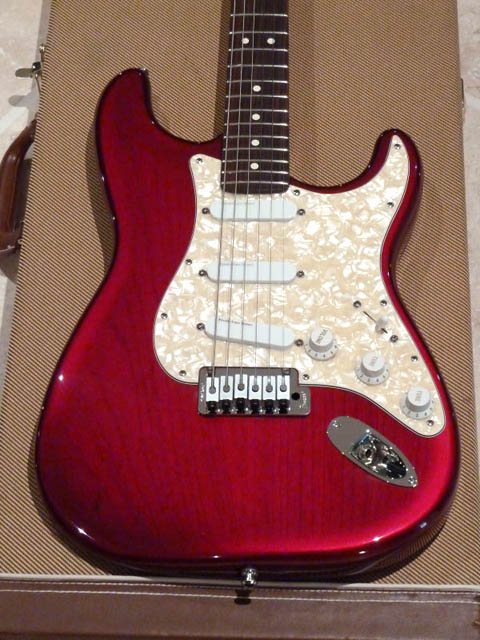
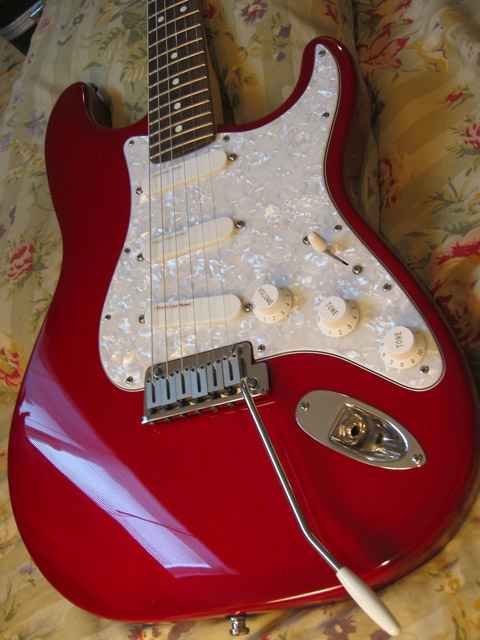
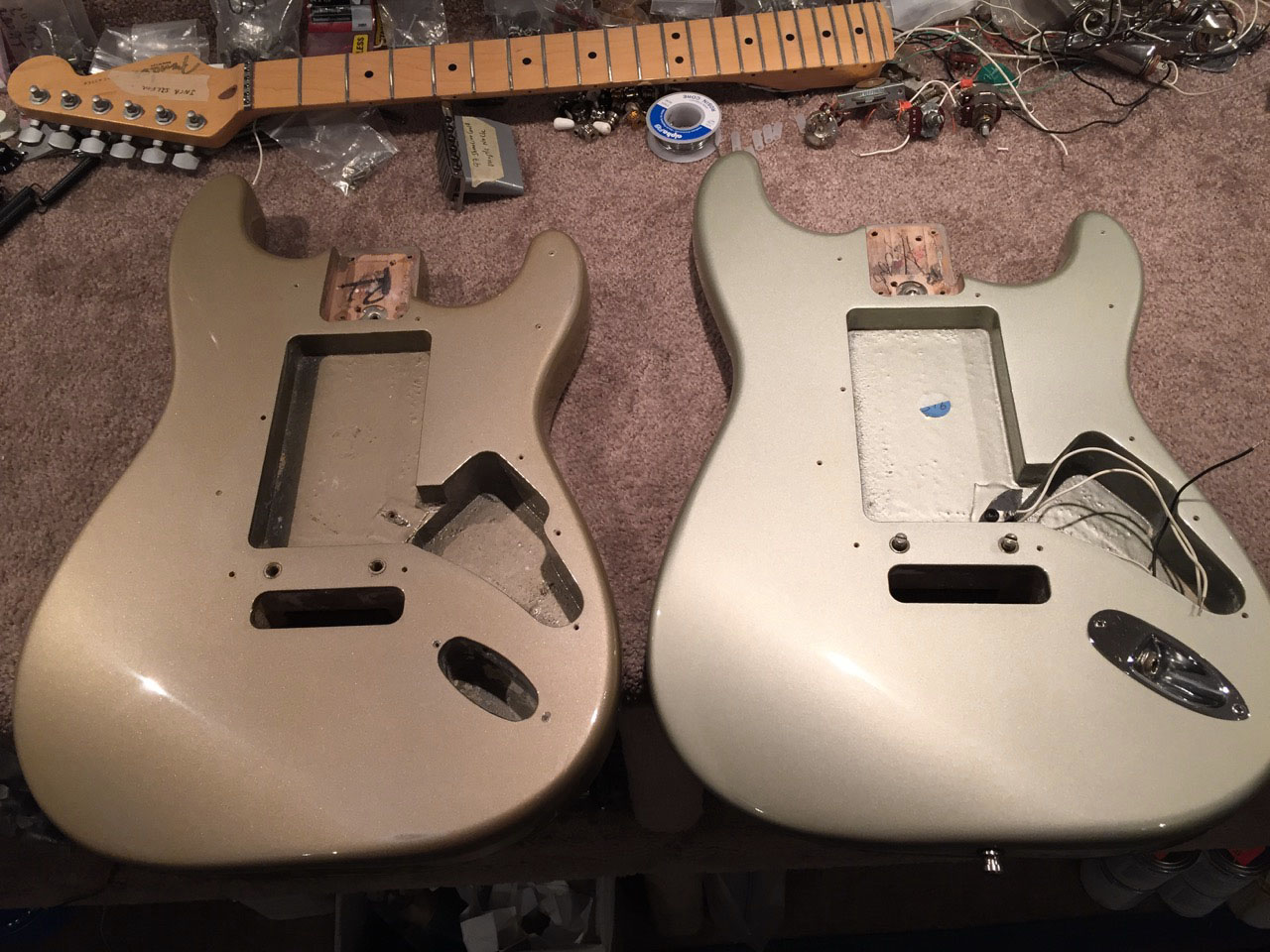
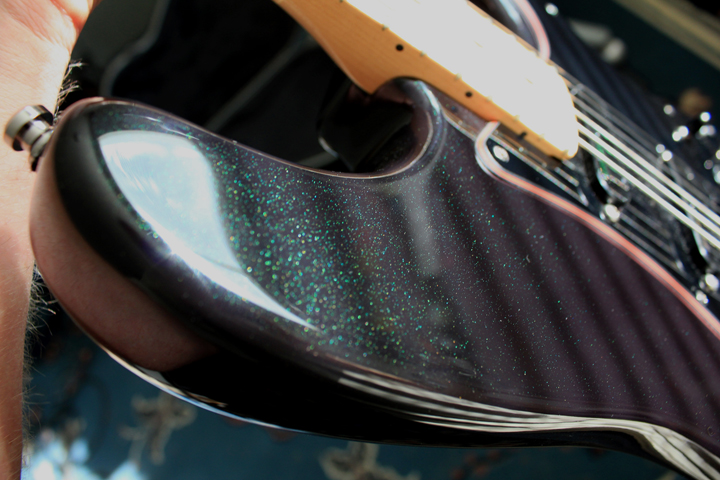

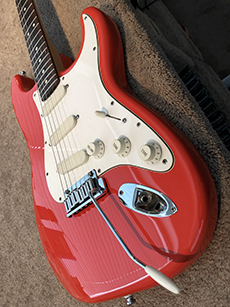
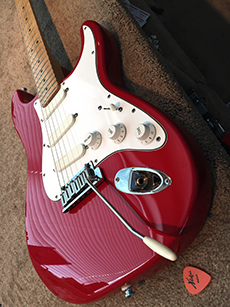
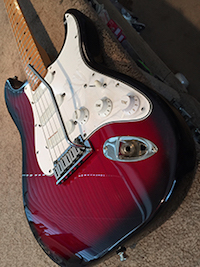
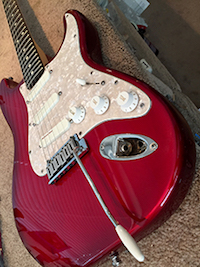
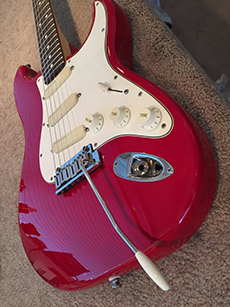
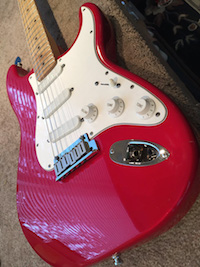
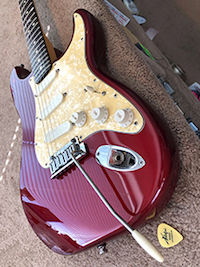
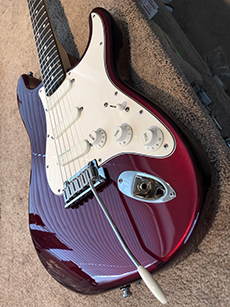
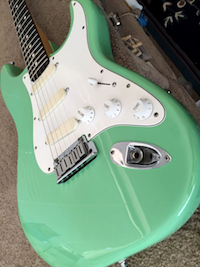
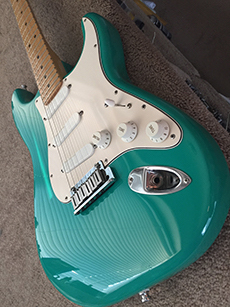
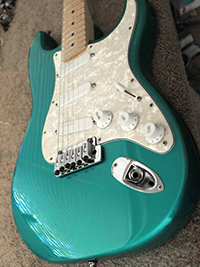
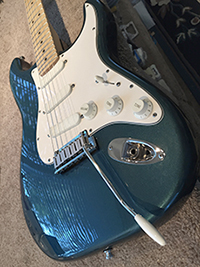
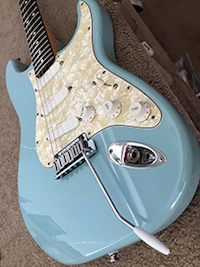
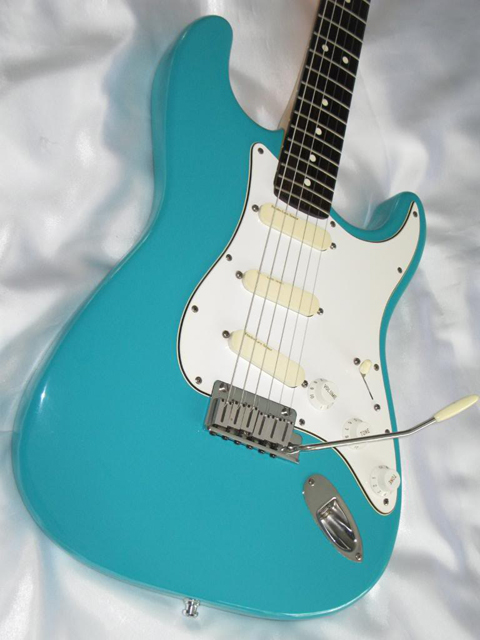
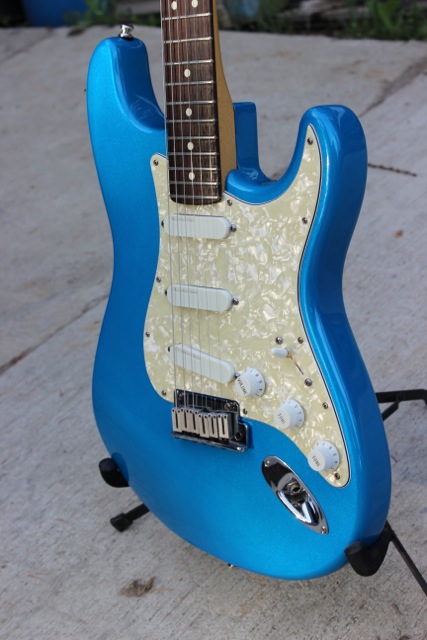
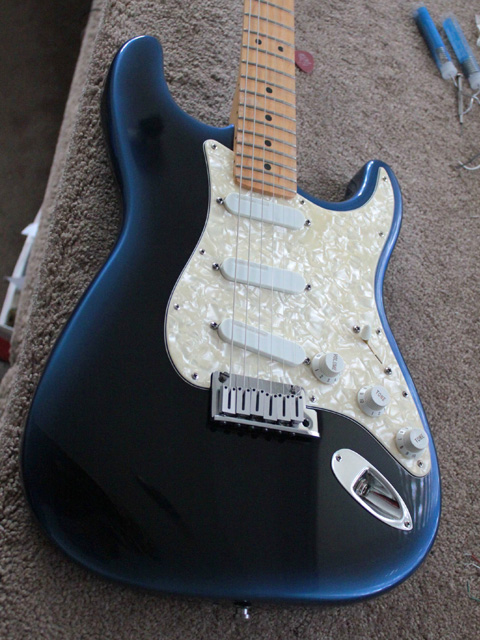
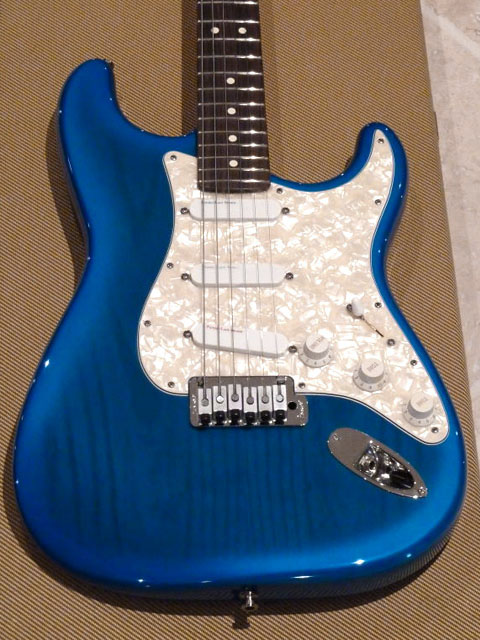
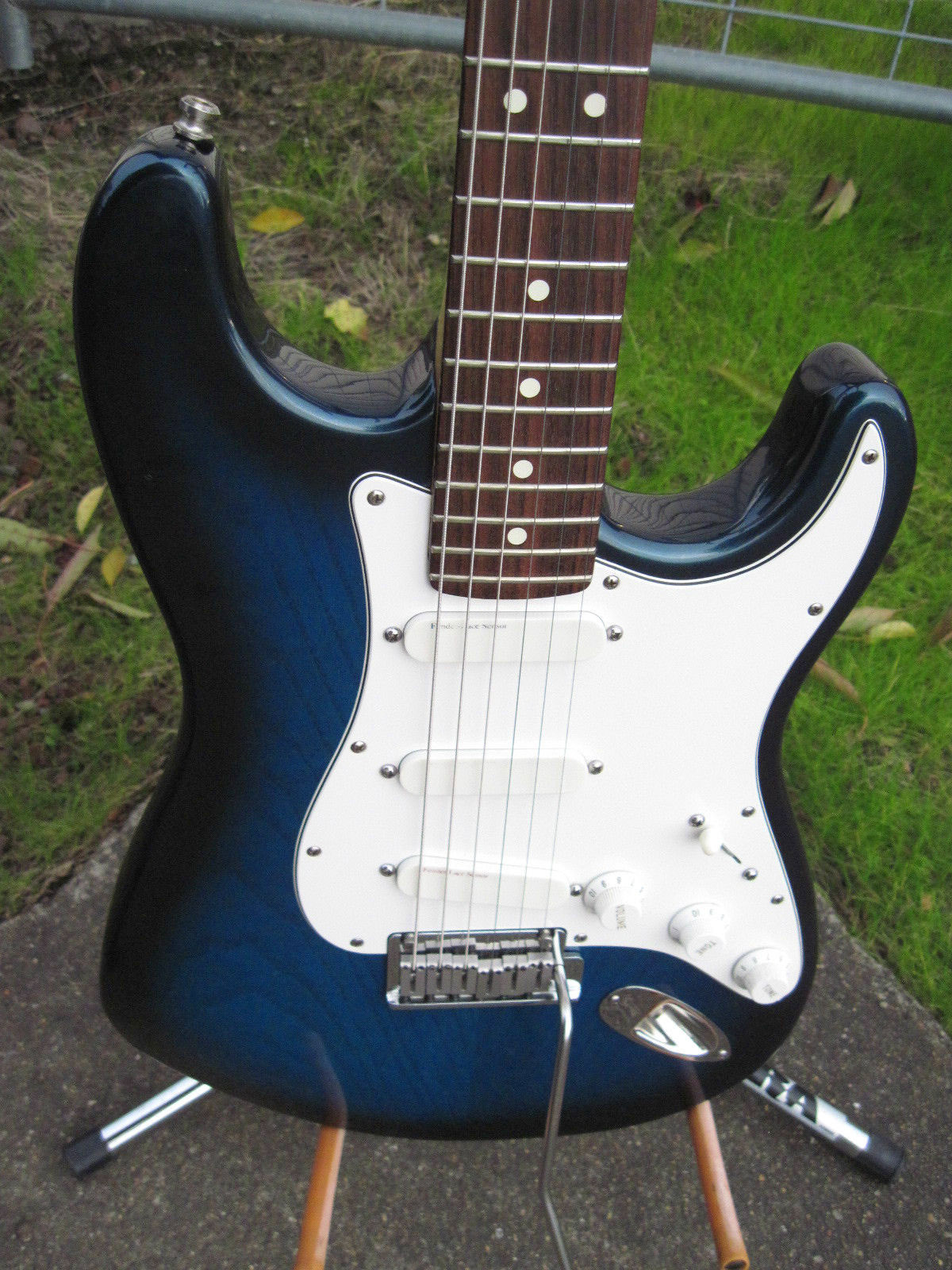
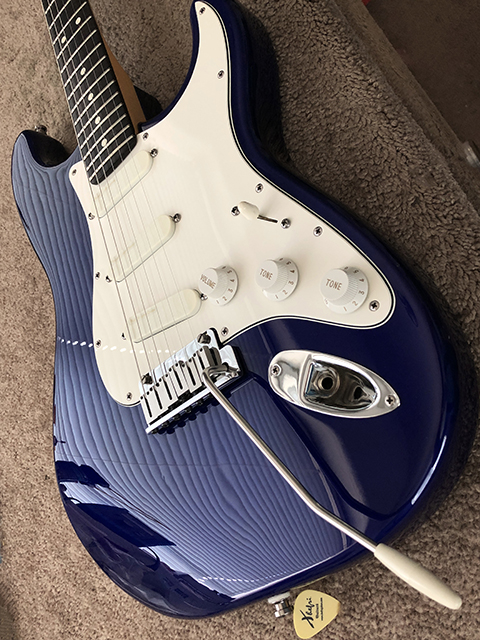
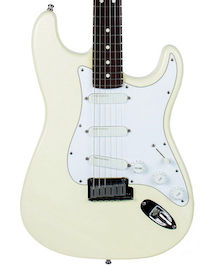
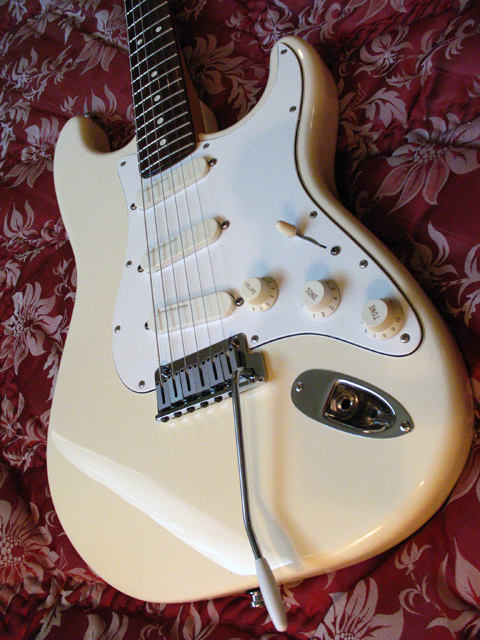
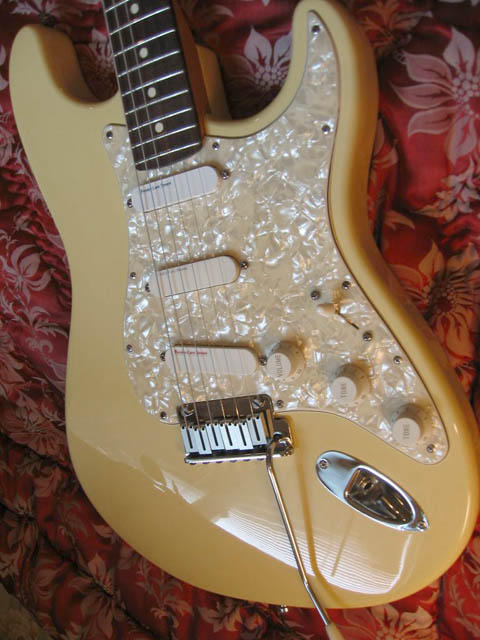
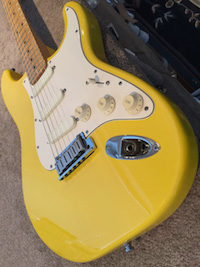
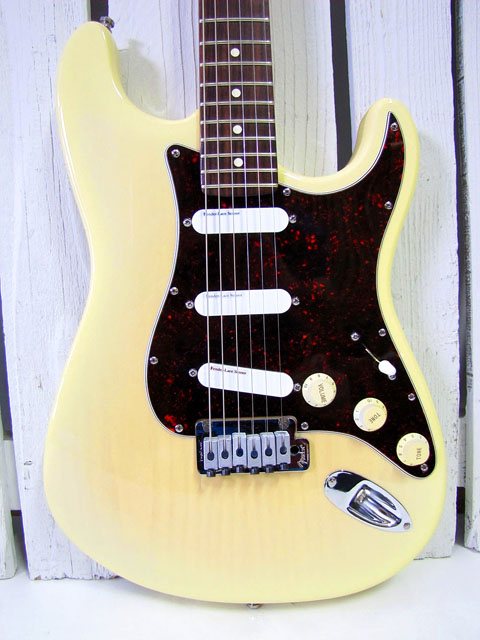
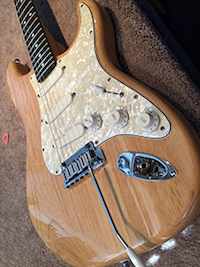
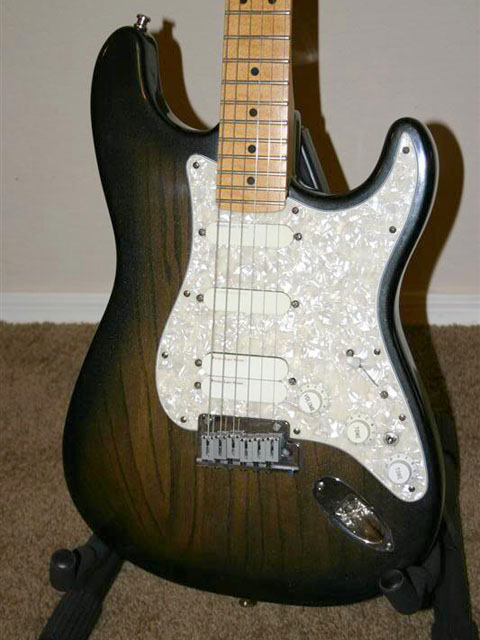
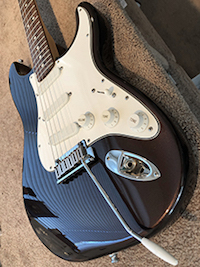
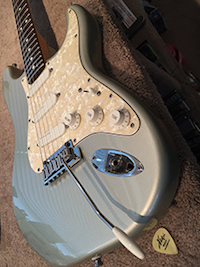
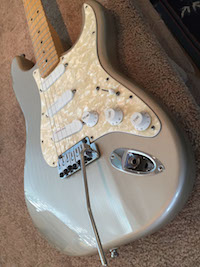
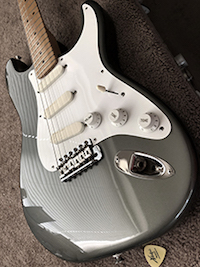
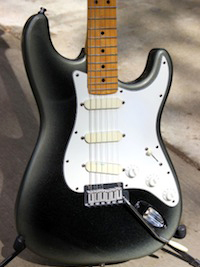
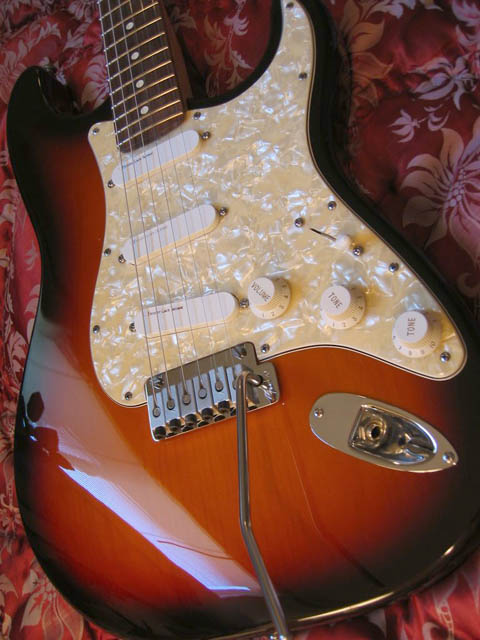
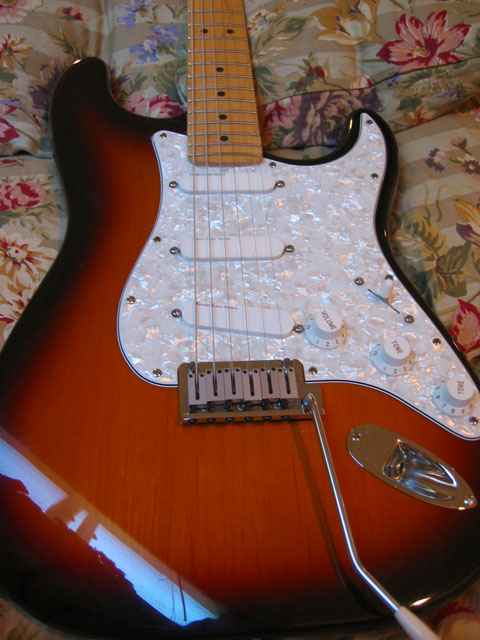
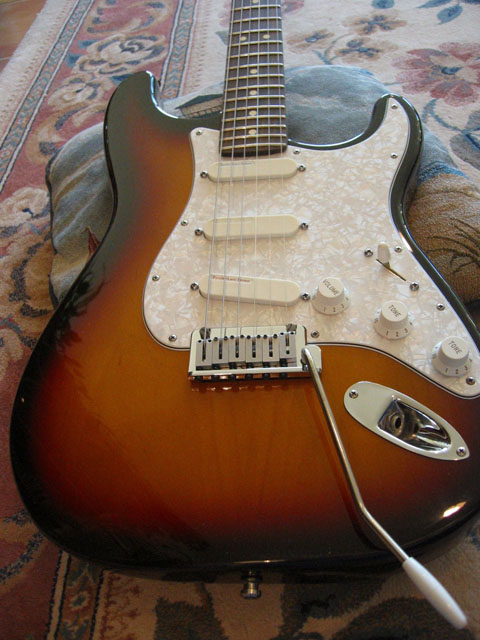
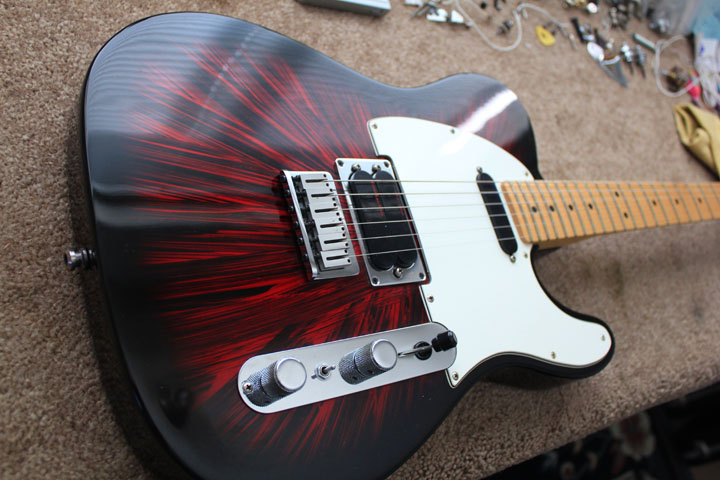
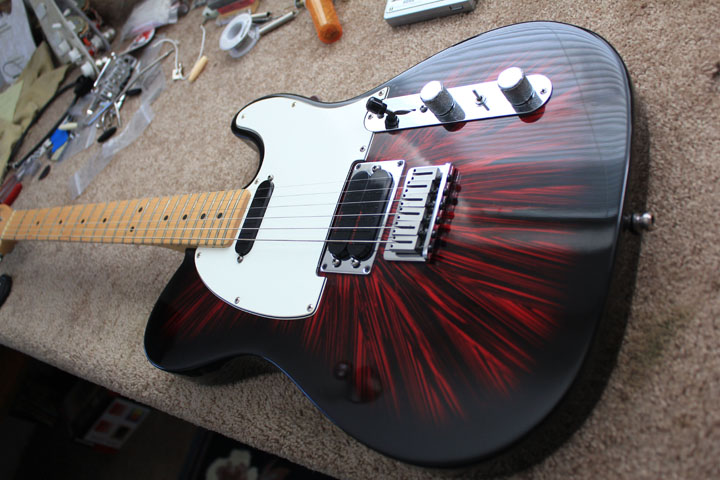

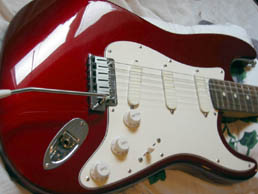
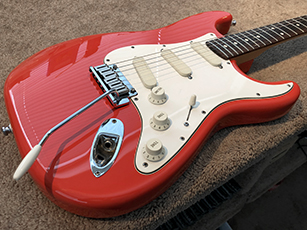
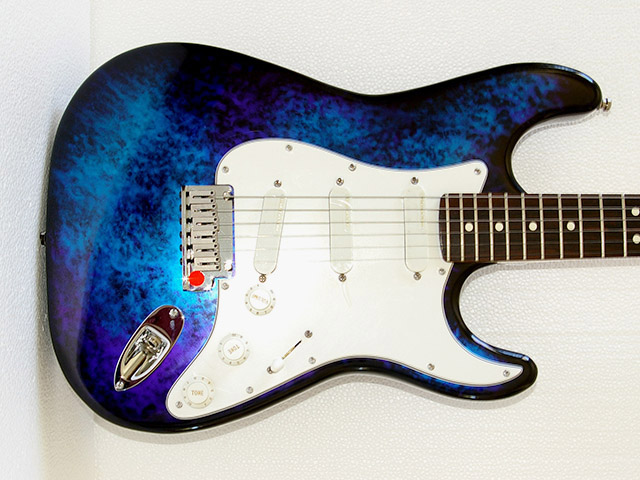
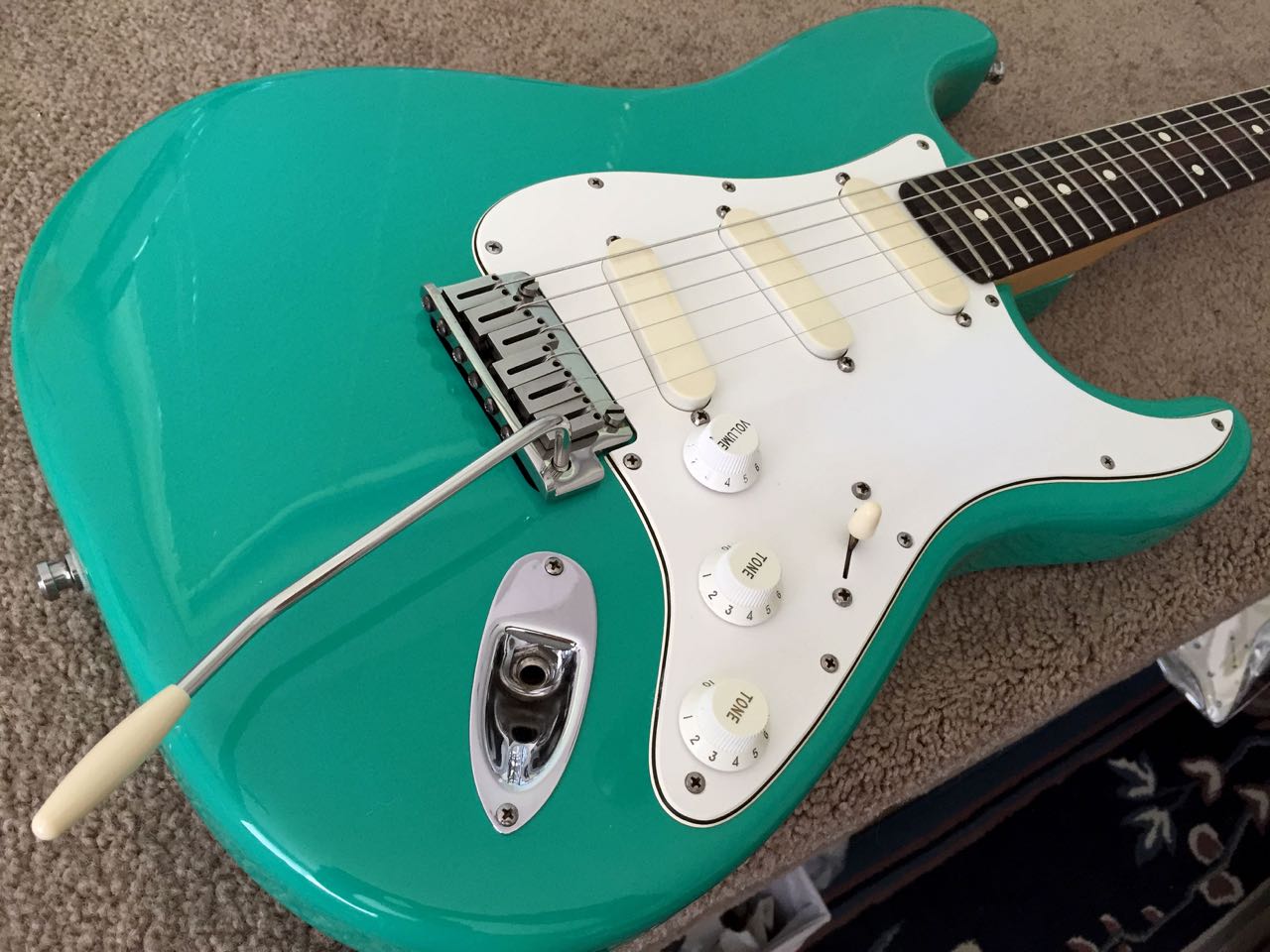
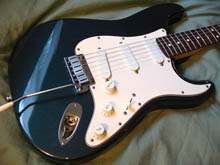
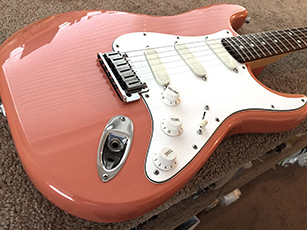
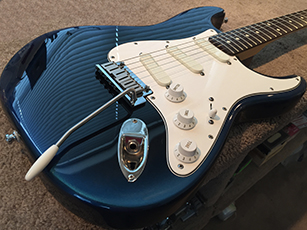
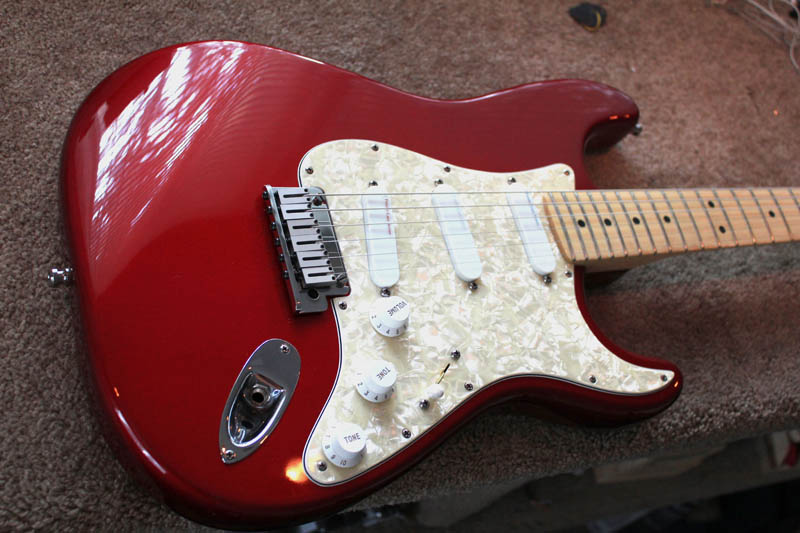
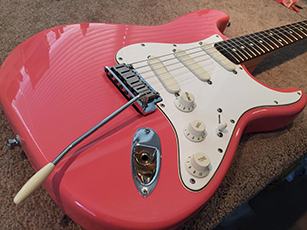
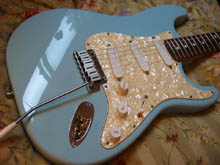
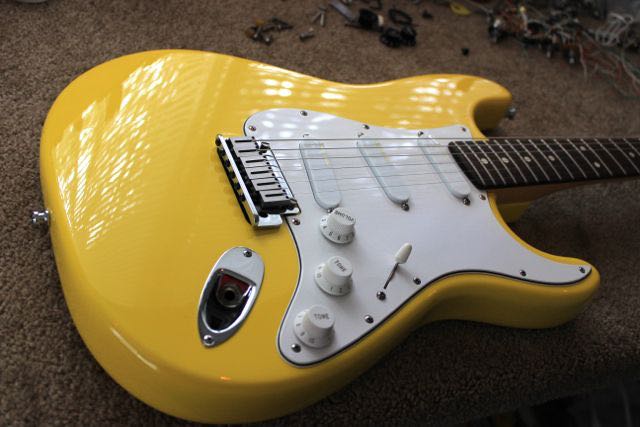
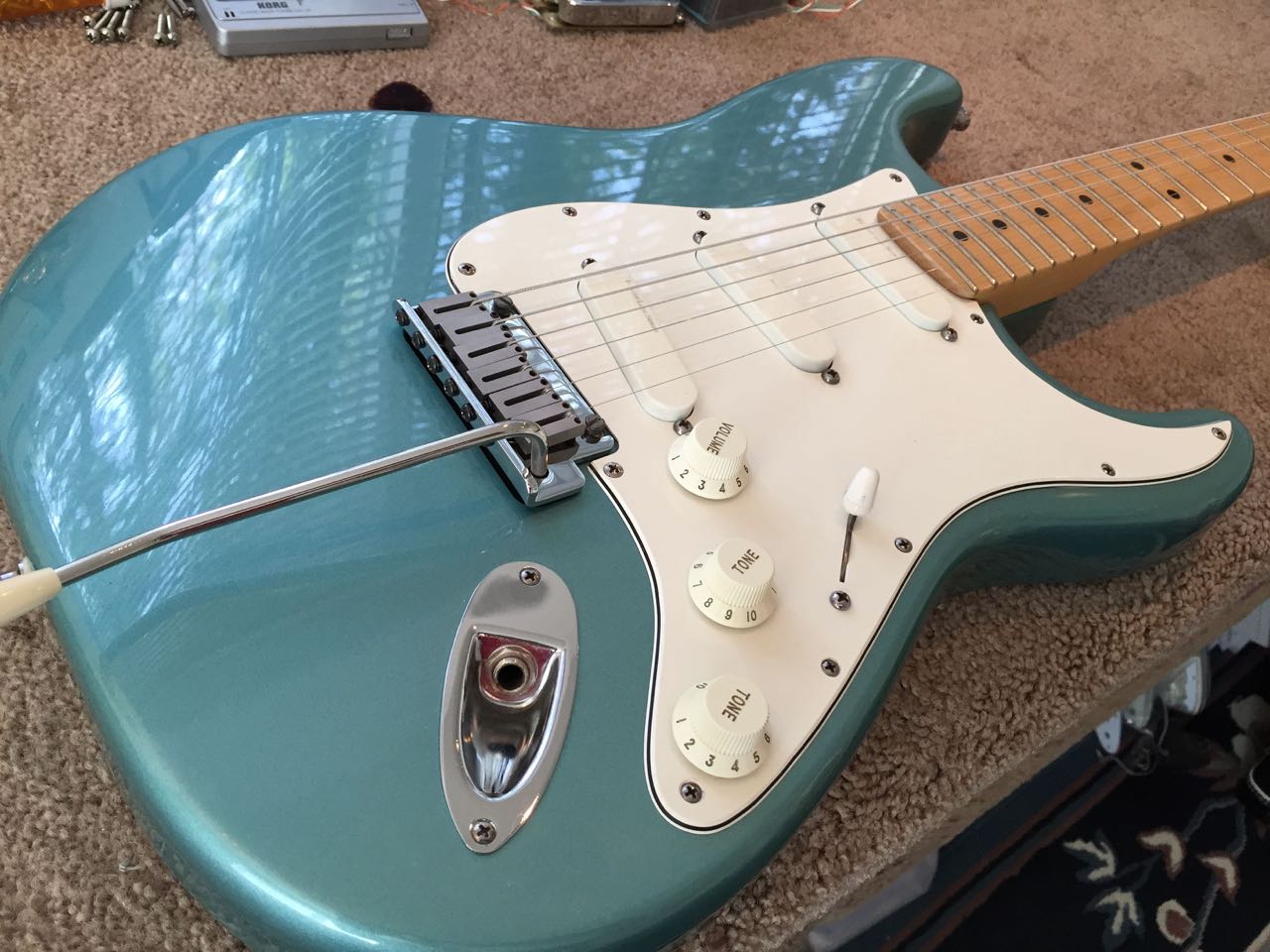
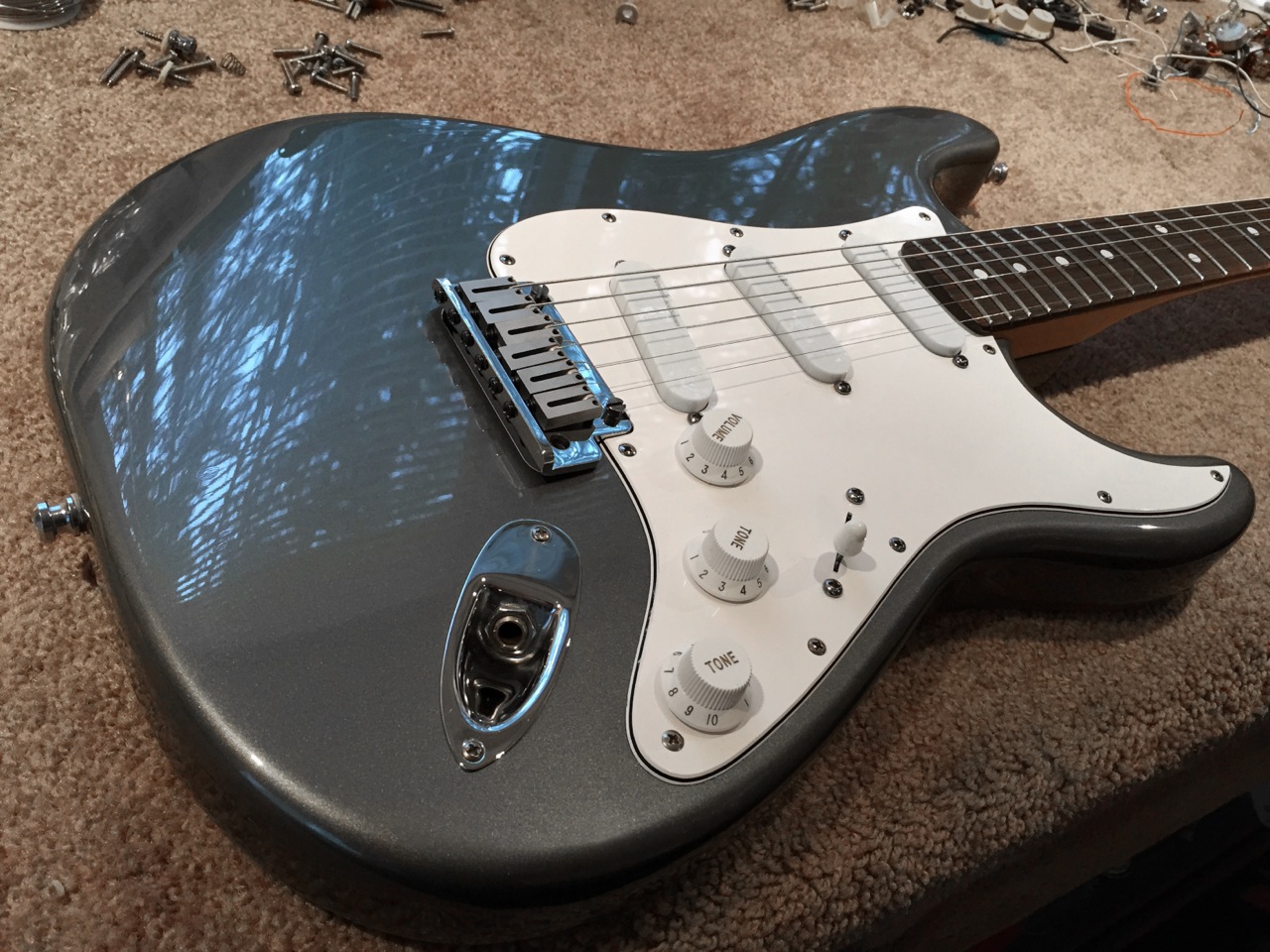
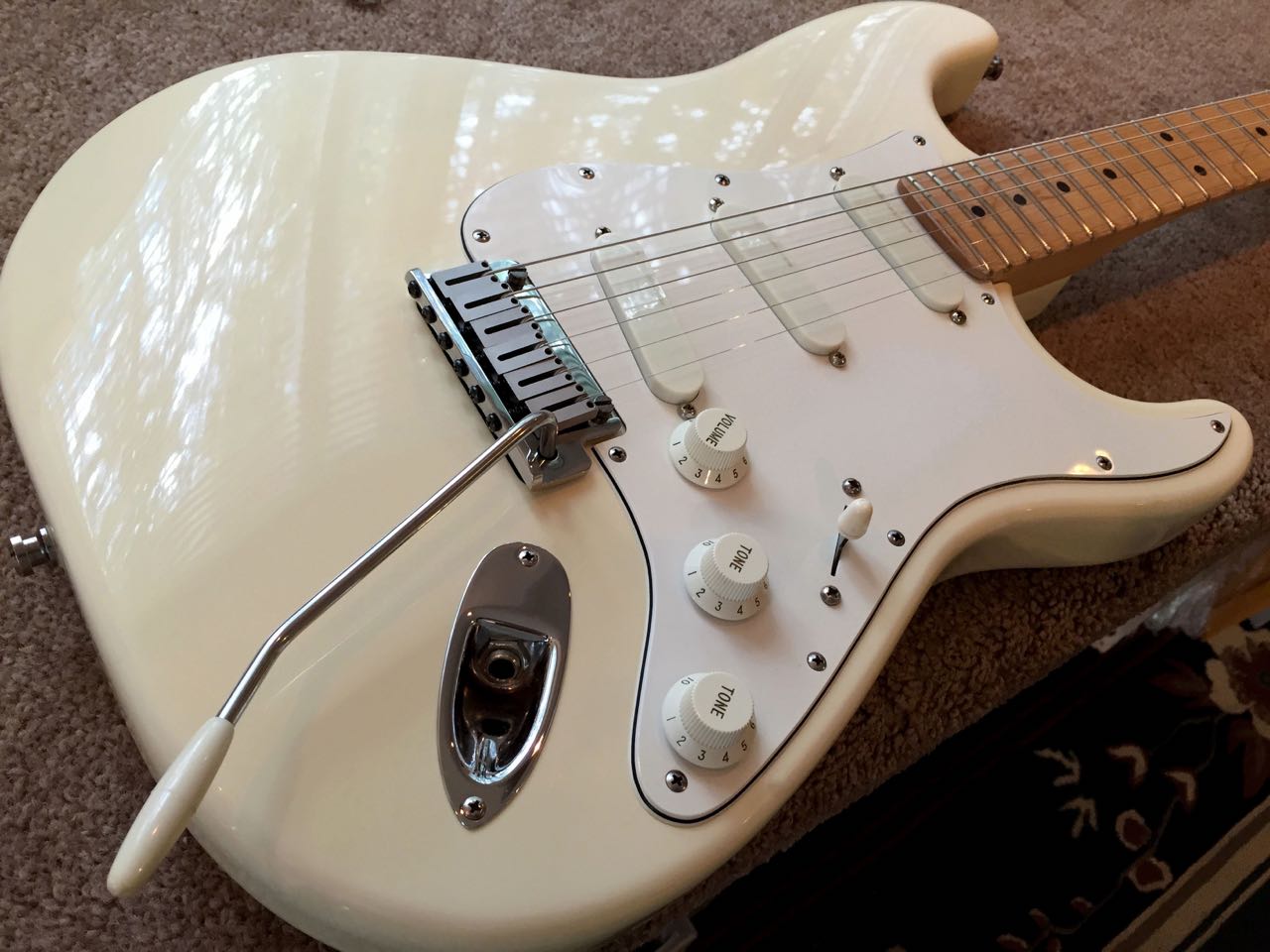
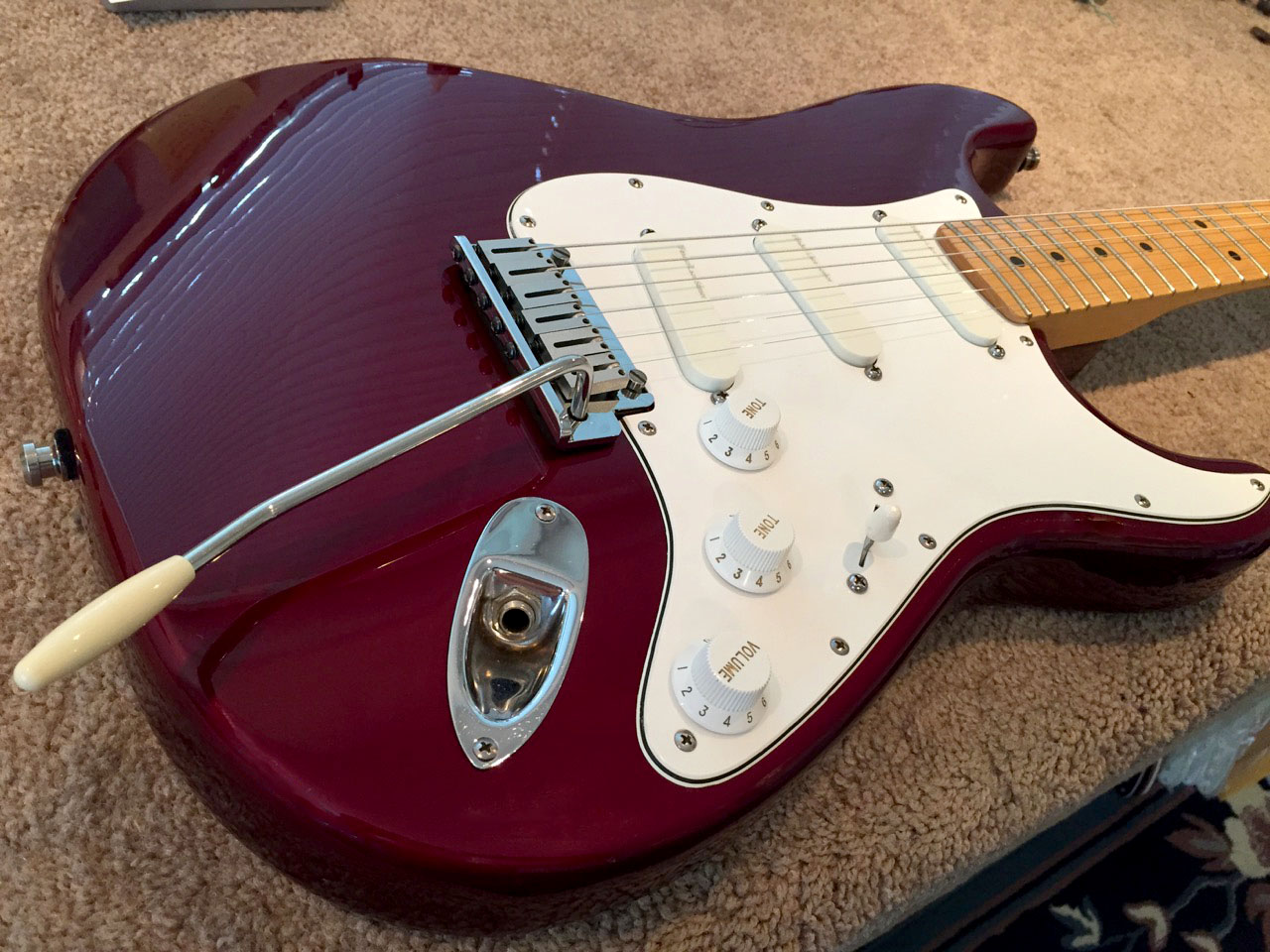
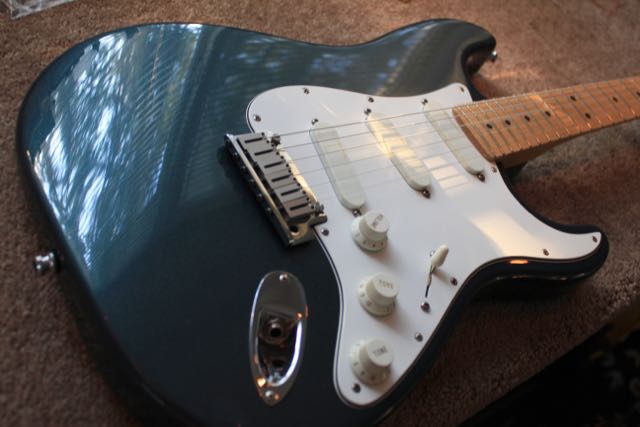
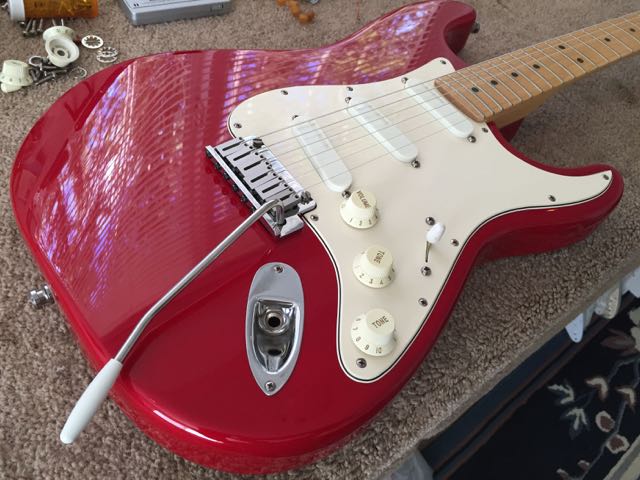

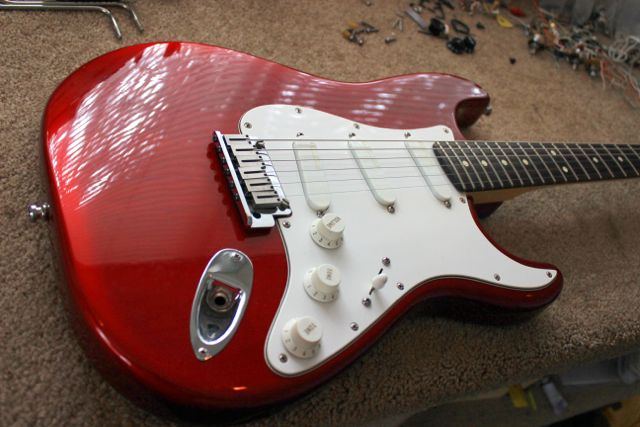
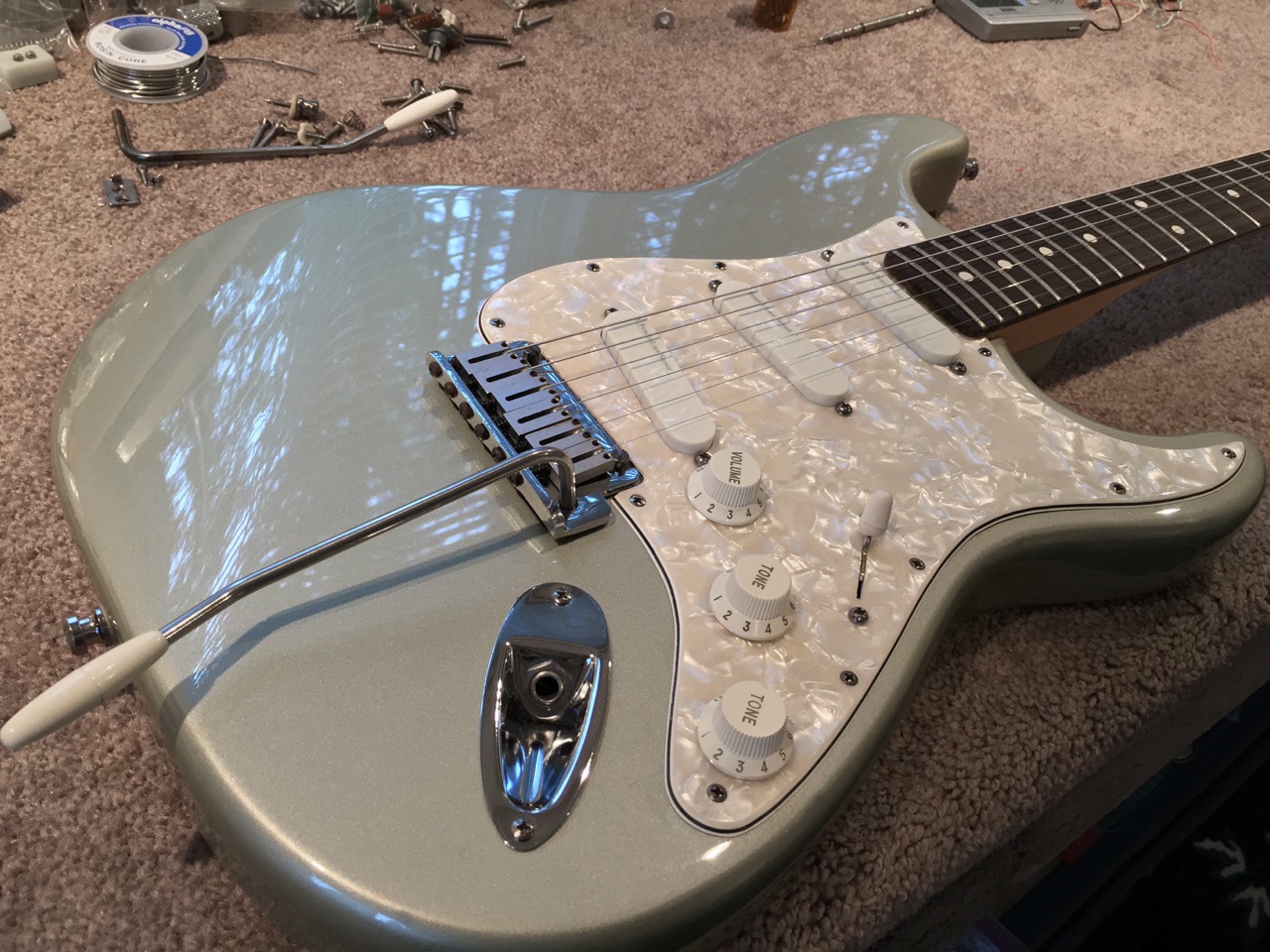
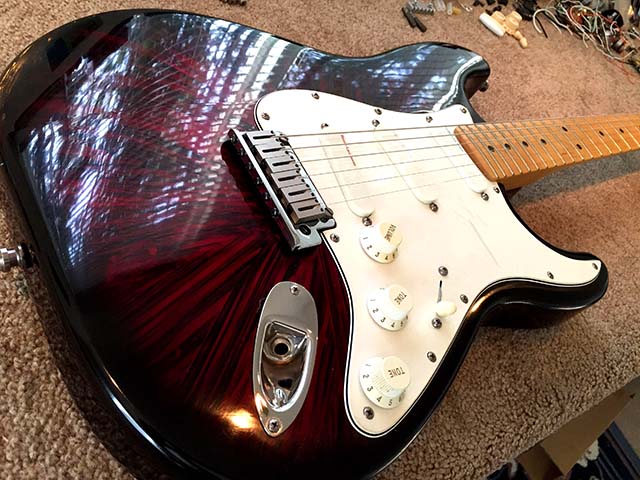
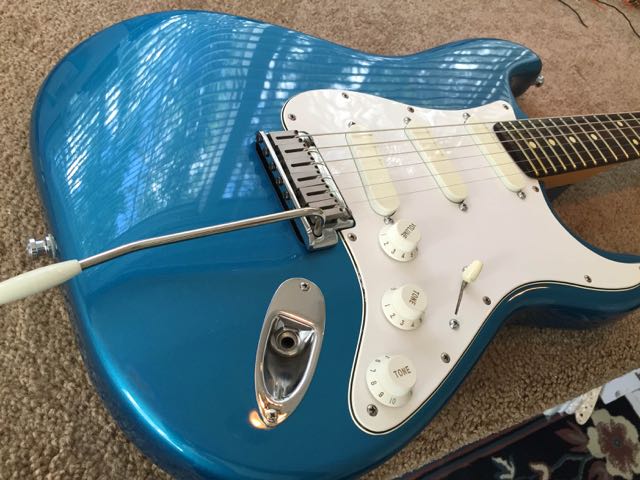

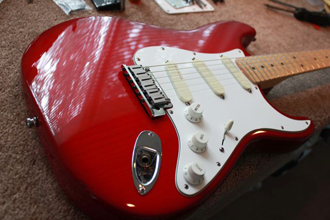
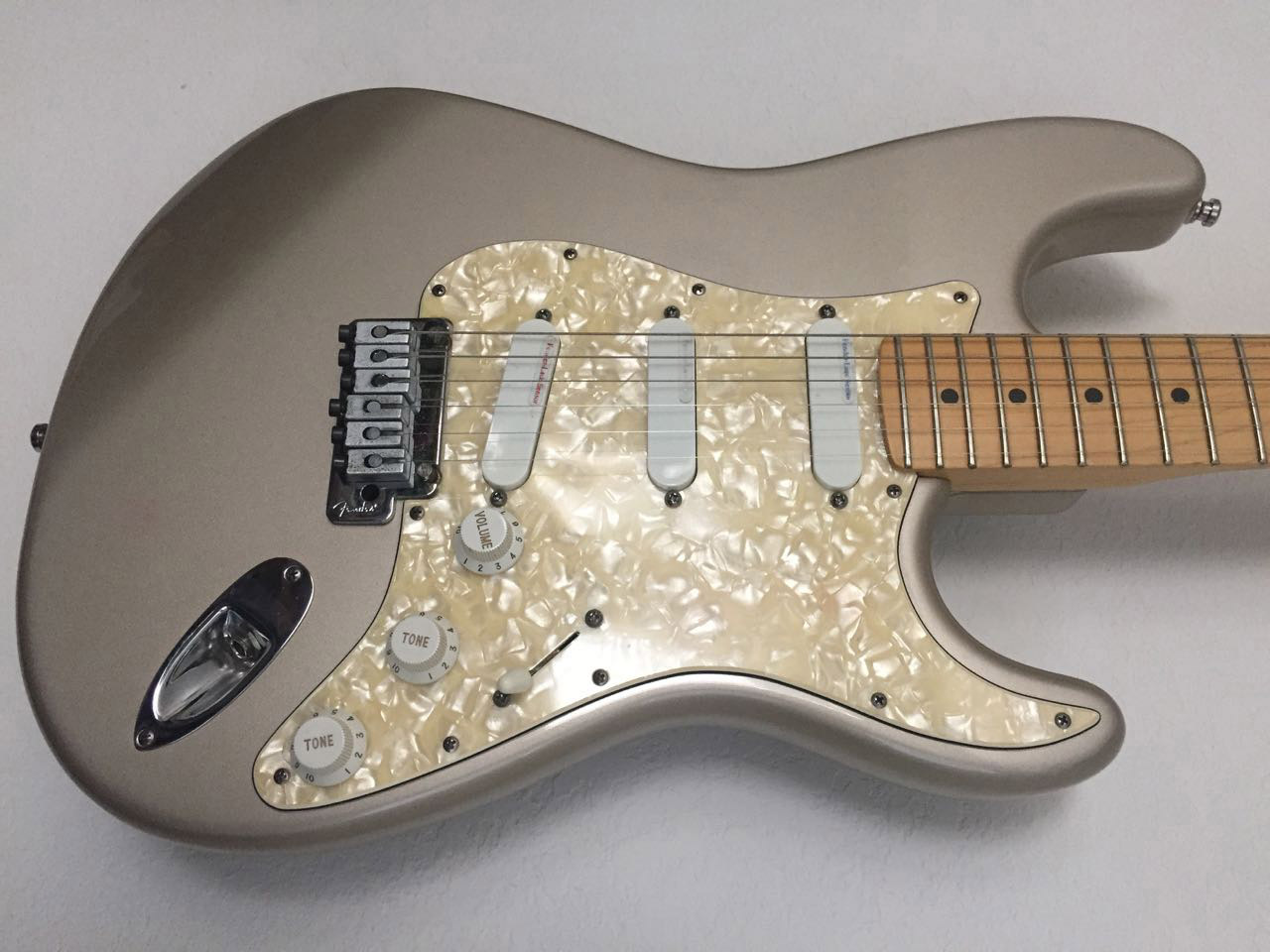
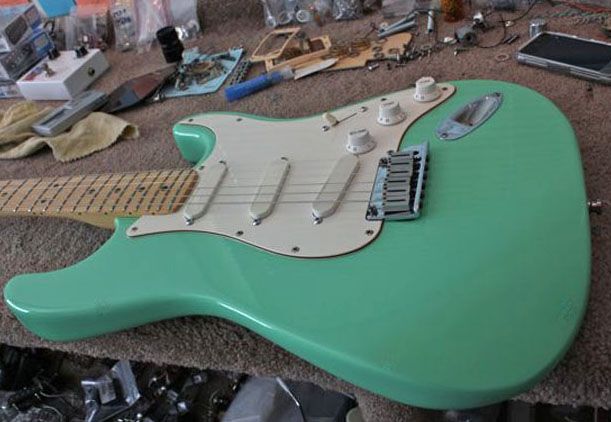

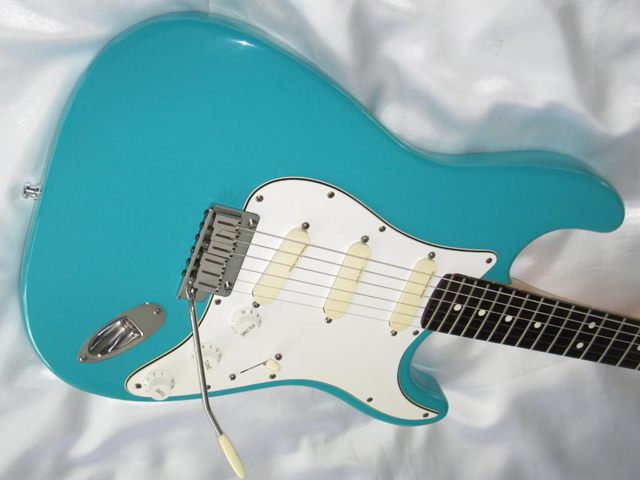

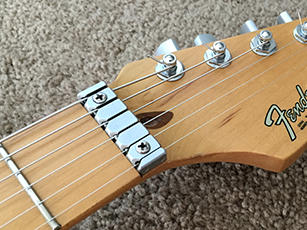
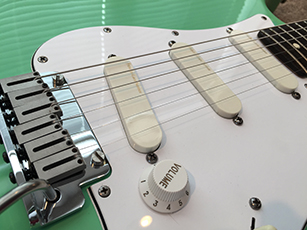
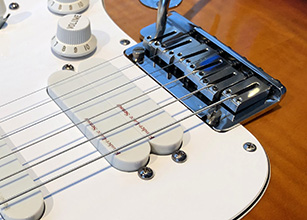
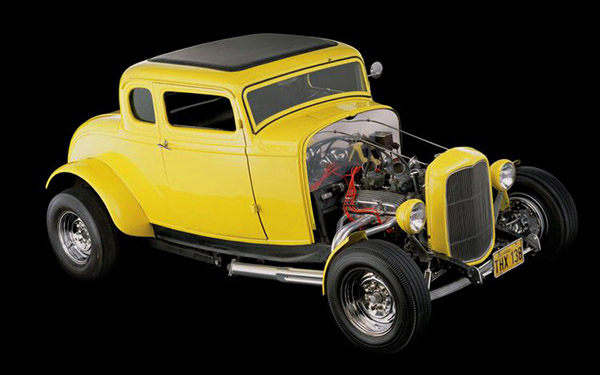

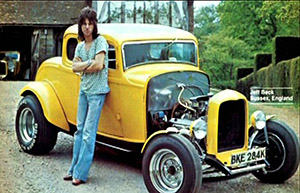
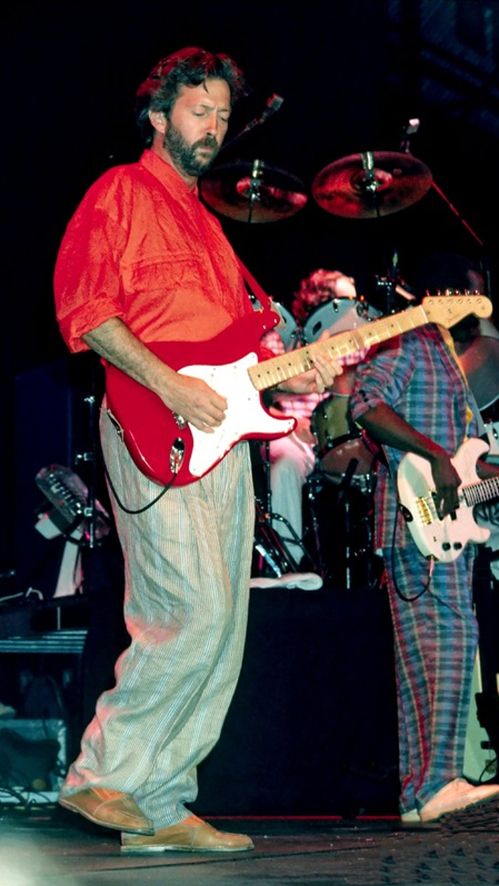
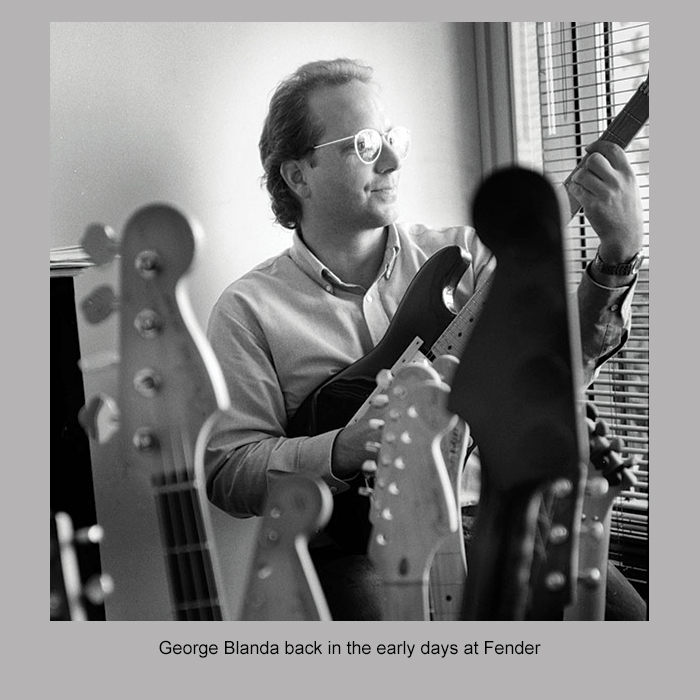
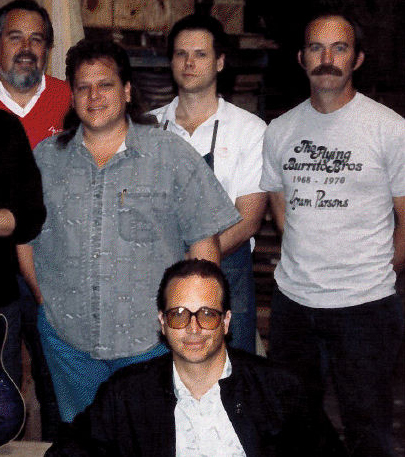

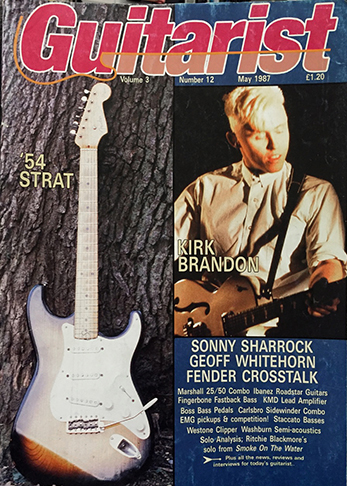
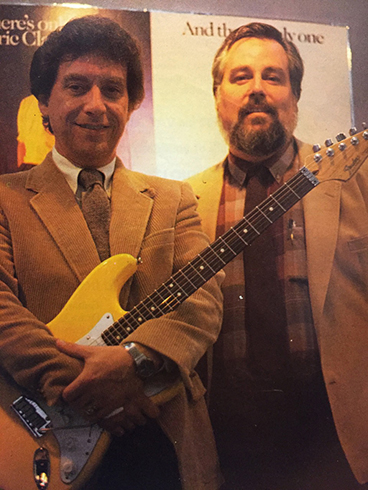
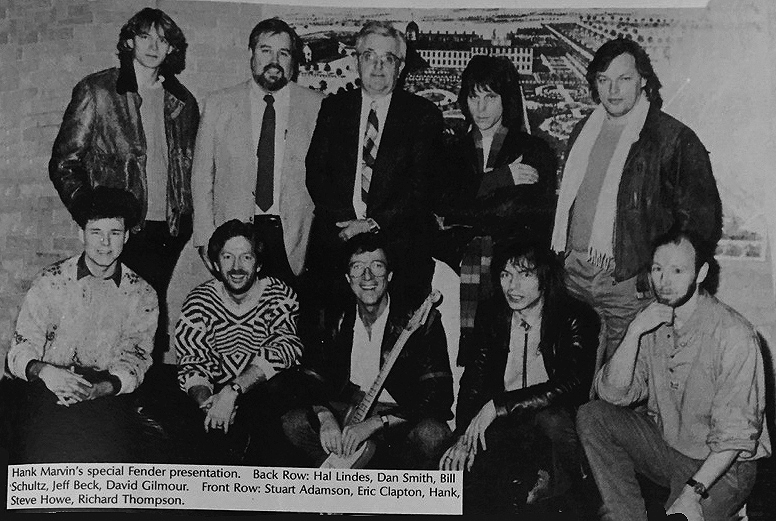
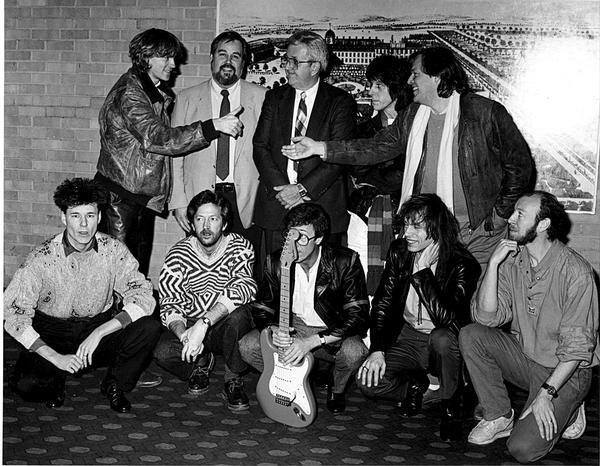

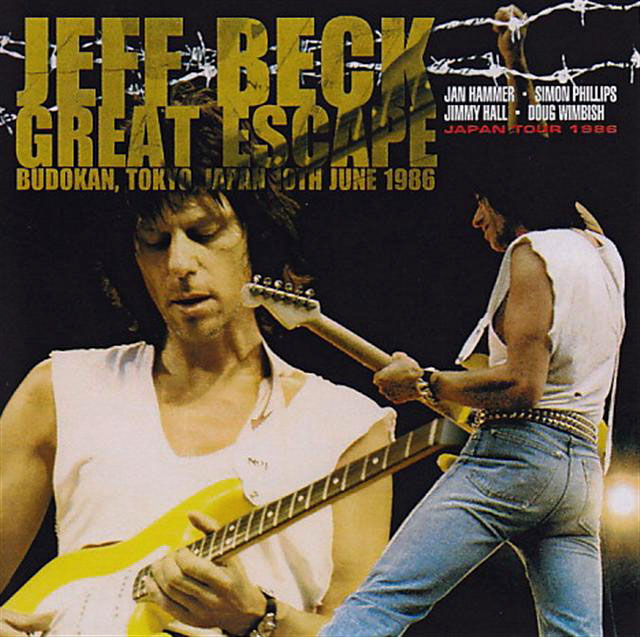
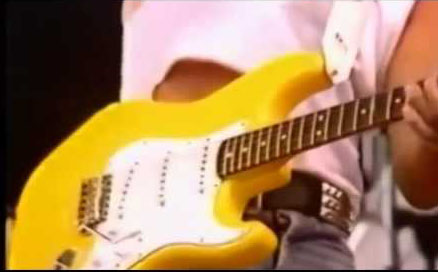
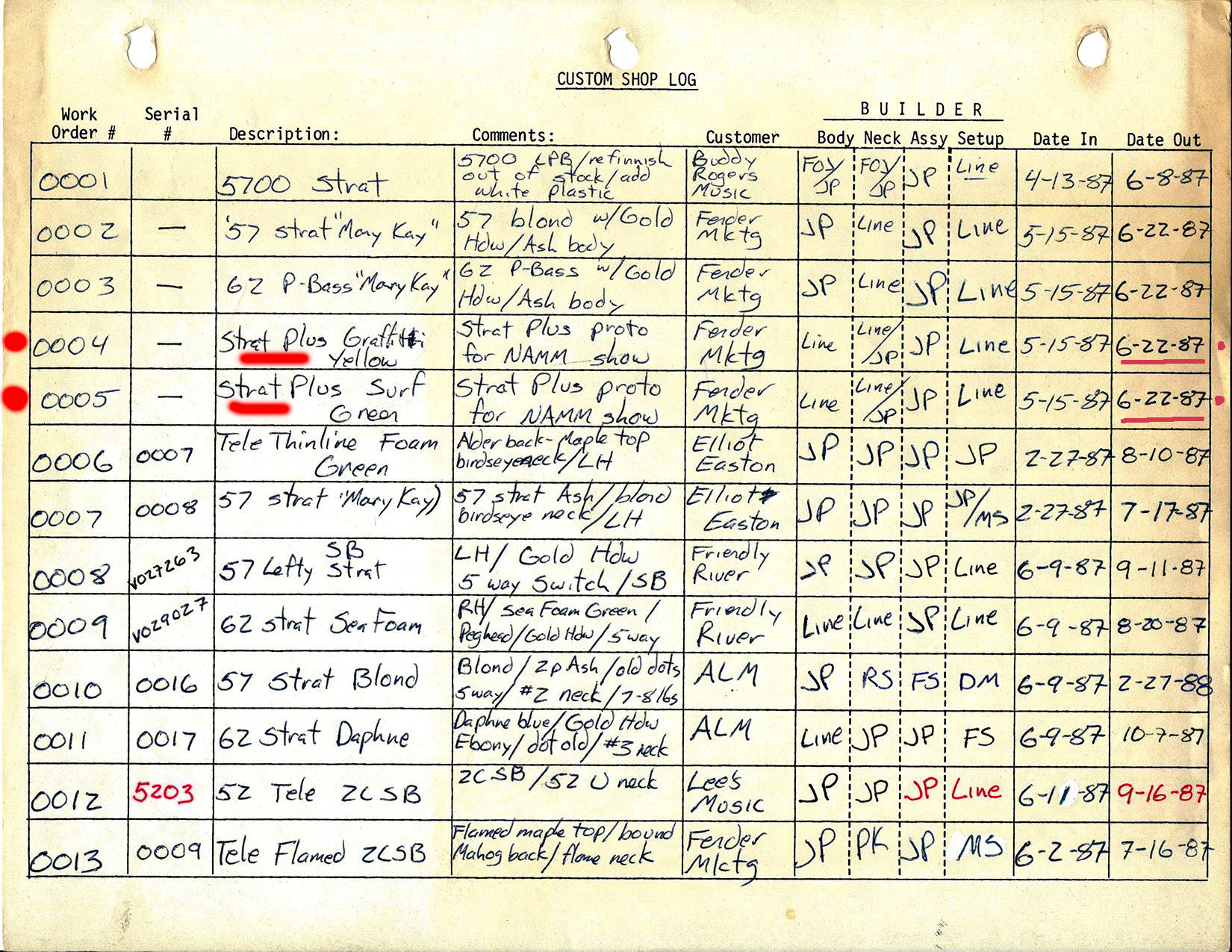
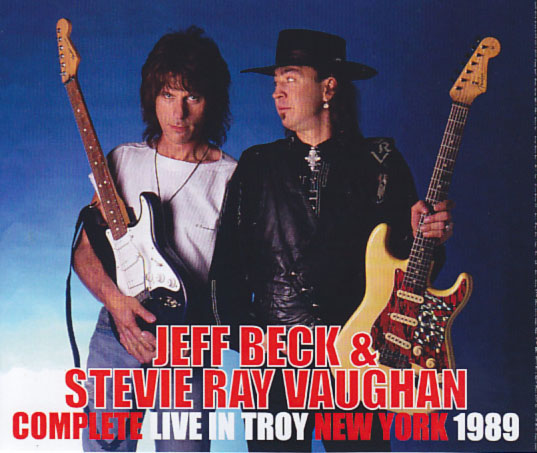
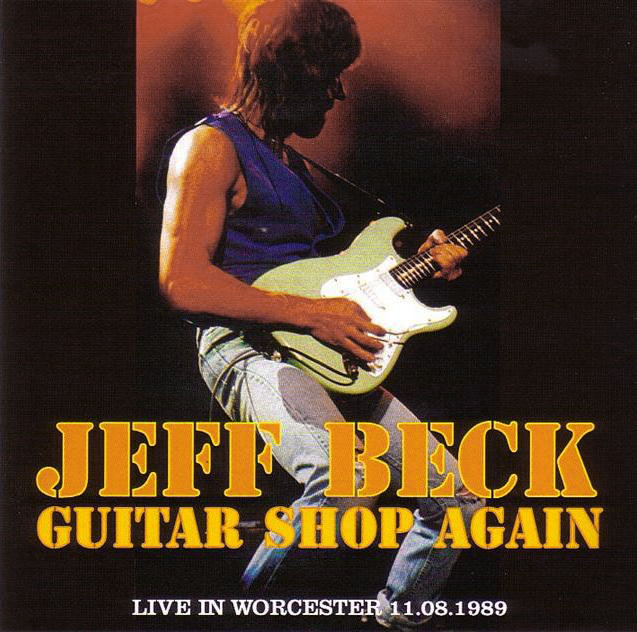
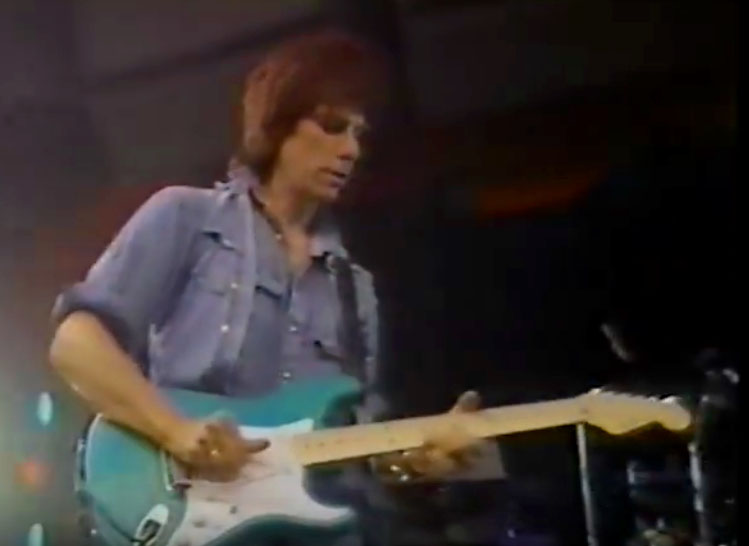

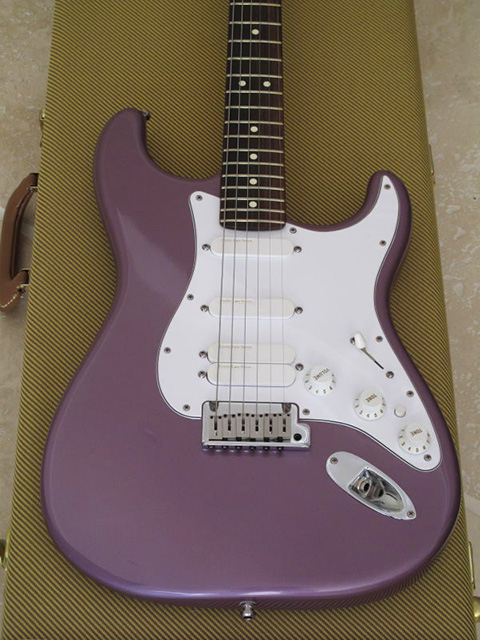
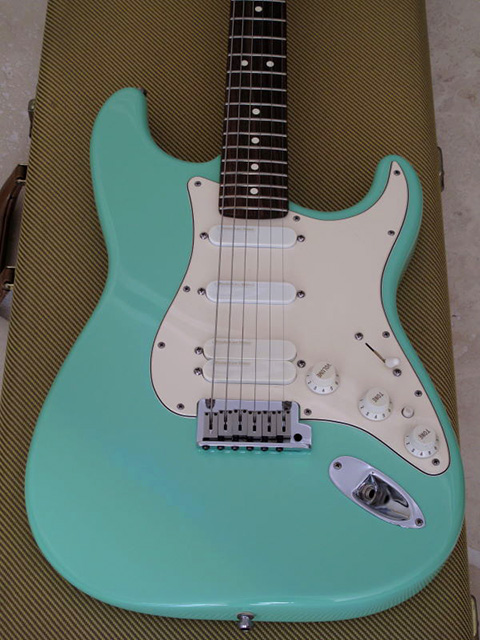
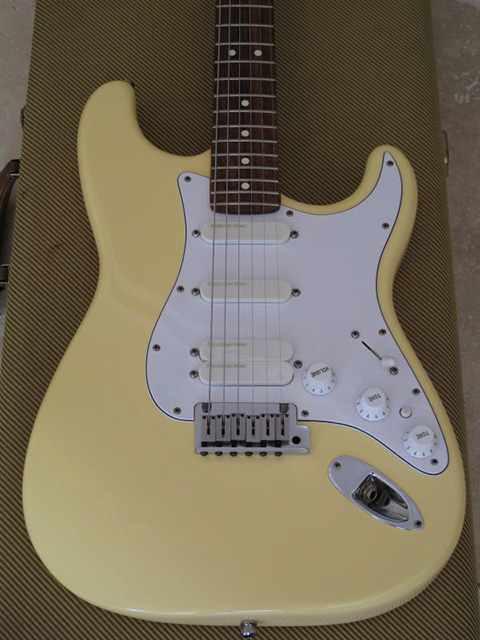
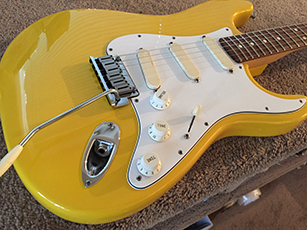
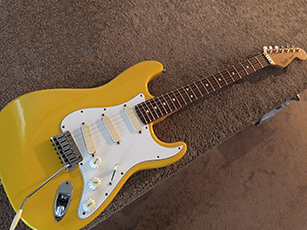
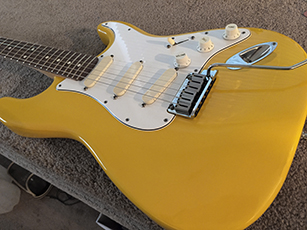
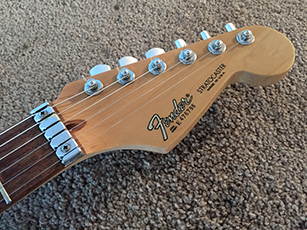
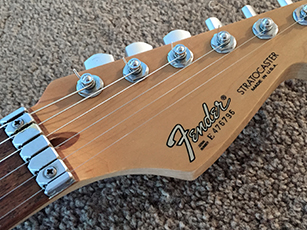

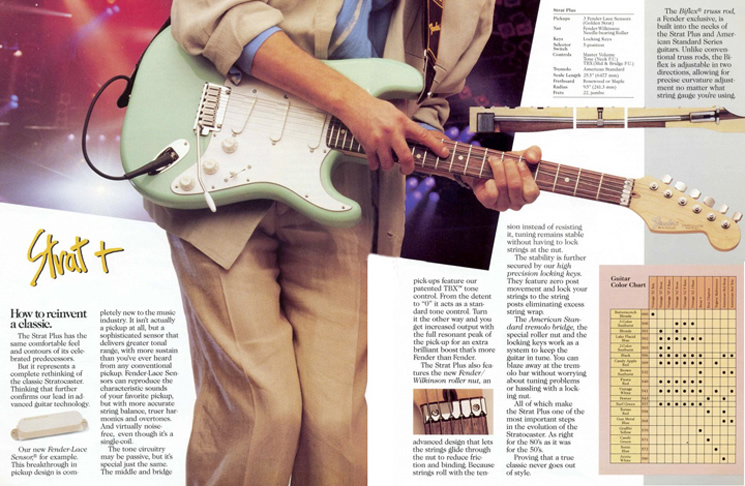
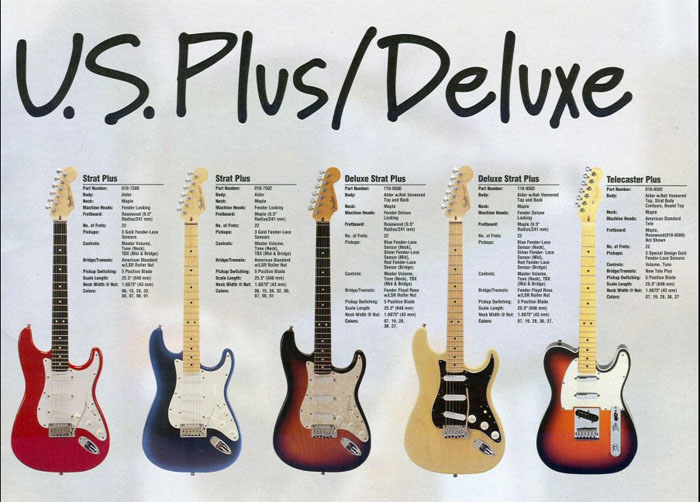
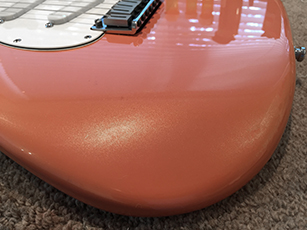

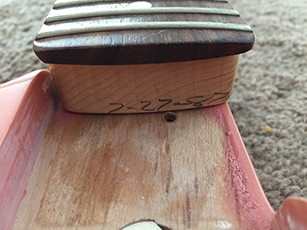
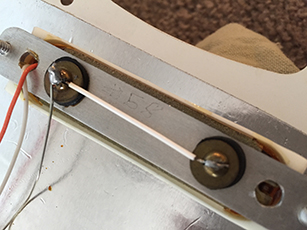
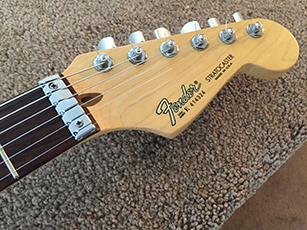
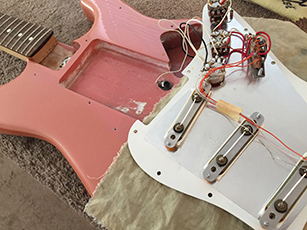
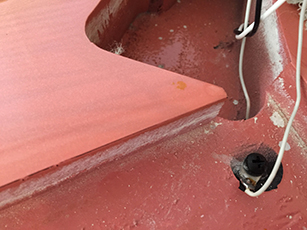
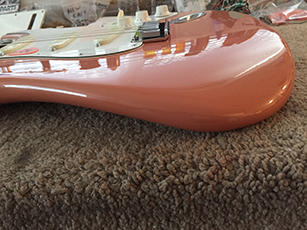
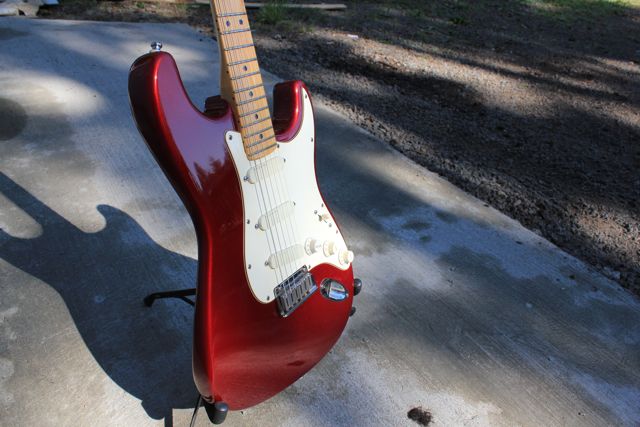
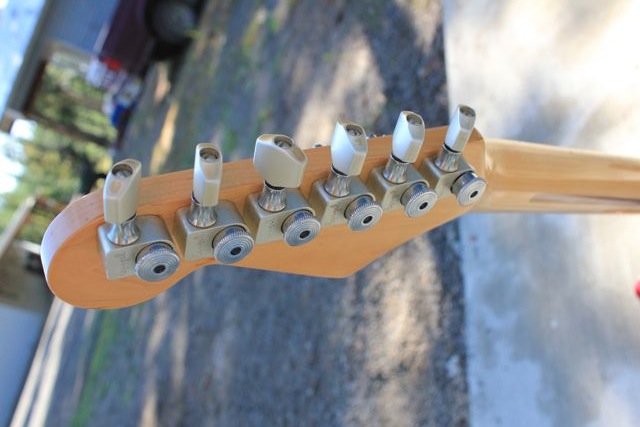
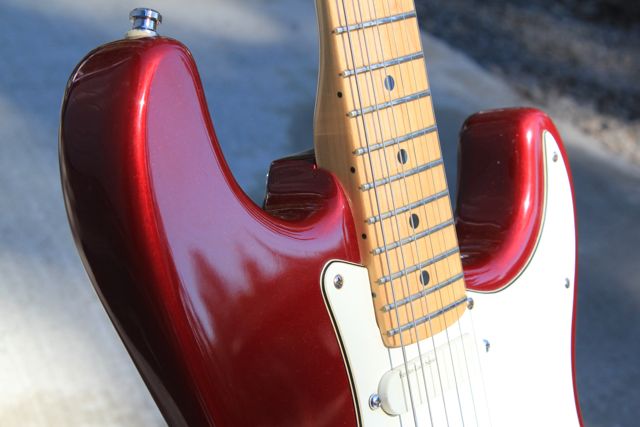
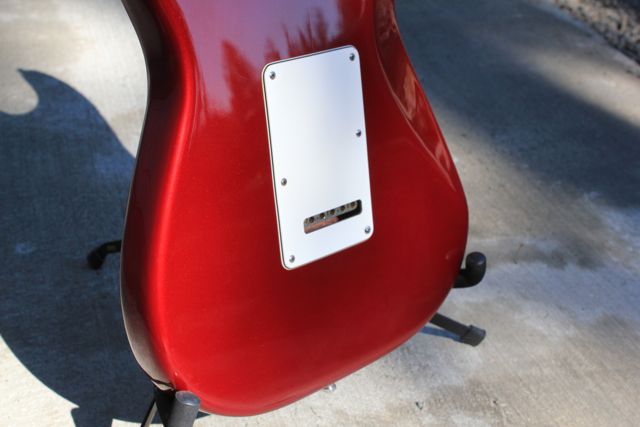
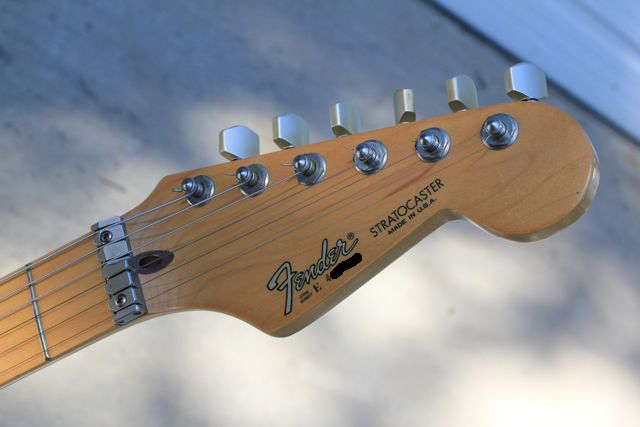
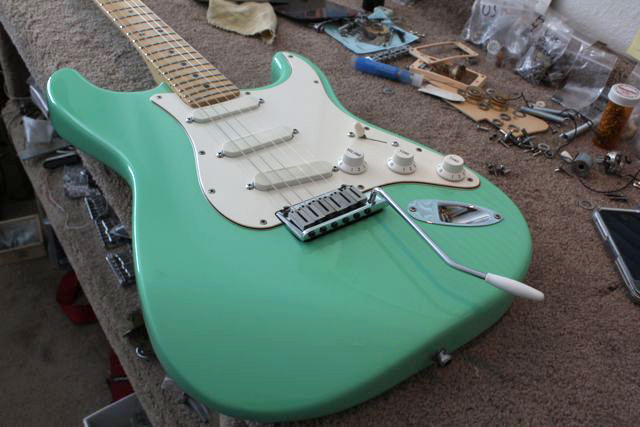
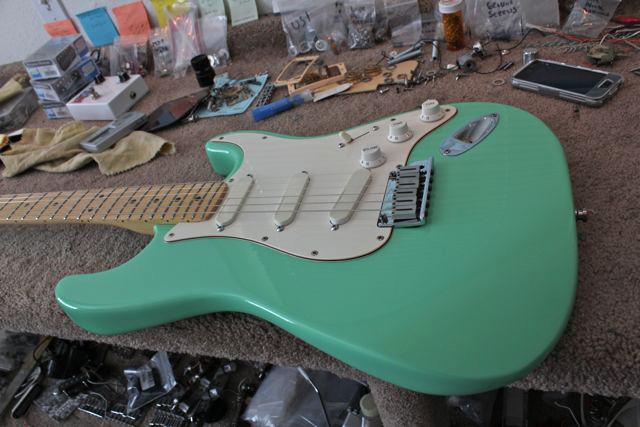
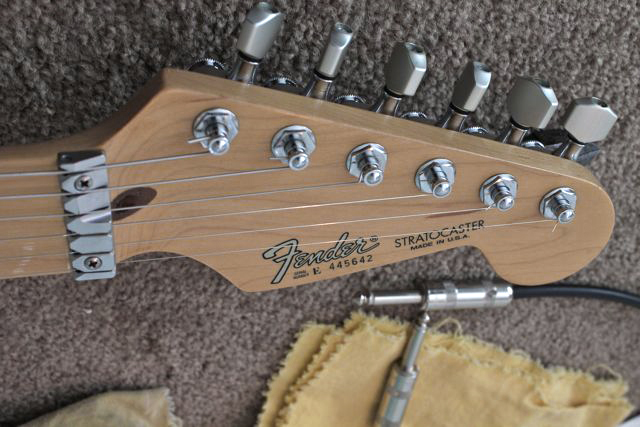
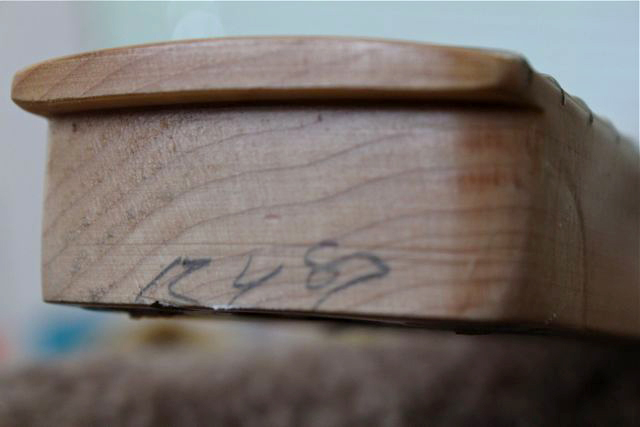
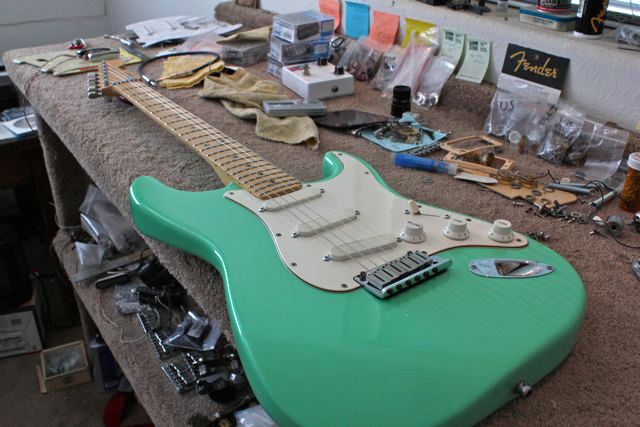
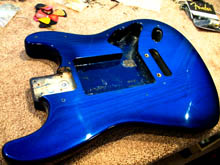
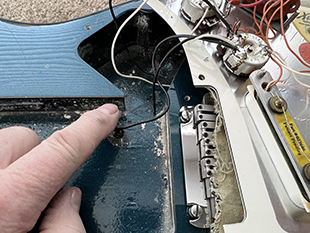
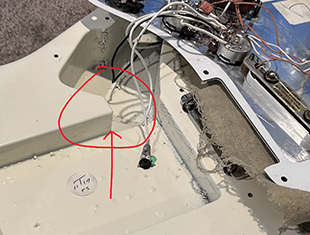
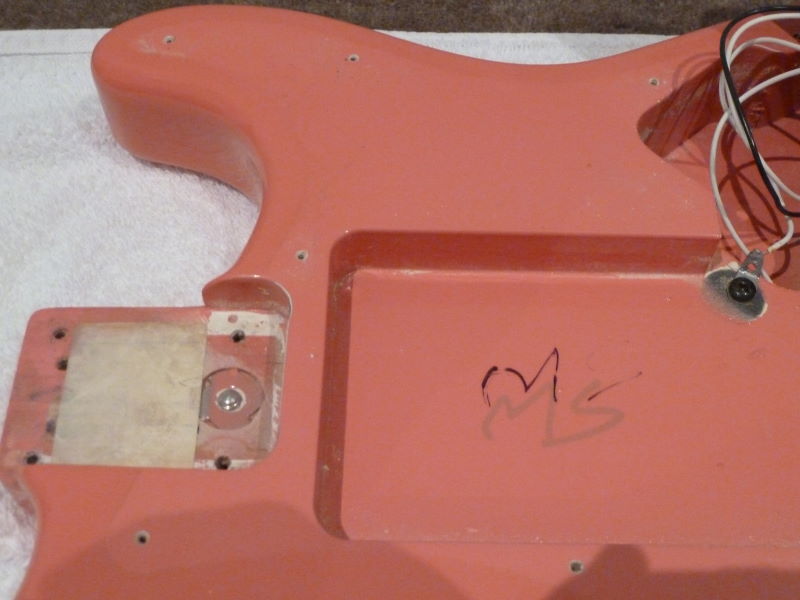
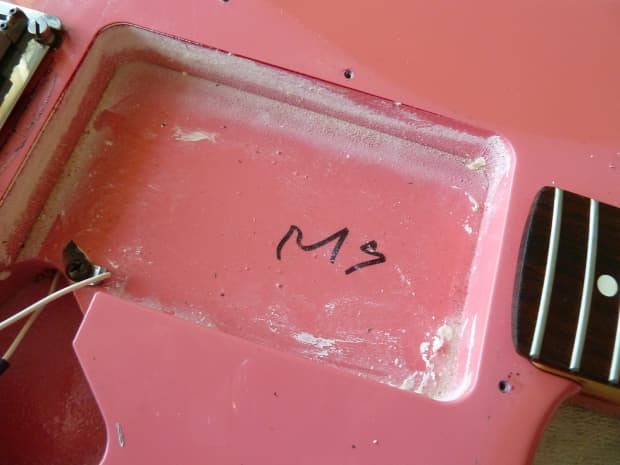
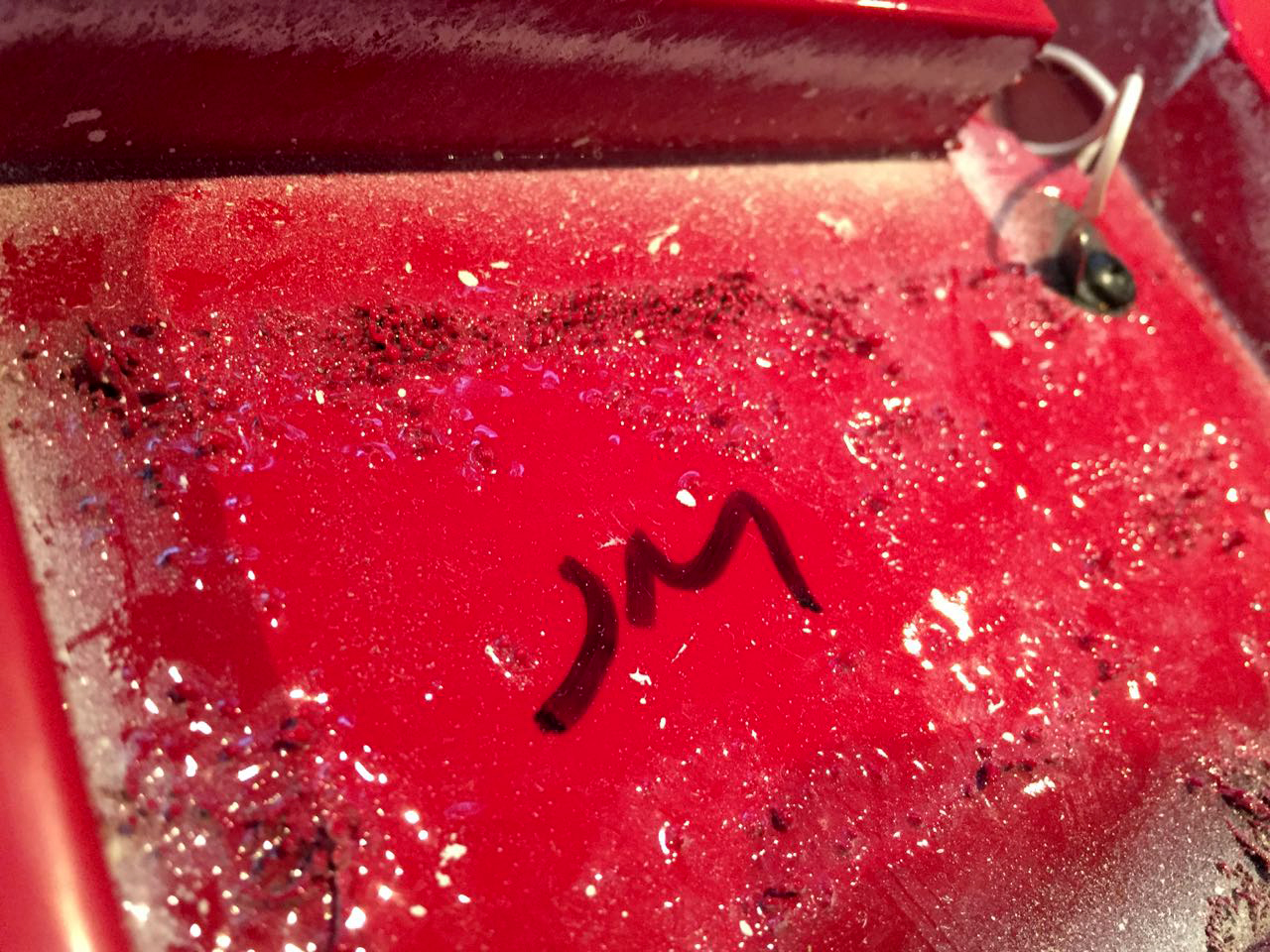

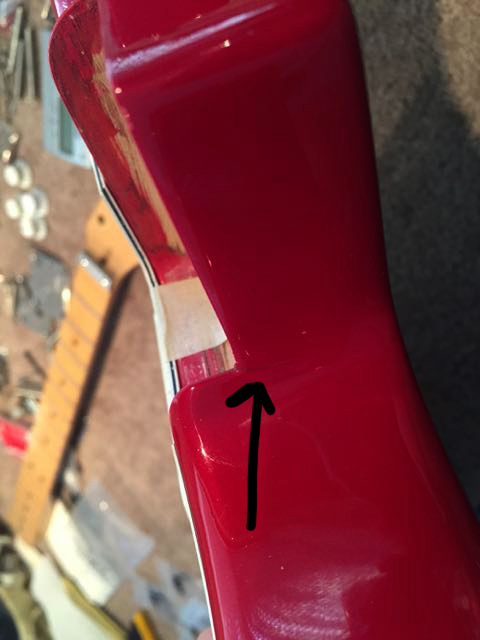
.jpg)