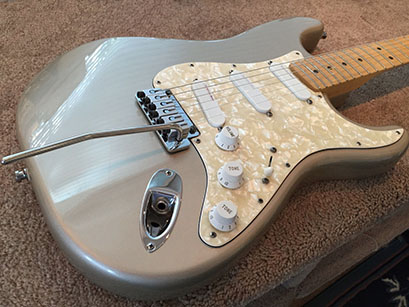
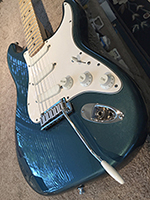
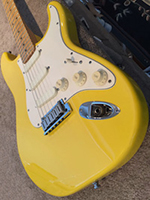
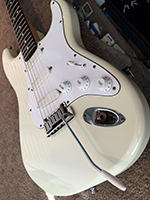
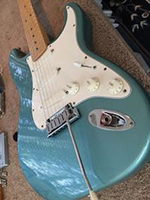
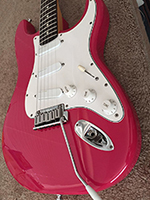
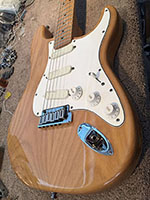
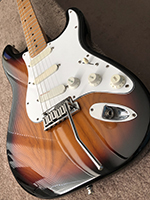
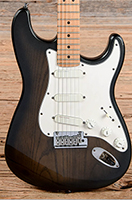
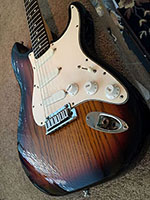
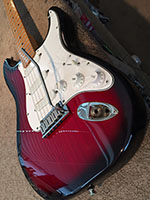
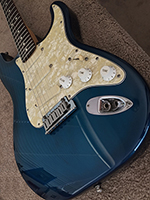
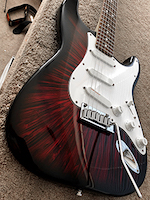
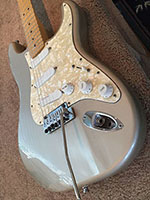
The Fender Deluxe Stratocaster
"Strat" Plus Series
In July of 1989 Fender ventured out into a new Stratocaster line based on the popular Strat Plus series—the Deluxe Stratocaster Plus. Don Lace Sr., founder of Lace Music Company/Anodyne General Inc.,had been experimenting with various windings and magnets based on his already well received Gold Lace Sensor pickups. The Gold Sensors found on the Strat Plus series, which was released mid-1987, were a big hit. They mimicked that glassy, bright 1950s Strat tone, all with no hum or string pull, which was common with the standard single coil pickups used by Fender over the years. Stop and think about this for a second—this had been a interesting turn for Fender, as they were now marketing their highest-end, USA made production line of guitars, using pickups designed and manufactured by a completely different company outside of Fender. In their marketing agreement they were labeled Fender Lace Sensor. That is a whole other discussion to be taken up later.
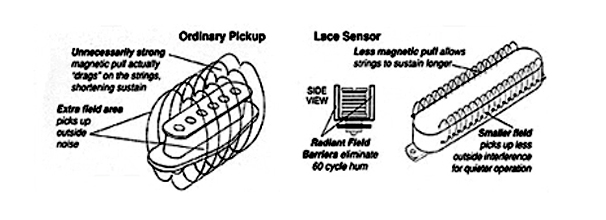
Much of what was going to be different between the Standard Strat Plus and the Deluxe Strat Plus, at first, seemed to be mainly the pickups. As we examine the history, we will see a different story. The Lace Sensors used lower energy magnets than ordinary single coil pickups and this created a whole new realm of properties. In regular pickups, the magnetic fields are so strong they physically dampen, or drag on, the strings' vibration, reducing sustain and actually changing the pitch. This means sustain is increased with the Lace Sensor while the string holds its true pitch for the duration of the note.
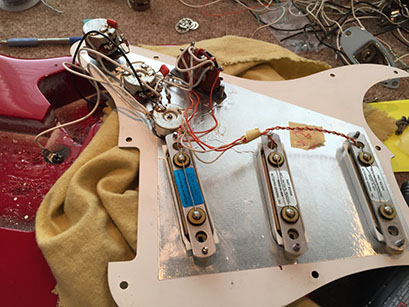
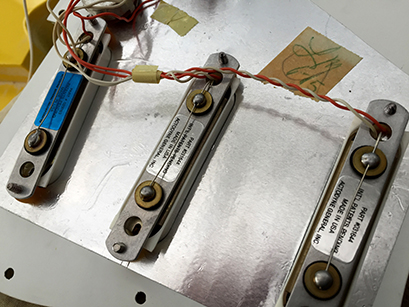
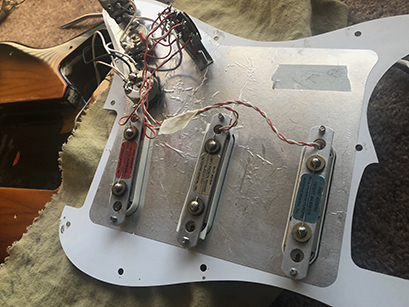
Soon Don Lace's experimenting created a really cool variation of Lace Sensor pickups. As just mentioned, using different windings and magnets, he came up with pickups that had the same noiseless features of the Gold Laces but with voices that were hotter and fatter. The new comers on the block was the Blue Sensor, which they claimed sounded a lot like Gibson's P-90 pickup. The Silver Lace Sensor was voiced like a 1970s Strat. Fender capitalized on these new pickups and decided to come out with a Deluxe Strat Plus.
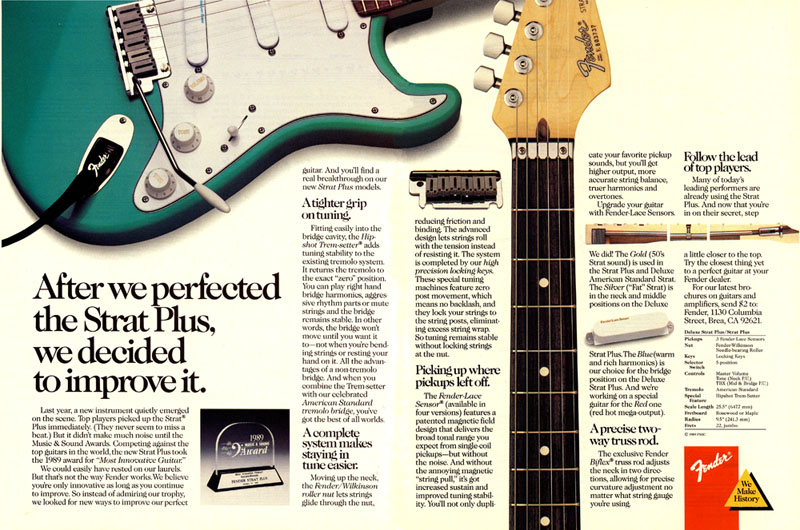
Above is a 1989 Fender advertisement showing the new Deluxe Strat Plus model. Notice the Plus DX in the picture how it the Silver-Silver-Blue Lace Sensors! OK, keep that in mind. Then if you can read the print on this add, you will see on the left side where it mentions Picking up where pickups left off. In that section it mentions the Deluxe American Standard Stratocaster, and how they came with Blue, Silver and red Lace Sensors. I talk in detail about this guitar, as it is NOT a Strat Plus. Click here to learn more: It Looks Like a Plus, But it's NOT! This is simply a short lived American Standard Strat that they popped some Lace Sensors in, and the truth is, almost none came with those pickups, but instead used 3 Gold Lace Sensors. Some people think there was less than 400 of these made, but I think there were a number more than that. I will explain more about the new Version 1 Strat Plus' as we go on.
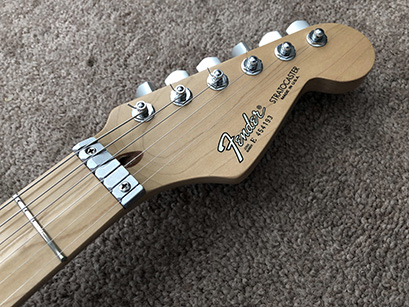
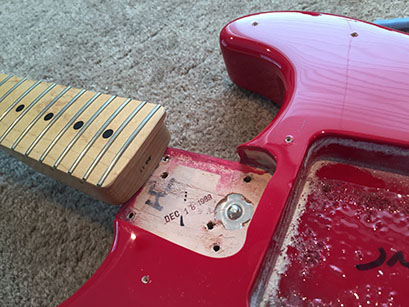
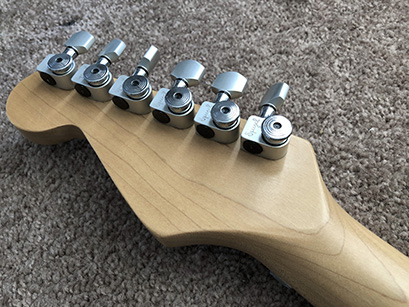
By early 1988 Fender had settled on the design of the Standard Strat Plus guitar using the full Wilkinson roller nut and brushed chrome Schaller locking tuners . They also had serial numbers, by mid-1988, that actually matched the year of production! Early on they used E4xxxx for their 1987 and early-1988 Plus guitars. (Some say they were using up their old Fullerton water-slides while they were waiting for new ones to be made). This means E8xxxxx was built 1988 and E9xxxx in 1989. But here is the odd things. While the Strat Plus was settled in to a design and serial number dating, along came the Strat Plus DX!
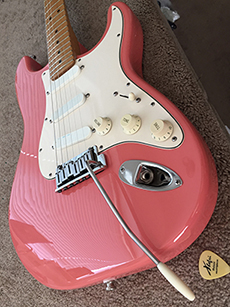
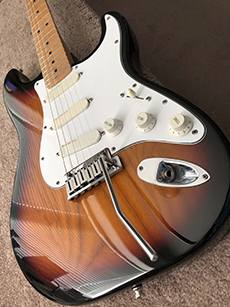
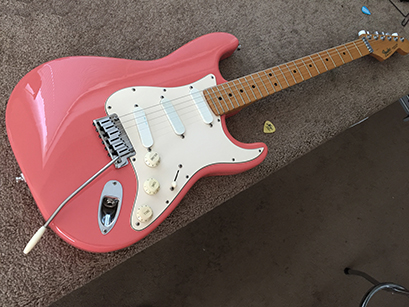
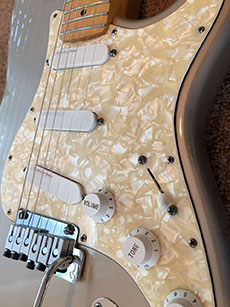
Fender now stepped backward and started using the split Wilkinson roller nut again with the Sperzil black dot locking tuners, just as they did on the Standard plus' in 1987 and early 1988. (See above). And to top it off, they went back to the E4xxx serial number to boot! What the heck? Fender only used these old features for a short time. It was like they were starting all over again! Maybe using up old parts and serial number water-slides Ummmm—IDK! After a short time they updated things and most Plus DXs started carried the E8xxx and E9xxxx serial numbers. But here is the cool thing about the Version 1 Strat Plus DXs—they now came with the newly designed Silver, Silver, Blue Lace Sensor pickups and almost of them were cool vintage pastel colors. The other feature was the Hipshot Tremsetter, which came with most V1 Strat Plus guitars.
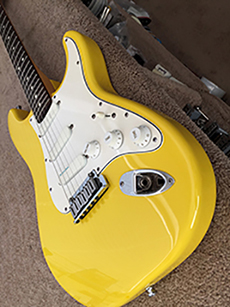
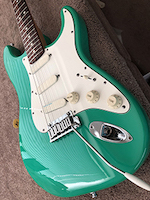
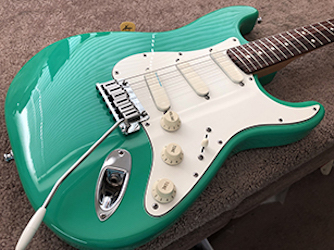
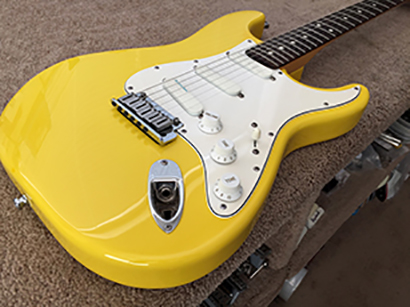
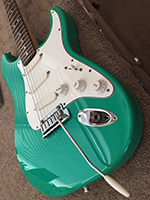
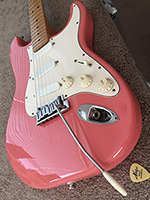
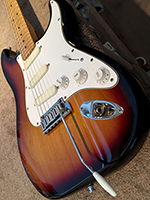
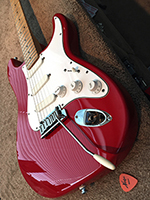
ALSO NOTE—The Bahama Green Plus shown above is just like the one they show in the Fender advertisement! (the pict in the add is a little grainy and not real color correct) In 1987 the Standard Strat Plus did not use the hipshot, and then early in 1988 they started showing up. Through the years it was hit and miss if they were installed! Sometimes I have seen them in the case, uninstalled but as part of the original purchase. Maybe sometimes Fender was simply out of stock. IDK. The 1989 Price list showed the V1s came in: Black, Bahama Green, Dusty Rose, Brown Sunburst, Pewter, Torino Red, Gun Metal Blue, Graffiti Yellow, Arctic White, Ice Blue and Razz Berry. BUT, I have owned Strat Plus DXs in Surf Green, and Vintage White. Again, one just never know what Fender sometimes did!
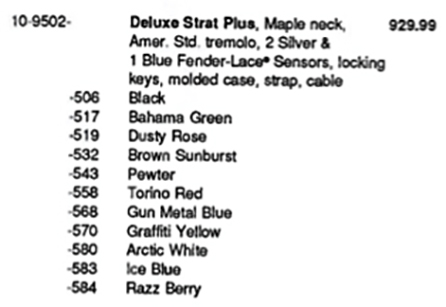 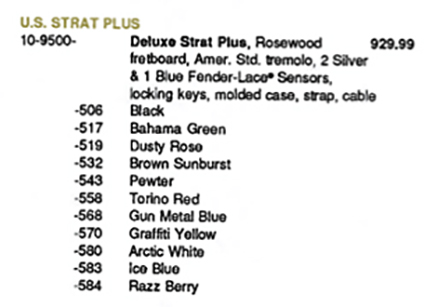
Above is the January 1989 Price list and available colors for the newly released Strat Plus DX! Click here to download a PDF of Fender's January 1989 Price list!
By November of 1989 the Standard Strat Plus color lineup changed, as it also did for the Deluxe Plus as well. Fender dropped some of the cool vintage pastel colors and instead moved to these colors: Black, Natural, Brown Sunburst, Pewter, Gun Metal Blue, Midnight Blue, Midnight Wine, Frost Red, Arctic White, Root Beer Metallic, Blue Pearl Burst, and Black Burst. The very first Strat Plus DXs in the cool pastels colors are rare and considerably more collectible. And some colors are almost nonexistent, like Ice Blue, Dusty Rose, Bahama Green, Graffiti Yellow and Razz Berry.
Let me deviate a second... I am going to share a bit of information no one seems to know much about about. Right when Fender was releasing its new Ultra series, they also introduced changes to the Deluxe Strat Plus' giving both very similar colors. But what was weird was, in the January 1990 Price list (below in yellow) it shows the new Strat Plus DX's having 2 Silver and a Red Lace sensor in the bridge!! Again, ummmmm! I think in the many years of collecting Strat plus Guitars, I have maybe seen one of these! I don't think Fender ever produced any in that pickup configuration, and if they did it was a super limited amount! Instead Fender came out with the Blue, Silver, Red combo Lace Sensors, and that configuration was a main stay to the end of the series in the pring of 1998.
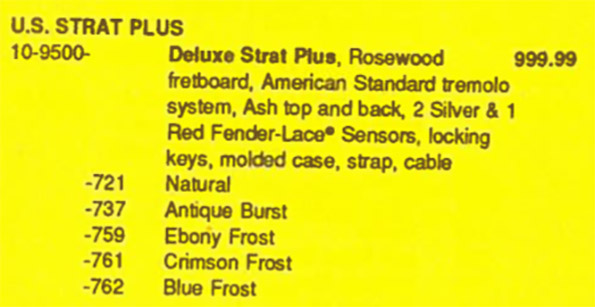 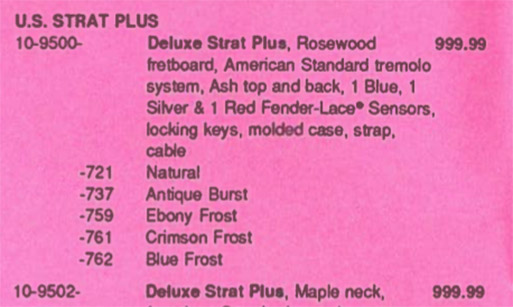
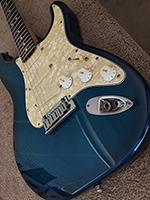
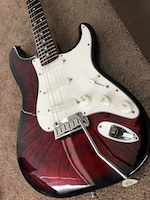
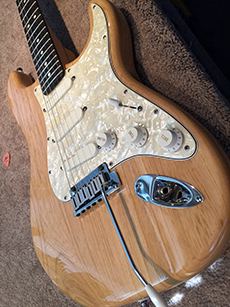
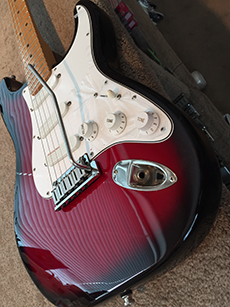
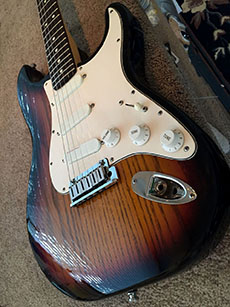
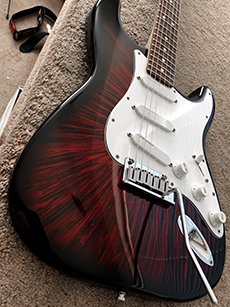
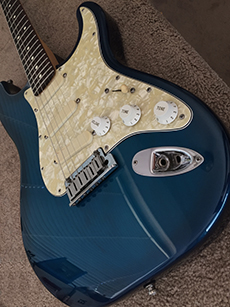
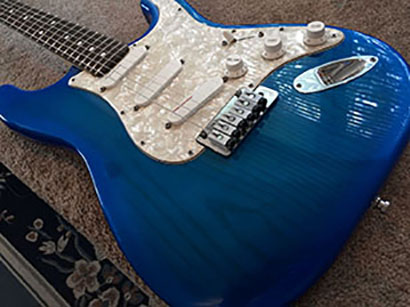
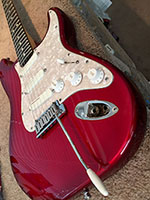
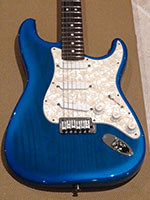
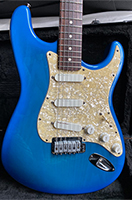
By June of 1990, Fender changed their price lists to reflect (correct?) this new pickup configuration (see above in pink). These Strat Plus DXs is what I call the Version 2. AGAIN, Fender's new V2 DX came with BLUE, SILVER and RED LACE SENSORS. As mentioned, these V2 Deluxe's came in finishes that corresponded with the Ultras released that same year. These new DXs also had Ash caps top and back with cool burst/frost finishes. Many of these also came in SOLID Ash. If you have owned one of these, you will know they were often as heavy as an old Les Paul! The colors for the V2 DXs were simply: Natural, Antique Burst, Ebony Frost, Crimson Frost, and Blue Frost. What was crazy is this—Fender used these same Frost colors on the Ultras, but called them Bursts instead! (See some samples below). Click here to download Fender's January 1990 Price List. And click Here to see the updated price list from June of 1990!
In the spring of 1991, they listed the famous Firestorm finish in the DX lineup too! And these same colors ran on the DXs all the way through most of the 1990s. There were actually way more colors available in the Standard Strat Plus' of these same years! In 1993 they added Mystic Black to the DX list AND they changed the Crimson and Blue Frosts to Crimson and Blue Bursts! I explain this change and the difference between frost and bursts on my Strat Plus page: CLICK HERE and scroll down to "Frosts Verses Bursts".
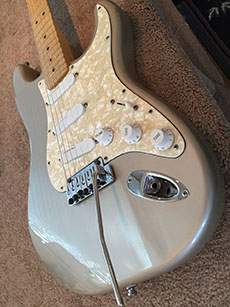
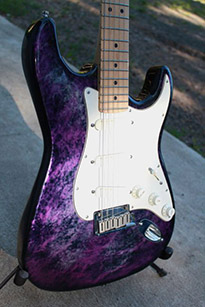
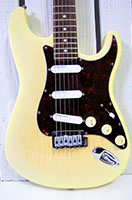
In 1994 they dropped the Natural finish and replaced it with Vintage Blonde (with was a creamy see-through finish). BTW, by 1994 these were retailing for a whopping $1279.99! In 1995 the Aluminum bodied DX Plus' came out in three colors: Violet Metal Burst, Blue Metal Burst, and Stars and Stripes. While 1996 was the year that Fender changed and added a bunch of new colors to the Standard Plus line, they basically left the DXs the same—at least on the books! I have seen colors not listed show up in the DX series.
1997 was the year Fender started winding down the whole Plus line with plans to phase them out by 1998. In 1997 into 1998 they offered on their price lists: plain Black, Antique Burst, Crimson Burst, Blue Burst, and Shoreline Gold (which cost an extra $50 buckaroos!). By July if 1998 the Plus and Ultra lineups were no longer seen in Fender's price lists, sad to say, replacing this series with the new American Deluxe Stratocaster. And the parting of ways between Lace Music Co, and Fender was not a pleasant one, as fender unveiled their new Noiseless pickups.
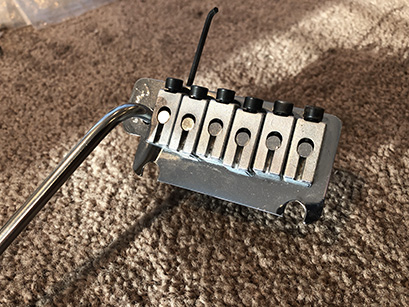
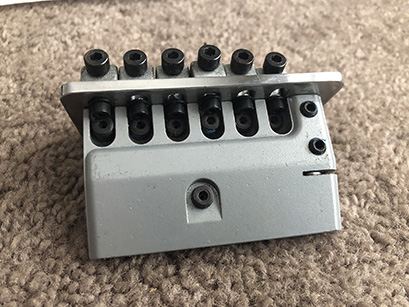
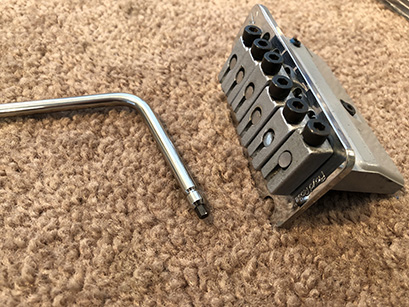
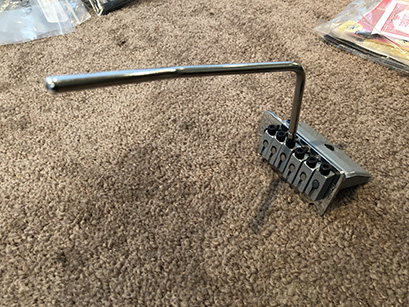
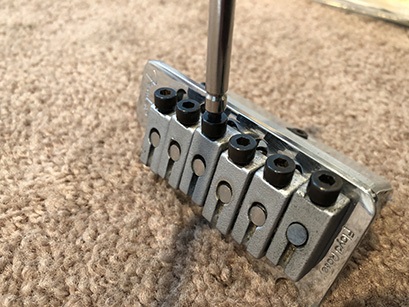
Fender's Mini-Floyd Rose Locking bridge (aka The Blanda Bridge!)
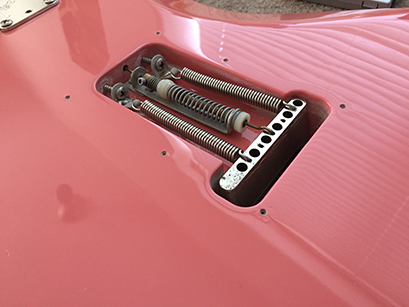
The very first V1 Strat Plus DXs came with the same 2-point American Bridge as the Strat Plus and American Standards had. Around 199o some some Strat Plus DX models came with the Deluxe two-point floating bridge. These had a block block and a pop-in tremolo bar. Around 1993-4 Fender introduced their new Fender "Mini-Floyd Rose" Deluxe Locking bridge. The Fender Deluxe Locking Bridge is loved by some and hated by others. Some claim it cuts down sustain and other say it increases it. I personally like them. To change strings, you simply cut off the ball-end of the string and feed it into the bridge saddle under the machines steel barrel and then tighten down the Hex Screw. Fast and east. No feeding strings through the tremolo in the back of the body thus risk scratching your guitar. Thus the back cover is solid as there is no reason for the hole for the strings. Click here to download a PDF on how to set these up.
And to make it even easier, the Tremolo arm that comes with these bridges has a Hex Key on the tip, which you can use to loose and tighten the Hex screws! Really handy! Setting the intonation is tricky (another reason some people do not like them). You do it from the underside of the bridge (from the back of the guitar with the the trem-cover off). There is a set of Hex screws that you loosen to move the string saddle back and forth. Again, NOT ALL Deluxe Strat Plus' use these. As stated, they are more common from 1993-4 onward.
There has been a lot of confusion about these tremolos. Over the years I saw these called Mini-Floyd Rose, Deluxe Fender Floyd Rose and a Floyd Rose Type II. Even at Fender recently there has been discussion about what these were called. The early ones had Fender written on tremolo arm side and had Floyd Rose on the upper side (like the one above). Later on, they came with no name on them. Weird, eh? One current Fender employee told me they were nick named the Blanda Bridge named ofter George Blanda who they were told designed it. BTW, George was head of R&D at Fender around the time Fender's Custom Shop started up. He built the prototypes for Clapton back in the day as well as guitars for other well know artists. I decided to find out the real scoop, so I contacted George and asked him about these bridges. Here is what he wrote back:
"I did design this bridge. It is obviously inspired by the original Floyd Rose but we wanted to develop a more user-friendly locking tremolo. At that time, a lot of people didn't’t want some of the features and hassles of the original. It started out as a Fender project but about the time that the prototype was done Fender entered into a distribution agreement with Floyd Rose. In order to fill a hole in Fender’s Floyd Rose lineup, It was agreed that Fender would promote this as a Floyd Rose product. This was both to lend credibility to the new design and to increase sales of Floyd Rose branded product by going to a broader customer base. This worked out well for both parties. When the Fender and Floyd Rose distribution agreement ended we continued to sell this tremolo but with the Floyd Rose logo removed. I think our marketing description was Fender Locking Tremolo."
Fender Deluxe Stratocaster Plus colors - Through the Years!
January of 1989 prices lists had the line-up seen above for the Deluxe Stratocaster Plus. Top - left to right: Black, Bahama Green, Dusty Rose, Brown Sunburst, Torino Red. Next row: Gun Metal Blue, Graffiti Yellow, Arctic White, Ice Blue, and Razz Berry. Oh man! What a nice line-up! What Fender did next was to strip this whole line down to five basic colors! Remember what I am showing here is ONLY Deluxe Strat Plus colors. Click Here to download a complete January, 1989 Price List!
1990-1992 brought some changes to the Deluxe Stratocaster Plus Color line up! Yes, they killed a lot of great colors, and today those 1989 V1 colors are very collectible especially in the DX configuration! OK what we have here is - left to right: Natural, Antique Burst, Ebony Frost, NOTE another variation of Ebony Frost, which I have nicknamed Tiger Stripes, was only offered early 1990 and is pretty rare, Crimson Frost, and Blue Frost. Note that all the DXs models this year had transparent finish—that was trademark of the V2 DXs series until around 1993 and later when they added some solid colors. And we can't forget the rare and cool Firestorm finish which came out mid 1990 and ended, too, in the first couple months of 1993. In summary, this basic color scheme was used until the end, with the exception of changing the frosts to bursts, which I will show you next. Click here to download Fender's complete Price List from June of 1990! Or Click here for Fender's February 1992 Price List.
1993 brought some changes to the Deluxe Plus Color line up. They added Mystic Black, which had a cool blue/green pearl in the clear coat. Very subtle. They Dropped Ebony Frost and then changed the frosts to bursts. Left to right: Mystic Black, Natural, Antique Burst, Crimson Burst, and Blue Burst. Click here for Fender's January, 1993 Price List.
1994 - 1997 brought more changes to the Deluxe Plus Color line up. They added Vintage Blond and dropped the Natural finish. Other than that, the same old same old! In 1995 the Aluminum Strat Plus DXs came out in three different colors which I talked about earlier on this page. Top row - left to right: Vintage Blond, Mystic Black, Antique Burst, Crimson Burst, and Blue Burst. In 1996, Blue Burst changed its looks, as seen in the bottom row. In 1997 Fender dropped the Vintage Blond and changed Mystic Black to just a plain black. Also in 1997 they added Shoreline Gold as seen last. In listing all these, it is important to know that why this was a general outline by Fender in their sales catalogs and price lists, there was cross over (left-overs) from one year to the next, they also had special orders. So there are always exceptions to the rules! Click one any of these years to download Fender's price list: 1994 January Price List - 1996 January Price List - 1997 January Price List. By early 1998 the Strat Plus and Ultra series DIED—but they still live on today here at Xhefri Guitars!
|